
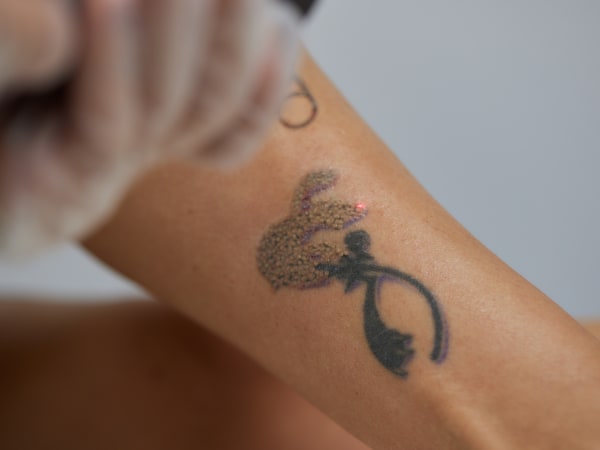
So you’ve taken the plunge and decided to remove a tattoo. Laser tattoo removal offers a safe and effective way to fade or eliminate unwanted ink. But your journey doesn’t end after the final laser pulse. Proper aftercare ensures your skin heals correctly, minimising discomfort, and achieving the best possible tattoo fading results.
Read through our essential laser tattoo removal aftercare steps, from cleaning and moisturising to sun protection and avoiding irritants. By following these recommendations, you can promote optimal healing and maximise the effectiveness of your laser tattoo removal treatment.
Aftercare
The tattoo removal laser treatment may create a superficial burn wound. Some clients may experience, bruising or swelling. There is immediate whitening of the treated area, which usually lasts for several minutes.
Many clients then develop blisters, crusts, or scabs within 12-72 hours, which may last for 1-2 weeks or sometimes longer .The treated areas may be pink or pale after the scab separates. Loss of skin pigment in the treated area is common but usually temporary. Healing is usually complete by 5-8 weeks.
- Keep the treated area clean and dry while it is healing. Clean the area gently with soap and water and then gently pat the area dry. You should apply a thin coating of antibiotic ointment (Sudocrem) up to three times a day while the area is healing if you keep the area covered with a sterile dressing.
- You may apply cool compresses for 24 hours after the laser treatment to help reduce discomfort and inflammation. You may take plain Tylenol, but avoid aspirin (it can increase the risk of bruising and/or bleeding.)
- Do not pick at the scab or allow the skin to become scraped which may result in infection and scarring.
- Shaving should be avoided in the treated area until it is completely healed.
- Do not wear makeup or any cream or medication unless recommended by our office for 48 hours.
- Wear a sunblock with an SPF of 50 or higher over the area for 3 months following the treatment.
If the area looks infected (honey-coloured crusting and oozing or spreading redness), if you experience an unusual discomfort or constant bleeding, if any other complications develop, or if you have any questions or concerns, contact the office immediately. Of course, if you have any extreme reaction (such as moderate to severe facial swelling, moderate to severe rash, any difficulty breathing, or you are in any distress) call your GP and go to the emergency department.