Skip to the main content

Laser Hair Removal: Your Questions Answered

Are you considering Laser Hair Removal? It's natural to have many questions about this treatment, but worry not! This FAQ page is your one-stop shop for all things laser hair removal.

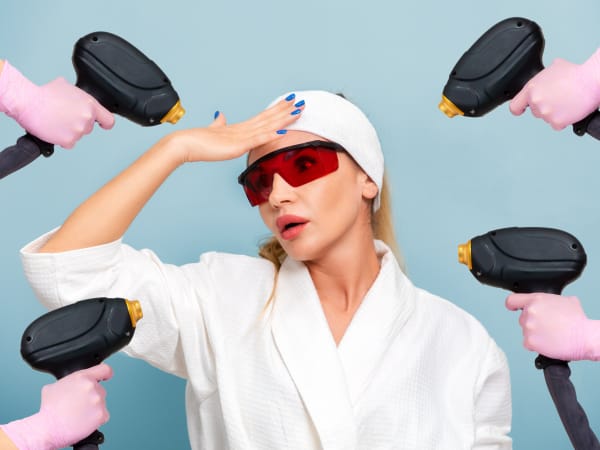
A young woman dressed in a robe, wearing protective laser glasses looking confused. Multiple laser hair devices are pointing at her from different directions.

offers clients a long-lasting solution for achieving smooth, fuzz-free skin. But with so many questions swirling around this treatment, we’re here to shed some light! Dive into our FAQ page for everything you need to know about laser hair removal, from how it works to what to expect during and after treatment. Let’s help you achieve the silky-smooth confidence you deserve!

Does Laser Hair Removal Work?

Laser hair removal is a popular and proven method of effective long-term hair reduction, in use for over twenty years.

Laser should not be confused with Intense Pulsed Light (IPL) treatment (often referred to as laser hair removal).

For laser hair removal to be effective, hair must be dark – either brown or black, although red hair can sometimes work. Blonde, white or grey hair may not be suitable for treatment, as the laser targets the pigment ‘melanin’ in the hair which makes it dark. This pigment must be present in the hair for the heat to be generated to disable the hair follicle.

It should not be claimed that laser hair removal removes 100% of hair permanently, as it is possible for some regrowth to appear. Top-up sessions are sometimes necessary to maintain results, but this varies from person to person and with different body areas.

Typically, facial areas need more treatments than other body areas do. Where regrowth is experienced, it is usually much finer, sparser and slower-growing hair than before laser treatment.

Clients with hormonal imbalances and conditions such as polycystic ovaries find laser hair removal the most convenient and effective way of managing the excess hair experienced as a symptom of their condition.

At Creative Touch, we have performed many hundreds of laser hair removal treatments and we are proud of the exceptionally high level of client satisfaction we experience.
How Does Laser Hair Removal Work?

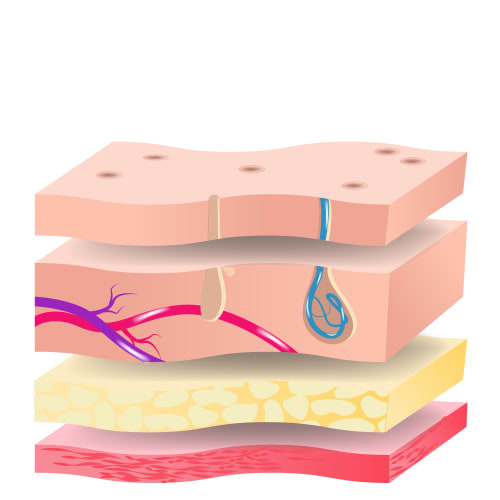
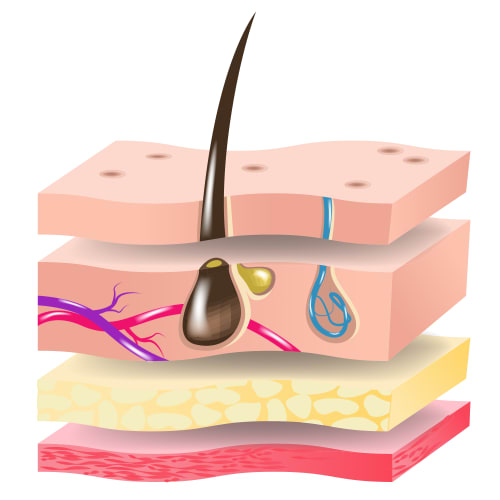
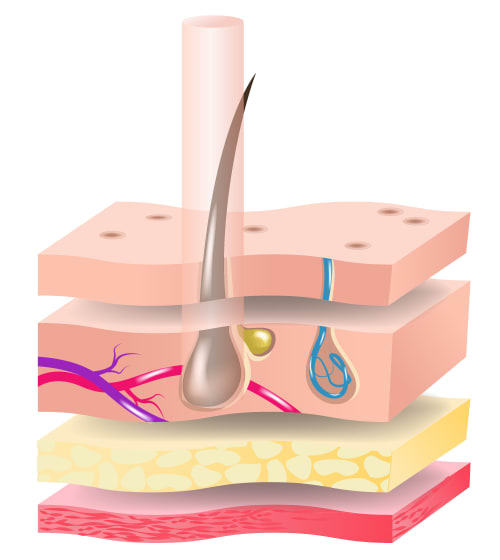
BeforeIllustration of skin layers with a normal healthy hair

Growth Phase (Anagen)

The hair root, also known as the bulb, is rich in melanin, the pigment that gives hair its colour.

Illustration of skin layers with a focused beam of laser light targeting the hair

Heat Delivery

Melanin in the hair follicle absorbs a precise beam of light emitted by the laser. This targeted light energy is converted into heat, which damages the hair follicle.

AfterIllustration of skin layers with with no hair regrowth

Reduced Growth

The damaged follicle struggles to produce new hair; any hair that does regrow will be significantly finer and lighter.

Diode vs. IPL - Which Is The Right Treatment for You?

Here’s a breakdown of the two most popular laser hair removal technologies: Diode and Intense Pulsed Light (IPL).

The Science Behind It All

Both methods use light energy to target hair follicles, but they differ in their approach:

Diode Laser

This powerhouse emits a single, concentrated beam of light precisely absorbed by hair follicle pigment (melanin). This precise targeting heats the follicle and prevents future hair growth. Diode lasers come with built-in cooling for a comfortable experience, suitable for most skin tones.

Intense Pulsed Light (IPL)

Unlike the focused laser, IPL uses a broad spectrum of light pulses. While effective for skin concerns like pigmentation and redness, its scattered light may not target hair follicles as precisely as a diode laser. This can lead to a need for more frequent sessions and potentially a higher risk of side effects, particularly on darker skin tones.

Illustration of the light wavelength difference between IPL and Laser hair removal devices.
An IPL device emits a broad spectrum of light pulses with various wavelengths, whereas a diode laser emits a single, concentrated wavelength of light.
FeatureDiode LaserIntense Pulsed Light
Light TypeSingle, focused wavelengthBroad spectrum of wavelengths
Effectiveness for Hair RemovalMore effective, requires fewer sessionsLess effective, may require more sessions
ComfortMore comfortable with built-in coolingLess comfortable, potential for higher discomfort
Skin Tone SuitabilitySuitable for all skin tones (Fitzpatrick 1-6)Primarily suitable for lighter skin tones (Fitzpatrick 1-3)
VersatilityTargets hair removal primarilyTargets hair removal, pigmentation, redness, and texture

Choosing the Right Technology for You:

Are you prioritising permanent hair reduction? Diode laser is your champion!

Are you looking for a multi-tasking treatment for various skin concerns? IPL might be a good option, especially if you have a lighter skin tone.

This is a general comparison, and individual results may vary; we can determine the best laser hair removal option for your skin tone, hair colour, and desired outcome.

Am I Suitable For Laser Hair Removal?

Most people, male and female can benefit from laser hair removal.

The best results are seen in people with dark hair and fair skin, but advances in laser technology now mean that all skin types can benefit. If you have higher levels of pigmentation in your skin, extra care will be needed. Female patients with hirsutism may be treated but the underlying cause may mean regular treatments are necessary.

You will NOT be suitable for treatment if:

  • You are pregnant (can commence 3 months post-delivery)
  • You have a suntan on the area to be treated or have used a sun bed recently, or have used fake tan in the last 2 weeks.
  • You have had an epileptic seizure in the last 2 years
  • You have vitiligo
  • You have keloid scars
  • You are taking medication which increases photosensitivity
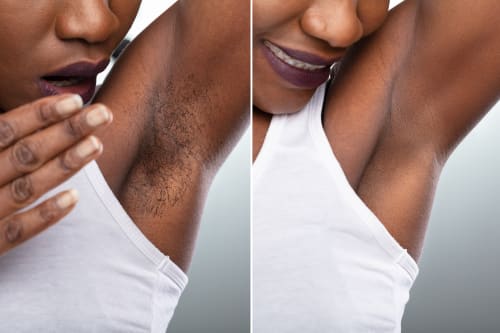
Before and after: underarm laser hair removal on darker skin
Laser hair removal for darker skin is now an option with advanced Diode lasers suitable for all skin tones

Can I Have Laser Hair Removal While On Medication?

The only medications that are prohibited for laser hair removal are Accutane and Retin-A. These should to be discontinued before treatment to avoid a potential photosensitivity reaction.

During your consultation, we will review any medications or supplements that you are taking to help determine the appropriate energy setting for your treatment.

Are Women With PCOS Suitable For Laser Hair Removal?

Women with Polycystic Ovary Syndrome (PCOS) may suffer from a variety of different symptoms, one of these being excessive hair growth – hirsutism. This is because of higher levels of androgens, the male hormones which are normally present in women but at lower levels.

Excess body and facial hair can cause extreme stress and affect confidence issues.

Laser hair removal may be an effective way to control hair growth but it is important to realise it will not treat the underlying cause. A course of sessions is always necessary for the best results but women with PCOS may need more treatments and at regular intervals but good results can still be achieved.

What Is The Age Limit For Laser Hair Removal?

We recommend a minimum age of 18 years for laser hair removal, although in some circumstances those aged 16 – 18 years old would be considered for treatment.

If you are under 18 years old, a parent or legal guardian would need to accompany you to your consultation and appointments.

There is no upper age limit.

Is Winter Or Summer Best For Laser Hair Removal?

We generally recommend winter for laser hair removal, but it’s not a strict requirement as lifestyle factors are an important consideration:

  • Laser treatments can temporarily make your skin more sensitive to the sun post-treatment. You can better protect your skin when you’re more likely to be covered up and staying indoors.

  • Some patients may experience slight sensitivity in the laser-treated area. Cooler winter temperatures can provide a more comfortable environment for healing, whereas summer months can amplify that irritation with sweat.

  • Because IPL laser hair removal works better on lighter and undamaged skin, sun exposure and tanning can reduce the effectiveness of the laser treatments.

Can I Have Laser Hair Removal On My Face?

Laser hair removal is very popular for facial areas such as the upper lip, chin, cheeks and neck. It is the part of the body that people are most self-conscious about, and a very common area to be treated with laser hair removal.

Laser hair removal can certainly help reduce, thin and slow hair growth – making it much more manageable. We would normally suggest stopping waxing, threading, plucking and bleaching 3 – 4 weeks before commencing laser treatment. However, shaving and trimming before and in between laser treatments is fine. Makeup should be removed before treatment.

We can treat most areas on the face, apart from inside the nose and ears and underneath the eyebrows. The area between the eyebrows and above the eyebrows can be treated.

Hair must be either brown or black to be effectively treated. If the hair is extremely fine and downy, it may not be suitable for laser treatment.

If you are struggling with excess facial hair, laser hair removal is a great option to consider.

What Body Areas Can Laser Hair Removal Treat?

The most common areas that we treat for women are face, underarms, bikini line and legs. With men, full back and shoulders, chest and abdomen and beard are the most popular. However, laser hair removal can be used to treat almost any area of the body, with a few exceptions – such as inside the nostrils and ears and shaping the lower part of the eyebrows, although we can treat in between and above the eyebrows.

Laser hair removal works best on dark, thick hair as this contains more melanin (the pigment in the hair which the Laser targets to heat it up). If you have brown or black hair in the area you would like treated this would be suitable. We can treat thick or fine hair and adjust the Laser accordingly for effectiveness. A patch test will be performed to ensure the correct setting of the Laser for your skin and hair type. Blonde, grey and white hairs would not be effectively treated.

Our booking page shows some of our most popular areas for laser hair removal, but prices for any other body area are available upon request. We also have offers available for our laser hair removal packages.

We are the specialists in laser hair removal in Rotherham so please contact us today for further details.

Are There Any Side Effects From Laser Hair Removal Treatment?

Side effects should be minimal, but you may experience:

  • Redness, which usually fades within 24hrs.
  • A warm sensation, which usually disappears after a few hours.
  • Swelling around the hair follicles, which will return to normal within a few hours.

Very occasionally, some people experience:

  • Minor blistering. If this occurs, keep the skin clear and dry and don’t pop or pick the blister. Try to keep it uncovered until it clears.
  • Slight changes in the colour of your skin. This will usually fade after 2-3 months. It is extremely rare for permanent discolouration of the skin to occur.

Skin reaction varies from person to person depending on several factors. These could include the thickness and colour of hair. Coarse, dark hairs contain more melanin than fine hairs and respond very well to treatment, which means more heat is generated with laser treatment, sometimes leading to a stronger skin reaction. Other factors could be sensitivity of the skin and which body area is being treated.

We can adjust the laser settings very precisely for individual skin and hair types, allowing us to achieve the best results for laser hair removal at the safest levels for the skin. At Creative Touch, all laser hair removal treatments are performed by trained practitioners.

What Is A Patch Test For Laser Hair Removal?

When you attend the clinic for your initial consultation for laser hair removal, you will be required to undergo a ‘patch test’ prior to commencing your laser hair removal treatment.

The purpose of the patch test is to determine a safe and effective setting of the laser for your skin and hair type. We would recommend waiting 24 hours after your patch test before undergoing your first laser hair removal treatment to ensure there is no adverse reaction.

A range of settings will be used in the patch test, tailored to your individual skin and hair type, starting at a lower level and gradually increasing until a good clinical endpoint is achieved. We would expect to see a slight reddening of the skin, some frazzled, burnt hairs and sometimes slight swelling around the hair follicles – giving a goosebumpy appearance. You will be able to feel a slight pinpricking sensation when the desired setting is achieved.

The patch test is only done on a very small area and will normally take only a few minutes. The skin usually recovers very quickly and you should experience no discomfort afterwards. Aloe vera would normally be applied to the skin afterwards to cool the area.

Consultations and patch testing are only carried out by experienced, trained practitioners at our Rotherham laser hair removal clinic.

How Long Does It Take To Complete Laser Hair Removal?

We recommend a course of treatment for the best results. Normally we suggest a minimum of six treatments which are initially spaced 6-8 weeks apart for the body or 4-6 weeks apart for the face.

It is also important to remember sun exposure must be avoided for 4 weeks after treatment and if you are tanned, you should wait for your skin to return to its normal colour before having laser treatment. We cannot treat tanned skin, as the laser may burn it.

If you are taking holidays or spending time in the sun during your course of treatment, it may take you longer to achieve results as you will have longer breaks between treatments. We would recommend using SPF50 to minimise tanning if possible.

After the initial course of treatment is completed, it may be necessary to have occasional top-up treatments depending on the body part and the individual. Clients with certain medical conditions, such as PCOS, may need more regular top-ups on areas such as the face.

How Many Laser Hair Removal Treatments Will I Need?

Laser hair removal treatments with a class IV laser will yield significant permanent hair reduction for most people, male and female.

Some people are fortunate to see excellent results after only 3-4 treatments and others may need 10 or more, although rarely.

Certain factors in an individual can affect the success of the treatment such as age, sex, hormone levels, pigment levels in the hair, the number of hair follicles present and certain medical conditions. Female patients with hirsutism may find regular treatments are necessary.

Some areas of the body may also respond at different rates. So whilst 6-8 may be enough on say underarms, an area with finer hair such as the forearms may require more sessions to achieve good results.

Our booking form shows some of our most popular areas for laser hair removal, but prices for any other body area are available upon request.

We are the specialists in laser hair removal in Rotherham, so please contact us today for further details.

What Are The Hair Growth Cycles?

Hair growth in each follicle occurs in a cycle. There are three main phases of the hair growth cycle:

  • Anagen (active phase): This is the growing phase when the actual hair is produced.

  • Catagen (resting phase): In this phase the hair stops growing but does not fall out. The follicle then recedes.

  • Telogen (dying off): This is when the old hair falls out ready for the follicle to grow again and produce a new hair.

Normally this cycle will continue throughout an individual’s life, but some factors can influence, encourage or inhibit hair growth.

Laser hair removal treatment is most effective on hairs when they are growing in the anagen phase. This is why patients need multiple treatments to disable each new hair as it enters its growing phase.

This hair growth cycle varies greatly depending on the body area. For example, the face usually has a shorter cycle so treatment can be effective at 8 weekly intervals. Other areas such as the back or legs have longer cycles so treatments are more effective if spaced 8 – 12 weeks apart.

How Do I Prepare Beforehand?

Hair in the body areas to be lasered should be as short as possible. We recommend shaving the hair the day before or on the day of your appointment.

We do not aim the laser at individual hairs; the whole of the shaved area will be treated, so we do not need to see the hairs being treated. By shaving, the root of the hair is still present, which is what the laser targets. It is for this reason that waxing, plucking and electrolysis are not permitted between treatments, as they all remove the entire hair including the root. If you have waxed, plucked or had electrolysis, you would need to wait 4 weeks before starting laser treatment.

Bleaching should be avoided as this removes the pigment from the hair, which the laser needs to target. If you have bleached the hair, you would need to wait for this to grow out before starting laser treatment.

Hair removal cream should not be used for 7 days before commencing laser treatment. You can shave as often as you need to between treatments.

It is also important that your skin is not tanned. We therefore ask that you do not use fake tans or sunbeds during your course of treatment. If your skin has tanned through sun exposure, you mustn’t laser it until your tan has gone. The laser can burn tanned skin.

If you wear makeup to your appointment and you are having your face lasered, this would be removed before treatment.

If you are unsure about skin and hair preparation prior to laser hair removal treatment, our practitioners at Creative Touch would be pleased to answer any questions you may have.

Why Shouldn’t I Pluck Or Wax Before My Laser Treatment?

Laser hair removal targets the root of the hair to be effective. If the hair has been recently plucked, waxed, threaded or had treatment with electrolysis, the hair would have been removed from the follicle. It is for this reason we recommend stopping these methods of hair removal four weeks prior to starting laser hair removal treatments and refrain from using them for the duration of your course of treatment.

However, it is fine to continue shaving throughout your course of treatment instead. This is because when shaving the hair we only cut off the surface hair, leaving the root remaining in the follicle for the laser to target.

It is recommended that you shave the area to be treated the day before your appointment. This ensures the laser doesn’t burn the surface hair on your skin and only targets the root of the hair, making the treatment more comfortable and minimising skin reaction.

It is important to stress that shaving will not increase the amount of hair growing and most people find it an effective way to manage hair growth between sessions.

Is Laser Hair Removal Permanent?

Laser hair removal can be considered “permanent reduction”.

It permanently disables hair regrowth as long as the right type of hair is treated with an appropriate type of laser at effective settings.

It is called a “reduction” because lasers used for hair removal cannot and do not remove 100% of the hair in any area. With proper treatments laser can remove the majority of the coarse hair on a body area but they cannot remove finer hair.

Results may vary due to several factors such as the type of laser used, how settings are set, the underlying cause of the hair growth and the practitioner’s experience etc. It is important to realise the body can also develop new hair growth due to numerous factors such as age, stress, diet, hormonal changes and certain medical conditions.

Generally, a patient can tell how much reduction has been achieved from a course of treatments after waiting 6-12 months from their last treatment. Patients who experience new growth in later life may benefit from “top-up” sessions.

Expected outcomes can be difficult to predict and there is always the possibility that certain individuals may fail to respond to treatment.

Is Laser Hair Removal Painful?

The sensation of laser hair removal is often compared to a pinpricking or rubber band flicking against the skin. It can be a little uncomfortable and some body areas are more sensitive than others. Areas such as the underarms, bikini line and upper lip would generally be more sensitive than having the arms or legs treated. Pain is only felt whilst the laser is fired and does not last. It should be noted that not feeling any discomfort during treatments may be an indication that the laser is set too low to produce good results.

However, the treatment is quite quick and generally well tolerated. The laser covers almost a square centimetre with each shot, so gets several hairs each time it is fired. Other treatments, such as electrolysis are much slower as they treat one hair at a time.

Very occasionally some clients find the laser too uncomfortable and would use an anaesthetic cream such as EMLA on small areas of the body. EMLA is not suitable to treat large body areas as adverse reactions can occur.

If you have any concerns about pain tolerance, your practitioner will be happy to discuss them with you at the initial consultation.

What Should I Do After Laser Hair Removal?

Are there any special post-treatment instructions?

When you begin your treatment programme you will need to follow these guidelines:

  • Do not bleach, use depilatory creams, wax, thread or pluck your hair between treatments. Shaving is recommended.

  • Avoid exposing the treated area to the sun and always use a sunscreen of SPF30 or higher.

  • After the final treatment you will need to carry on avoiding the sun and use a sunscreen of SPF30 or higher for 4 weeks.

  • If you experience a warm feeling after treatment, you can apply a cooling cream or gel such as aloe vera to soothe your skin.

Side effects should be minimal, but you may experience:

  • Redness, which usually fades within 24 hours.
  • A warm sensation, which usually disappears after a few hours.
  • Swelling around the hair follicles, which will return to normal within a few hours.

You can find a full guide to post-treatment care in our Laser Hair Removal Aftercare Guide.

If you have any concerns or questions following a treatment session, please contact Creative Touch. Our practitioners are very experienced and always happy to give advice and reassurance when needed.