
What Is Rosacea?
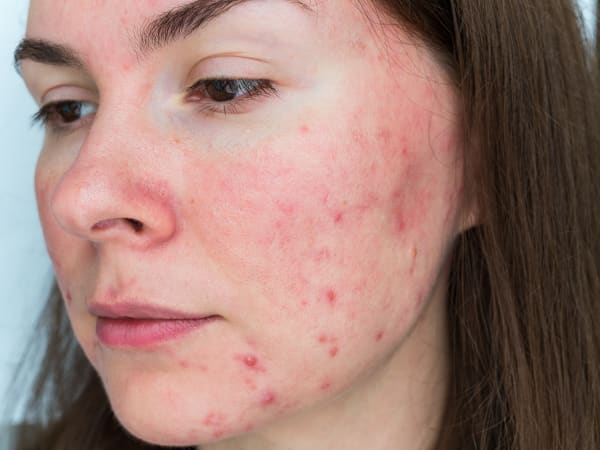
Rosacea is a chronic (long-term) condition affecting the skin, sometimes impacting the eyes. It’s characterised by redness, pimples, and, in advanced stages, thickened skin. Rosacea usually affects the face; other parts of the upper body are only rarely involved. While the exact cause remains unknown, some people may inherit a tendency to develop it.
Who Gets Rosacea?
Symptoms of Rosacea
Rosacea can manifest in several ways, and people may experience different combinations of symptoms.
Facial flushing
This is often the initial sign, presenting as frequent redness in the centre of the face, including the forehead, nose, cheeks, and chin. The flushing may come with a burning sensation, especially when using creams or cosmetics. Sometimes the face is swollen slightly.
Persistent redness and bumps
Vascular rosacea causes persistent flushing and redness. Blood vessels under the skin of the face may dilate (enlarge), showing through the skin as small red lines. This is called telangiectasia (tel-AN-je-ek-tay-ze-ah). The affected skin may be swollen slightly and feel warm.
As rosacea progresses, a condition called inflammatory rosacea causes persistent redness, pink bumps (papules), and pus-containing bumps (pustules) to develop on the skin.
Ocular rosacea
Up to three quarters of rosacea sufferers experience eye issues like dryness, redness, burning, stinging, itching, a feeling of having something in the eye, and sensitivity to light. [1] Eyelid inflammation and swelling are also possible. In severe cases, inflammation of the cornea (the eye’s front) can occur, affecting vision. Seek immediate medical attention if you experience eye pain or vision problems.
Skin thickening
In advanced stages, the skin becomes deeply red, and eye inflammation worsens. Numerous telangiectases are often present, and nodules may develop and become painful. Rhinophyma, characterised by an enlarged, bulbous, and red nose, may develop in some men, though rarely in women. Thickening of the skin on the forehead, chin, cheeks, or other areas is also a possibility.
Triggers and Aggravating Factors
Doctors do not know the exact cause of rosacea but believe that some people may inherit a tendency to develop the disorder. People who blush frequently may be more likely to develop rosacea. Some researchers believe that rosacea is a disorder where blood vessels dilate too easily, resulting in flushing and redness.
While the exact triggers vary among individuals, certain factors are commonly reported to worsen rosacea symptoms:
- Heat, including hot baths and strenuous exercise
- Sunlight and wind
- Cold weather
- Hot or spicy foods and drinks
- Alcohol consumption
- Menopause
- Emotional stress
- Long-term topical steroid use on the face
Patients affected by pustules may assume they are caused by bacteria. Researchers have not established a link between rosacea and bacteria or other organisms on the skin, hair follicles, or elsewhere in the body.
Rosacea Treatment
There is no cure for rosacea; however, effective treatments can manage and control the symptoms. A dermatologist specialising in skin conditions typically treats rosacea. Treatment goals are to manage the condition and improve the patient’s skin appearance. It may take several weeks or months to see noticeable improvement.
Treatment Options
Topical antibiotics: Medications like metronidazole are applied directly to the affected skin.
Oral antibiotics: For severe cases, doctors often prescribe oral antibiotics like tetracycline, minocycline, erythromycin, or doxycycline. These may address papules and pustules but may have a less significant effect on redness and flushing.
Laser surgery and electrosurgery: These procedures address dilated blood vessels causing red lines and may be used for rhinophyma. Laser rosacea treatment offers minimal scarring or damage, improving the skin’s appearance. Surgical removal of excess tissue is an option for rhinophyma to reduce nose size.
Managing Rosacea
In addition to prescribed treatments, certain lifestyle modifications can help manage rosacea:
Sun protection: Regularly use sunscreen with SPF 30 or higher, offering UVA and UVB protection. Consider a wide-brimmed hat for additional sun protection.
Gentle skincare: Opt for hypoallergenic, fragrance-free, and non-greasy moisturisers for dry skin. Avoid steroid creams (unless prescribed by a doctor) and abrasive products on the face. Men may find electric razors more gentle than blade shaving.
Makeup: While rosacea can be unsightly and distressing, makeup can help with camouflage. Look for mineral-based, oil-free cosmetics that won’t irritate your skin.
Psychological Impact of Rosacea
Rosacea can significantly impact a person’s emotional well-being due to the changes in appearance. Some people experience low self-esteem, embarrassment, and a negative impact on social and professional interactions. A doctor should be consulted if a person feels unusually sad or has other symptoms of depression, such as loss of appetite or trouble concentrating.
Conclusion
Rosacea is a manageable condition with effective treatment options and lifestyle modifications. By working with a dermatologist or aesthetician you can control your symptoms and improve your quality of life. Remember, although rosacea can be persistent, you are not alone. There are many resources and support groups available to help you cope with this condition.
Resources
- Talonted Lex: Lex Gillies, a blogger and British Skin Foundation Ambassador from York, has spent eleven years documenting her relationship with rosacea.
- British Skin Foundation: A UK charity that raises money to fund research into all types of skin diseases, whilst also aiming to raise awareness of skin diseases in the wider community.
- NHS – Rosacea: NHS information on rosacea.
References
- Van Zuuren, E. J. (2017). Rosacea. New England Journal of Medicine/the New England Journal of Medicine, 377(18), 1754–1764. doi.org/10.1056/nejmcp1506630
- Tan, J., Schöfer, H., Araviiskaia, E., Audibert, F., Kerrouche, N., & Berg, M. (2016). Prevalence of rosacea in the general population of Germany and Russia – The RISE study. JEADV. Journal of the European Academy of Dermatology and Venereology/Journal of the European Academy of Dermatology and Venereology, 30(3), 428–434. doi.org/10.1111/jdv.13556
- Gallo, R. L., Granstein, R. D., Kang, S., Mannis, M., Steinhoff, M., Tan, J., & Thiboutot, D. (2018). Standard classification and pathophysiology of rosacea: The 2017 update by the National Rosacea Society Expert Committee. Journal of the American Academy of Dermatology, 78(1), 148–155. doi.org/10.1016/j.jaad.2017.08.037