

Hair loss concerns aren’t vanity. Your hair is an integral part of who you are, and watching it thin can have a profound impact on self-confidence and self-perception. We understand that.
But here’s something important: effective treatments do exist. Natural, non-surgical options that work with your body’s own healing processes to encourage regrowth and slow thinning.
You’re not too late. And you’re certainly not alone. Androgenetic alopecia affects up to 85% of men and around 40% of women during their lifetimes [1]. Many of our clients started noticing changes in their thirties, some even earlier.
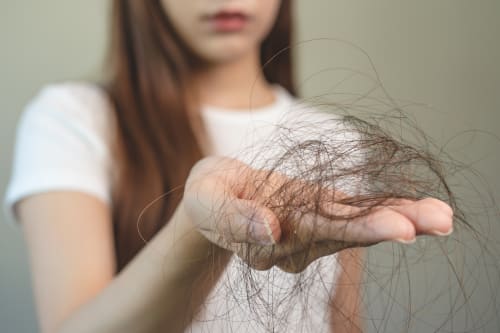
At Creative Touch, we specialise in regenerative treatments that support your hair’s natural growth cycle. We also offer cosmetic solutions that create immediate visual improvement. The right approach depends on your specific pattern of hair loss, your goals, and what feels right for you.
Let’s explore what’s possible.
Understanding Why Hair Thins
Hair loss rarely means your follicles have disappeared. More often, they’re miniaturising; gradually becoming smaller and producing finer, weaker hair strands. Eventually, these miniaturised follicles may produce hair so fine it’s barely visible, or enter a prolonged resting phase.
For most people, this happens due to androgenic alopecia - pattern baldness driven by genetics and hormones. But hair thinning can also result from stress, nutritional deficiencies, hormonal changes, certain medications such as GLP-1s, or underlying health conditions.
Men typically notice: receding hairline, thinning at the crown, gradual temple recession
Women typically notice: wider parting, overall thinning across the scalp, reduced volume
The pattern matters because it helps determine which treatments will work best for you. Early intervention tends to give the most encouraging results. But even if you’ve been thinning for years, options exist.
When follicles are dormant but still present, regenerative treatments can often wake them up. When follicles are too far gone, cosmetic solutions can create the appearance of density. And sometimes, a combination approach works beautifully.
The first step? Understanding what’s actually happening with your hair. During your consultation at Creative Touch, we’ll assess your hair loss pattern, discuss potential causes, and talk through which treatments make sense for your situation.
Our Approach: Supporting Your Body’s Natural Processes
We’re not fighting against your biology. We’re working with it.
Your body knows how to heal and regenerate. It does this constantly. Hair follicles are remarkable structures with their own regenerative capacity. Our treatments essentially amplify these natural processes, providing the growth factors and signals your follicles need to shift into active growth.
This means patience is part of the process. You’re not applying something that sits on the surface or injecting a filler that provides instant structure. You’re initiating biological changes that unfold according to your body’s own timeline.
The upside? Results that look and feel natural because they are. Your own hair, growing from your own follicles, is supported by your body’s healing mechanisms.
iPRF Therapy: Next-Level Hair Regeneration
If you’ve heard of PRP for hair loss, think of iPRF as its more sophisticated successor.
Injectable Platelet Rich Fibrin ( iPRF) represents a significant advancement in regenerative medicine. Whilst PRP concentrates platelets from your blood, iPRF preserves something much more comprehensive: platelets, white blood cells, circulating stem cells, and a fibrin matrix that changes everything about how the treatment works.
How iPRF Works
We draw a small amount of your blood similar to a routine blood test. This goes into a specialised centrifuge that spins at carefully calibrated low speeds. Unlike the high-speed processing used for PRP, this gentler approach preserves all the components your body uses for healing and regeneration.

What makes iPRF different is the fibrin matrix. Think of it as a three-dimensional scaffold that traps growth factors and releases them slowly, continuously, over more than a week. Traditional PRP releases its growth factors within hours; a quick burst of signalling. iPRF provides sustained signalling that keeps your follicles receiving regenerative messages long after treatment.
The science is compelling: iPRF contains approximately 10 times the platelet concentration of normal blood and up to 100 times more circulating stem cells than standard PRP. More healing components. Delivered more effectively. For longer.
What iPRF Does for Your Hair
Those concentrated growth factors signal your hair follicles to wake up and get back to work. They:
- Stimulate dormant follicles to enter the active growth phase
- Improve blood supply to the scalp (better nutrition for follicles)
- Support the stem cells that regenerate hair
- Help existing hair grow thicker and stronger
- Create an environment where healthy hair production flourishes

This isn’t instant. Your follicles need time to respond, reconstruct their growth structures, and produce new hair. Most clients start noticing changes around 2-3 months, with more significant results visible at 6 months as multiple growth cycles complete.
What to Expect from iPRF Treatment
On treatment day, we’ll cleanse your scalp and apply a topical anaesthetic to ensure your comfort. Whilst your blood processes in the centrifuge, you’ll relax in our treatment room. The iPRF is then carefully injected across thinning areas using very fine needles. We space injections about half an inch apart for complete coverage.
The entire appointment takes 45-60 minutes. You might notice temporary redness or mild swelling, but most clients return to normal activities the same day.
We typically recommend 3-4 sessions spaced 4-6 weeks apart initially. Each treatment builds on the previous one whilst your tissue is actively regenerating. Following this initial course, maintenance sessions every 6-12 months help sustain your results.
iPRF works particularly well for early to intermediate hair loss—when follicles are thinning but still present. For those who cannot or prefer not to take hair loss medications like finasteride, iPRF offers a completely natural alternative with minimal risk of adverse reactions.
Investment: £200 per session
PRP Hair Loss Therapy: Proven Regenerative Treatment
Platelet Rich Plasma (PRP) therapy has been helping clients with hair thinning for years, and it remains an excellent regenerative option.
Like iPRF, PRP harnesses your body’s own healing capacity by concentrating platelets from your blood. These platelets release growth factors when injected into your scalp, stimulating follicles and supporting hair regrowth.
Here’s the key difference: PRP uses anticoagulants during processing and achieves different growth factor release kinetics compared to iPRF. It’s still highly effective. Many clients achieve meaningful improvements in hair density and thickness with PRP.

How PRP Differs from iPRF
PRP processes blood at higher speeds with anticoagulants, isolating platelet-rich plasma. It typically achieves 3-5 times normal platelet concentration (compared to iPRF’s 10-fold concentration) and releases growth factors more quickly, within hours rather than over a week.
Does this mean PRP is inferior? Not necessarily. It’s a proven treatment with strong results, and for many clients, it’s the perfect choice. The lower price point makes it more accessible, and some people respond brilliantly to standard PRP protocols.
During your consultation, we’ll discuss which approach makes sense for your specific situation and budget.
You may also come across Growth Factor Concentrate (GFC), a newer approach that takes a different direction again. Rather than injecting platelets or a fibrin matrix, GFC uses a preparation kit to activate your platelets before centrifuging, then separates out a cell-free layer containing only the concentrated growth factors themselves. No red blood cells, no white blood cells, no platelets, just the signalling molecules. Think of it as the highly purified end of the spectrum: PRP delivers growth factors via platelets, iPRF delivers them via a sustained fibrin scaffold, and GFC delivers them directly in concentrated form. It’s an interesting development, and early results are promising. That said, the evidence base is still maturing compared to PRP’s depth of clinical research. We don’t currently offer GFC at Creative Touch, but if you’ve been reading about it and wondering how it compares, that’s what your consultation is for.
PRP Treatment Process
The process is similar to iPRF: blood draw, centrifuge processing, scalp preparation with anaesthetic, and strategic injections across thinning areas. We recommend 3 treatments initially, once monthly, followed by maintenance appointments every 3-6 months.
Results typically become visible around 3-4 months as your hair growth cycle responds to the treatment.
Investment: £150 per session
Cold Plasma: Supporting Your Scalp’s Natural Environment
If you’ve been researching hair loss treatments, you might not have encountered Cold Plasma yet. It’s a newer approach that works differently from both iPRF and PRP, addressing hair loss by creating optimal conditions for growth rather than directly injecting growth factors.
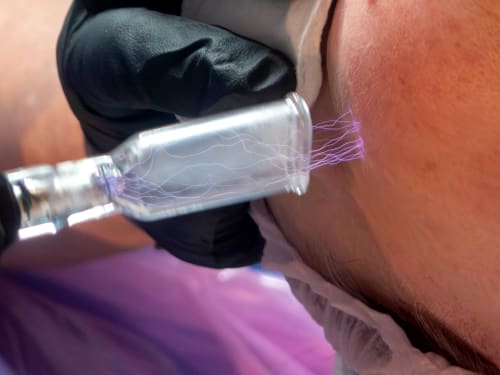
Cold Plasma technology generates reactive oxygen and nitrogen species that penetrate your scalp, stimulating blood circulation to dormant follicles whilst creating an environment where healthy hair growth can flourish. Think of it as optimising the scalp ecosystem so your follicles can do what they’re meant to do: produce healthy hair.
How Cold Plasma Works for Hair Stimulation
Rather than using needles or injections, Cold Plasma delivers energy directly to your scalp through a handheld device. The treatment generates plasma - a state of matter where gases become ionised - at comfortable temperatures (it’s called “cold” plasma because it doesn’t burn or damage tissue).
This plasma creates reactive species that:
- Stimulate blood flow to hair follicles, ensuring they receive nutrients and oxygen
- Reduce scalp inflammation that inhibits healthy growth
- Address conditions like dandruff and seborrheic dermatitis that create hostile environments for hair
- Support your scalp’s natural healing processes
- Create optimal conditions for follicles to shift from resting to active growth phases
What makes Cold Plasma interesting is its versatility. Research shows it’s effective not just for hair stimulation, but also for treating scalp conditions that contribute to hair loss. If you’re dealing with persistent dandruff, scalp sensitivity, or inflammation alongside thinning hair, Cold Plasma addresses both concerns simultaneously.
What Cold Plasma Offers
Completely non-invasive: No needles, no injections, no blood draws. The device moves across your scalp whilst delivering plasma energy through your hair to the follicles beneath.
Comfortable treatment: Most clients find it relaxing - just a gentle tingling or warming sensation. Sessions typically last 15-20 minutes.
Scalp health improvement: Beyond hair stimulation, clients often notice their scalp feels healthier. Itching reduces. Flaking improves. The environment where your hair grows becomes more supportive.
Works alongside other treatments: You can combine Cold Plasma with iPRF or PRP. Some clients use Cold Plasma to maintain scalp health between regenerative treatment sessions.
Particularly effective for:
- Pattern hair loss where scalp health is compromised
- Stress-related shedding
- Thinning accompanied by scalp sensitivity or inflammation
- Anyone who prefers non-injectable treatments
- Clients wanting to optimise their scalp environment before or alongside other hair treatments
The Cold Plasma Treatment Process
We section your hair to access your scalp, then systematically treat the areas of concern with the Cold Plasma device. You’ll feel gentle warmth or tingling—sensations most clients find quite pleasant.
There’s no downtime. You can return to normal activities immediately, and there are no visible after-effects.
Like other regenerative approaches, results develop gradually. Most clients notice their scalp feels healthier within days—less itching, less sensitivity. Improvements in hair thickness and new growth typically become apparent around 3-4 months as your hair growth cycle responds to the improved scalp environment.
We typically recommend 6-8 sessions spaced 1-2 weeks apart initially, followed by maintenance sessions every 2-3 months to preserve the improvements you’ve achieved.
How Cold Plasma Fits Within Your Hair Loss Strategy
Cold Plasma isn’t necessarily better or worse than iPRF or PRP, it’s different. Some clients respond beautifully to Cold Plasma, particularly if scalp conditions have been contributing to their hair loss. Others benefit more from the direct growth factor signalling of iPRF or PRP.
During your consultation, we’ll assess your scalp health alongside your hair loss pattern. If we notice inflammation, sensitivity, or conditions that create a hostile environment for hair growth, Cold Plasma might be an excellent primary treatment or complement to regenerative therapy.
The approach that makes sense depends on your specific situation. That’s what the consultation is for: understanding your particular pattern of hair loss and creating a plan that addresses your needs.
Scalp Micropigmentation: Creating Visual Density
Sometimes you need immediate results. Or perhaps your hair loss has progressed beyond what regenerative treatments can reverse. That’s where scalp micropigmentation comes in.
Scalp Micropigmentation (SMP) isn’t a tattoo, exactly, though that’s the easiest comparison. It’s a specialised technique that deposits tiny dots of pigment into your scalp to replicate the appearance of hair follicles. The result? The illusion of increased density, a stronger hairline, or the look of a closely shaved head with full coverage.

Scalp Micropigmentation in Action
Pigment size and colour is varied to create realistic changes in texture, mimicking natural hair follicles.
How SMP Creates Density
We use very fine needles to place pigment dots at precise depths in your scalp. The size, colour, and placement of each dot are carefully calibrated to match your natural hair colour and create realistic texture changes that mimic hair follicles.
For thinning hair, SMP adds visual density by reducing the contrast between your hair and scalp. Your existing hair looks thicker because there’s less visible scalp showing through.
For receding hairlines, SMP can frame your face with a natural-looking hairline that complements your features.
For significant hair loss, SMP creates the appearance of a closely shaved head; defined, clean, and confident.
Here’s an important distinction: iPRF and PRP need viable follicles to work with. If follicles have been absent for many years, regenerative treatments can’t bring them back from nothing.
SMP doesn’t require follicles at all. It works regardless of how advanced your hair loss is, making it ideal for:
- Significant pattern baldness where large areas lack follicles
- Scarring from previous hair transplants
- Alopecia areata patches
- Anyone wanting immediate visual improvement
- Clients who prefer not to undergo regenerative treatments
And here’s something interesting: SMP and regenerative treatments complement each other beautifully. You can use SMP to create immediate density, whilst iPRF or PRP works to regenerate actual hair growth over time.
The SMP Process
Most clients need 2-3 sessions to build up the desired density. We start with a foundation layer, then add detail and depth in subsequent appointments. Each session takes 2-4 hours, depending on the area we’re treating.
Results last 3-5 years before requiring touch-ups to maintain optimal appearance.
If you’ve never heard of scalp micropigmentation, check out our detailed explanation with video to see exactly how it works.
Supporting Your Hair Health from Within
Regenerative treatments and scalp micropigmentation work directly on your hair and scalp. But what about supporting your hair from the inside? There’s another layer to consider: nourishing your hair from the inside out.
Your hair reflects your overall health. Like your skin and nails, hair needs specific nutrients to grow strong and healthy. Among the most important? Omega-3 essential fatty acids your body can’t produce on its own.
Research suggests omega-3s may support hair health through several mechanisms. They help maintain healthy inflammation levels throughout your body, including your scalp. This isn’t about suppressing your body’s responses, it’s about keeping things balanced. They support circulation, ensuring nutrients reach your hair follicles efficiently. And they’re fundamental to cellular health, including the cells that produce your hair.
A 2015 study followed 120 women who supplemented with omega-3s and antioxidants [2]. After six months, researchers found improvements in hair density and reductions in excessive shedding. Whilst research in this area is still developing, the connection between nutritional support and hair quality is increasingly recognised.
At Creative Touch, we stock Zinzino Balance+ Oil. This is a high-quality omega-3 supplement we’ve chosen for its purity and complete nutritional profile. It combines pure fish oil with polyphenol-rich olive oil, supporting not just your hair but your overall wellness.
Is it a hair loss treatment? No. Will it regrow hair on its own? We can’t promise that. But several clients have mentioned noticing their hair feels thicker and healthier since incorporating it into their routine. The overall health benefits of balanced omega-3s are well-established.
If you’re interested in supporting your hair from multiple angles, ask about Balance Oil during your consultation. It’s particularly appealing if you want to support your hair from multiple angles: professional treatments for direct follicle stimulation, combined with nutritional support for overall health.
Think of it as part of the bigger picture. iPRF and PRP stimulate your follicles. SMP creates visual density. And omega-3 supplementation supports the foundational health that makes everything else work better.
Combining Treatments for Better Results
The most effective approach often involves multiple strategies working together.
iPRF + Cold Plasma: Deliver concentrated growth factors whilst optimising your scalp environment. Cold Plasma creates ideal conditions for follicles to respond to iPRF’s regenerative signals.
PRP + Cold Plasma: Stimulate follicles with growth factors whilst addressing scalp inflammation and improving circulation. Particularly effective if scalp conditions have been contributing to hair loss.
Cold Plasma + Nutritional Support: Support scalp health externally through treatments whilst nourishing hair from within through omega-3 supplementation. A comprehensive “inside and outside” approach.
iPRF + SMP: Regenerate actual hair growth whilst creating immediate visual density. As your hair thickens over months, it integrates beautifully with the SMP base.
Cold Plasma Between Sessions: Use Cold Plasma as maintenance between iPRF or PRP treatments to keep your scalp environment optimal and support continued growth.
SMP + Future Regenerative Treatment: Create density now, reassess for regenerative treatment later if your situation changes.
During your consultation, we’ll create a personalised plan based on your hair loss pattern, goals, budget, and what feels right for you. There’s no pressure to do everything at once; we’re here to guide you through options and support whatever approach you choose.
Your Journey: What to Expect
Initial Consultation
We’ll assess your scalp health and hair loss pattern, discuss what’s been happening with your hair, and explore potential causes. Then we’ll talk through which treatments make sense for your specific situation and create a plan tailored to your goals.
This conversation matters. We’re not here to push you toward the most expensive option. We’re here to help you understand what’s possible and make informed decisions about your hair health.
Book your consultation to get started.
Treatment Timeline
For iPRF or PRP:
- Initial course: 3-4 sessions over 3-6 months
- First changes: 8-12 weeks
- Significant results: 4-6 months
- Maintenance: Every 6-12 months
For SMP:
- Initial treatment: 2-3 sessions
- Immediate visual improvement after first session
- Final results: After completing all sessions
- Touch-ups: Every 3-5 years
Results Require Patience
Here’s the thing: regenerative treatments work with your body’s natural growth cycles. Your hair doesn’t grow overnight, and follicles need time to respond to growth factor signalling, reconstruct their structures, and produce new hair.
Early results are subtle. You might notice reduced shedding first, then gradually increasing density as months pass. By 6 months, the cumulative effect becomes much more apparent.
SMP provides immediate visual improvement, but even here, final results develop as the pigment settles and any initial redness fades.
Ongoing Support
We’re with you throughout your hair restoration journey. Follow-up appointments let us assess your progress, adjust treatment plans if needed, and ensure you’re happy with your results.
Why Choose Creative Touch for Hair Loss Treatment
We offer something many clinics don’t: everything you need for hair health under one roof.
Next-level treatments: iPRF represents recent progress in regenerative medicine, and we offer it alongside proven PRP therapy.
Regenerative and cosmetic options: Whether you need follicle stimulation, visual density, or both, we can help.
Holistic support: From professional treatments to nutritional guidance, we consider your hair health from every angle.
Transparent pricing: No hidden costs or pressure tactics. We tell you upfront what treatments cost and what results you can realistically expect.
Family atmosphere: We’re a family-run clinic in Yorkshire, serving clients throughout Sheffield, Rotherham, and South Yorkshire. When you visit Creative Touch, you’ll feel the difference that comes from genuine care rather than corporate protocols.
Experienced team: Our practitioners have extensive experience with regenerative treatments and scalp micropigmentation. You’re in skilled, caring hands.
Ready to explore your options? Get in touch to discuss which approach might work for your hair loss concerns.
Frequently Asked Questions
- Can hair loss treatments restore all my lost hair?
Honest answer: it depends on your specific situation.
If you have viable follicles that have miniaturised or gone dormant, regenerative treatments like iPRF and PRP can often wake them up and encourage thicker growth. Many clients see meaningful improvements in density and hair quality.
However, if follicles have been completely absent for many years - particularly in areas of long-term baldness - regenerative treatments can’t create new follicles from nothing. In these cases, SMP creates visual density, or we can discuss whether you might be a candidate for hair transplant referral.
During your consultation, we’ll honestly assess your hair loss pattern and discuss realistic expectations. We’d rather be upfront than make promises we can’t keep.
- How long before I see results from hair loss therapy?
For iPRF or PRP: Most clients notice initial changes around 2-3 months - perhaps reduced shedding or slightly improved texture. More significant improvements typically appear at 4-6 months as your hair growth cycles respond. Results continue to develop throughout the treatment course.
For SMP: You’ll see immediate visual improvement after your first session, with final results once all sessions are complete and any initial redness has faded.
Patience is essential with regenerative treatments. You’re supporting natural biological processes that unfold over weeks and months, not days.
- Are these hair loss treatments painful?
We use a topical anaesthetic for all treatments to ensure your comfort.
Most clients describe iPRF and PRP injections as slightly uncomfortable but very tolerable. You’ll feel the needle, but it’s not particularly painful. The treatment areas may feel tender afterwards, similar to a mild sunburn, but this typically resolves within a day.
SMP involves more extensive work over longer sessions, but again, a topical anaesthetic manages discomfort well. Most clients find the process quite manageable.
- Can women have these treatments?
Absolutely. Hair loss affects women just as much as men, though the pattern often differs.
All our treatments - iPRF, PRP, and SMP - work for both men and women. In fact, the 2015 study showing omega-3 benefits for hair health specifically studied women with pattern hair loss.
Women often appreciate the natural approach of regenerative treatments, particularly those who prefer not to take medications or have hair loss related to hormonal changes, stress, or nutritional factors.
- What about hair loss medications like finasteride?
Finasteride can be effective for male pattern baldness, but it’s not suitable for women, and some men prefer not to take it due to potential side effects.
iPRF and PRP offer completely natural alternatives that work through different mechanisms, supporting your body’s own regenerative processes rather than blocking hormones.
You can also combine regenerative treatments with medications if that’s appropriate for your situation. They work through different pathways, so there’s no conflict.
During your consultation, we’re happy to discuss how regenerative treatments fit within your overall hair loss management strategy.
- What about red light therapy for hair loss?
Red light therapy (photobiomodulation) has decent evidence for androgenic alopecia. Multiple reviews show improvements in hair density and thickness, and there are home devices specifically for hair regrowth.
However, the market is flooded with devices that vary enormously in quality. Professional-grade equipment uses specific wavelengths (red 630-680nm plus near-infrared 830nm) at sufficient power density to be effective. Many consumer devices don’t meet these specifications.
If you’re considering a home device, we’d suggest trying professional light therapy sessions first. If you don’t see any response with proper equipment over 8-12 weeks, a home device won’t help either. This approach can save you investing in equipment that ends up unused.
Light therapy works best as part of a comprehensive approach rather than standalone. The evidence suggests combining it with treatments like minoxidil, PRP, or iPRF produces better results than any single treatment alone.
We offer red light therapy as part of our hair restoration protocols. During your consultation, we can discuss whether it’s appropriate for your specific hair loss pattern and how it might fit within your overall treatment plan.
- How much will hair loss treatment cost overall?
For iPRF:
- Initial course (3-4 sessions): £600-£800
- Annual maintenance (1-2 sessions): £200-£400
For PRP:
- Initial course (3 sessions): £450
- Maintenance (every 3-6 months): £150-£300 annually
For SMP:
- Complete treatment (2-3 sessions): Varies by area treated
- Touch-ups (every 3-5 years): Lower cost than initial treatment
During your consultation, we’ll discuss specific costs for your situation and create a treatment plan that fits your budget. We believe in transparent pricing—no surprises.
- What is Growth Factor Concentrate (GFC), and how does it differ from PRP?
GFC is a blood-derived treatment, like PRP and iPRF, but it works differently. Rather than injecting platelets directly, GFC uses a specialist preparation kit to activate your platelets outside the body. The platelets release their growth factors into the surrounding plasma, and then a centrifuge step separates out a clear, cell-free layer containing only those concentrated growth factors. What gets injected is essentially just the signalling molecules — no cells of any kind.
Where PRP delivers a moderate concentration of growth factors via platelets, and iPRF delivers a higher concentration through a sustained-release fibrin scaffold, GFC delivers growth factors in a more concentrated, purified form that is immediately available rather than released over time.
The potential upside is reduced post-treatment inflammation, since removing white blood cells eliminates one source of scalp irritation that some PRP clients notice. The trade-off is that GFC lacks the broader biological environment that makes iPRF particularly effective: the fibrin scaffold, the leukocytes, the stem cell signalling that support tissue repair beyond just hair growth.
GFC evidence is still developing. Early comparative studies look promising, but PRP has decades of clinical research behind it and iPRF’s evidence base is now well-established. GFC isn’t something we currently offer at Creative Touch. If you’re drawn to the idea of a highly purified growth factor treatment, iPRF is the closest approach we provide — and it’s one we believe in strongly. Your consultation is the best place to explore what’s right for your specific situation.
- What else can I do to support my hair health?
Professional treatments are powerful, but you can support your results through lifestyle choices too.
Nutrition matters. Hair is made from protein, so ensure you’re eating enough. Essential fatty acids, particularly omega-3s, support scalp health and may improve hair quality. We stock Zinzino Balance Oil for clients interested in high-quality omega-3 supplementation. Several clients have noticed improvements in their hair since adding it to their routine, though we can’t promise specific results.
Rapid weight loss deserves special mention. If you’re losing weight quickly (whether through GLP-1 medications like Mounjaro, bariatric surgery, or aggressive dieting) protein requirements increase significantly whilst appetite often decreases. This combination frequently triggers telogen effluvium (temporary hair shedding). We’ve written a guide on managing hair loss during rapid weight loss that covers both prevention and treatment strategies. The nutritional principles apply regardless of your weight loss method.
Manage stress. Chronic stress can push hair into the resting phase, increasing shedding. Whatever helps you manage stress - exercise, meditation, adequate sleep - supports your hair health too.
Be gentle with your hair. Avoid excessive heat styling, tight hairstyles that pull on follicles, and harsh chemical treatments. Your hair is more fragile when wet, so be especially careful then.
Address underlying health issues. Thyroid problems, iron deficiency, and hormonal imbalances can all affect hair. If you’re experiencing sudden or severe hair loss, see your GP to rule out medical causes.
During your consultation, we’ll discuss which additional supports might benefit your specific situation.
- Am I too late to start hair loss treatment?
You’re not too late, though earlier intervention does tend to produce more dramatic results.
Here’s why: regenerative treatments work best when you have viable follicles to stimulate. The longer follicles have been dormant or absent, the less likely regenerative treatments are to significantly restore growth in those areas.
That said, even if you’ve been thinning for years, you may still have dormant follicles that can respond to treatment. And SMP works regardless of how advanced your hair loss is.
The only way to know what’s possible for your specific situation is an honest consultation where we assess your scalp and hair loss pattern. We’ll tell you what we think will work and what won’t. No false hope, just realistic expectations.
Take the Next Step Towards Healthier Hair
Hair loss affects how you see yourself. Whether you’re in the early stages of thinning or have been dealing with hair loss for years, options exist that can help.
At Creative Touch, we’re here to guide you through those options without pressure or false promises. From iPRF therapy to proven PRP treatment to scalp micropigmentation that creates immediate density, we’ll help you find an approach that fits your situation.
Your hair health matters. And you don’t have to figure this out alone.
Book your consultation to discuss your hair loss concerns with our experienced team. We’ll assess your situation honestly, explain what’s possible, and create a personalised plan that makes sense for you.
Related treatments you might find helpful
- iPRF Therapy - Regenerative treatment for hair and skin
- PRP Hair Loss Therapy - Proven platelet-rich plasma treatment
- Scalp Micropigmentation - Create visual density for thinning hair
- Understanding SMP - Detailed explanation with video
References
Chen, S., Xie, X., Zhang, G., Zhang, Y. (2022). Comorbidities in Androgenetic Alopecia: A Comprehensive Review. Dermatology and Therapy, 12(10), 2233-2247. doi.org/10.1007/s13555-022-00799-7
doi: 10.1007/s13555-022-00799-7Le Floc’h, C., Cheniti, A., Connétable, S., Piccardi, N., Vincenzi, C., Tosti, A. (2015). Effect of a nutritional supplement on hair loss in women. Journal of Cosmetic Dermatology, 14(1), 76-82. doi.org/10.1111/jocd.12127
doi: 10.1111/jocd.12127