Telogen
Telogen is a phase of genuine structural rest rather than simply a pause in growth: the entire lower follicle – matrix, bulb, and inferior outer root sheath – is absent, having been dismantled during catagen. What remains is the permanent upper portion of the follicle (infundibulum and isthmus), the club hair anchored within it, and the dermal papilla condensed in its resting position immediately beneath the bulge. The stem cells of the bulge are quiescent, maintained in a non-cycling state by BMP signalling from the surrounding tissue and by the absence of the DP activation signals that anagen requires.
Telogen Is Not Uniform
Not all follicles in telogen are at the same point in that phase. A follicle that entered telogen two weeks ago is in a very different state to one that entered telogen three months ago and is approaching the exogen transition, even though both are structurally “in telogen” at the same moment. This matters for understanding treatment timing: follicles in early telogen are still consolidating the resting state; follicles in late telogen are approaching the point where the DP begins secreting the activating signals that will initiate the next anagen.
The secondary hair germ – the small cluster of cells at the telogen follicle base, adjacent to the resting DP – is the structure that first responds to anagen-initiating signals. It is not yet active in early telogen but becomes progressively more receptive to DP Wnt and GAS6 signals as telogen advances. By late telogen, the hair germ is primed to re-enter anagen at the first sufficient DP signal, making late telogen the most productive moment for growth factor delivery to the follicle environment.
Exogen: The Shedding Event
Telogen ends in the exogen phase: the regulated shedding of the club hair through loss of adhesion between the club’s surrounding epithelial cells. Exogen is independently regulated from anagen initiation: a new hair shaft can already be growing upward in early anagen before the preceding club hair has shed. The overlap between outgoing club hair and incoming new shaft is normal and physiologically expected which is why healthy hair can shed without any visible thinning, because the replacement is already underway before the shed occurs.
In telogen effluvium, this overlap is disrupted: because large numbers of follicles entered telogen synchronously, they also approach exogen synchronously, and the simultaneous shedding of many club hairs without equivalent simultaneous anagen re-entry is what produces the acute visible shedding. By the time shedding becomes noticeable, the trigger that caused synchronised telogen entry was typically two to four months earlier.
Clinical Application
The telogen phase is where the most clinically consequential hair biology happen, not because the follicle is actively doing anything during telogen, but because telogen duration and the conditions under which the DP re-initiates anagen determine whether a client’s hair returns to full density or remains in a prolonged reduced-density state. A further consequence of this mechanism: laser hair removal sessions can induce temporary telogen in follicles that survive without permanent damage – a growth delay consistent with telogen duration that can be mistaken for permanent reduction before the surviving follicles cycle back into anagen. jamanetwork.com Correctly framed in client consultations, this distinguishes the temporary follicle suppression effect from the genuine permanent reduction that bulge stem cell destruction produces.
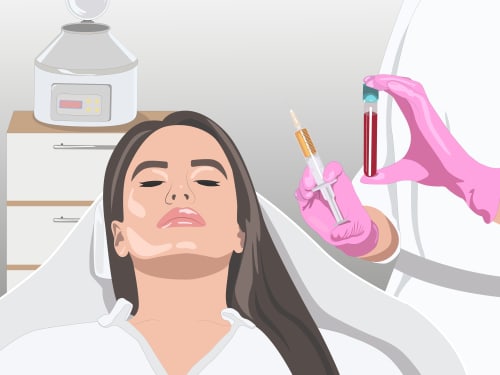
Glucocorticoid-driven suppression of DP GAS6 output extends telogen by preventing the signal that activates the hair germ and initiates anagen. For clients whose telogen effluvium is driven by ongoing stress – whether psychological, physiological, or the metabolic stress of sustained rapid weight loss on a GLP-1 medication – extended telogen is the mechanism. The follicles are structurally intact; the stem cells are present; but the initiation signal is chronically suppressed. iPRF treatment timed to the recovery phase, once the glucocorticoid suppression is easing, delivers the DP-support signals that help restore normal GAS6 and Wnt output, shortening extended telogen and supporting the transition back to anagen.
The two-to-four month duration of normal telogen also sets a realistic minimum timeframe for treatment outcomes in both AGA and TE contexts. Even if treatment successfully initiates anagen in follicles currently in telogen, those follicles need to progress through early anagen subphases before new hair becomes visible above the surface, meaning that measurable density improvement will typically be visible three to six months after treatment begins, not weeks. Framing this timeline accurately for clients, and explaining why the biology produces it, is considerably more reassuring than simply stating “results take time.”
Also Known As
- telogen phase
Pathway Connections
Regulators & Triggers
- this Inhibited by Dermal Papilla Evidence: DP secretes BMP inhibitors and FGF7/FGF10 in late telogen to break quiescence and initiate anagen; DP functionally inhibits persistence of telogen. Quist & Quist (2021) Signal Transduct Target Ther 6:358. doi:10.1038/s41392-021-00772-4
- this Affected by Hair follicle Evidence: Follicle enters relative quiescence during telogen; bulge HFSCs held quiescent by BMP signalling until DP signals re-initiate anagen. Plikus et al. (2012) J Invest Dermatol 132(8):1969. doi:10.1038/jid.2012.38
Learn More
This topic is discussed in 2 articles: