
Dermal Papilla
The Dermal Papilla is the “Board of Directors” for the hair follicle. This small cluster of specialized mesenchymal cells dictates whether a hair grows ( Anagen), rests ( Telogen), or miniaturises. Its authority is maintained by signalling, and its commands are issued via paracrine signals like FGF-7 (for growth), VEGF (for blood supply), and GAS6 (for stem cell activation). Clinically, we view the DP as the primary target for iPRF and Polynucleotides: if we can restore the DP’s signalling output, we can override the suppressive “veto” of DHT and Cortisol to restore hair density.
The dermal papilla (DP) is a compact, condensed cluster of specialised mesenchymal cells – dermal papilla cells (DPCs) – located at the base of the hair follicle bulb, enclosed within the follicular epithelium at the deepest point of the follicle. Although small – typically containing only a few hundred cells – the dermal papilla is the primary organising centre for the hair follicle, directing its development, cyclical activity, and response to systemic signals. DPCs are classified as specialised fibroblasts: they share the mesenchymal lineage and many molecular characteristics of dermal fibroblasts, but have acquired a distinct transcriptional programme that gives them their unique hair-inductive capacity. [2] That capacity is not intrinsic but actively maintained by Wnt signalling, without which DPCs lose their hair-inductive identity and revert toward a generic fibroblast phenotype.
Wnt Signalling: Maintaining Dermal Papilla Identity
Wnt/β-catenin signalling is the master regulator of dermal papilla function, operating at two levels simultaneously. First, it maintains the hair-inductive identity of DPCs themselves: when Wnt signalling is active in DPCs, they retain the transcriptional programme that enables them to direct follicle growth and cycle transitions. When Wnt signalling is lost in DPCs, their ability to initiate and sustain anagen is severely impaired. [2] Second, Wnt ligands secreted by follicular epithelial cells signal back to DPCs and to hair follicle stem cells (HFSCs) in the bulge region, activating β-catenin nuclear translocation, interaction with transcription factors LEF-1 and TCF3, and expression of differentiation genes required for anagen entry. [3] Loss of epithelial Wnt ligand secretion arrests the hair cycle in telogen – follicles cannot initiate anagen – confirming that this reciprocal signalling between follicular epithelium and dermal papilla is essential, not supplementary, to cycle progression. [4]
FGF-7: The Dermal Papilla’s Paracrine Output Signal
One of the most important signalling outputs of dermal papilla cells is FGF-7 – keratinocyte growth factor (KGF) – a growth factor secreted by DPCs that acts parabolically on follicular epithelial cells and HFSCs to prolong anagen, protect follicular keratinocytes from apoptosis, and sustain the growth phase. [1] FGF-7 expression in DPCs is strongly phase-dependent: it peaks during anagen, declines markedly through late anagen VI, and becomes nearly undetectable during catagen and telogen. This makes FGF-7 output both a product of active DPC signalling and a reliable marker of dermal papilla activity. When DPCs are functioning well, FGF-7 output is high; when they are suppressed by glucocorticoids, androgens, or nutrient deprivation, FGF-7 output falls with the anagen phase it was sustaining.
What makes FGF-7 particularly interesting is that DPC-derived FGF-7 also operates in an autocrine loop, sustaining DPC stemness and proliferation alongside its paracrine effects on follicular epithelium. [1] DPCs are not simply relay stations passing signals from the vasculature to the follicle but active participants in their own maintenance. Preserving or restoring DPC health therefore has compounding benefits: better-functioning DPCs produce more FGF-7, which sustains follicular epithelium and HFSCs, which in turn support the Wnt signalling environment that keeps DPCs in their hair-inductive state.
The Dermal Papilla Signalling Portfolio
| Signal | Target | Action | Clinical Relevance |
|---|---|---|---|
| FGF-7 (KGF) | Keratinocytes/HFSCs | Prolongs Anagen; prevents cell death. | The primary marker of an active, healthy DP. |
| VEGF | Capillary Plexus | Drives perifollicular angiogenesis. | Ensures nutrient delivery during active growth. |
| GAS6 | Bulge Stem Cells | Triggers Anagen entry (the “On” switch). | Specifically suppressed by Cortisol/Stress. |
| IGF-1 | Hair Shaft | Differentiation and shaft thickness. | Direct target for iPRF supplementation. |
VEGF and Perifollicular Angiogenesis
Dermal papilla cells express VEGF during the anagen phase, driving perifollicular angiogenesis – the formation and maintenance of the capillary network that supplies the follicle with nutrients, oxygen, and systemic signals including hormones and growth factors during active hair growth. [3] The perifollicular capillary plexus is not a static structure, it expands during anagen and regresses during catagen and telogen. DPC-driven VEGF secretion is what maintains its expansion and sustains the vascular supply that the actively growing follicle requires. In follicles where DPC function is compromised by androgens, glucocorticoids, or advancing miniaturisation, VEGF secretion falls, the perifollicular vasculature contracts, and the follicle receives progressively less vascular support as it also receives less paracrine signalling. These two deficits reinforce each other.
IGF-1 and Dermal Papilla Cell Activation
Insulin-like growth factor 1 (IGF-1) is expressed in dermal papilla cells and plays a supporting role in hair follicle growth and shaft differentiation. [7] Clinical evidence from Laron syndrome (a condition of IGF-1 deficiency) confirmed that IGF-1 deficiency impairs human hair growth and differentiation, establishing IGF-1’s role in follicle function beyond animal model data. DPCs can both produce and respond to IGF-1, making it part of the local growth factor signalling environment that iPRF augments directly through platelet-derived IGF-1 delivery to the dermal papilla zone.
Androgenetic Alopecia: DHT and Dermal Papilla Miniaturisation
In androgenetic alopecia (AGA), the dermal papilla is the primary site of pathological androgen action. Dihydrotestosterone (DHT) – the more potent androgen converted from testosterone by 5α-reductase – binds to androgen receptors expressed on DPCs, triggering a paracrine signalling cascade that progressively miniaturises the hair follicle. [6] DHT-driven DPC signalling shifts the follicle from a terminal growth pattern toward a progressively shorter anagen cycle, thinner hair shaft, and smaller follicle, with elevated 5α-reductase activity and increased androgen receptor–DHT complexes confirmed in AGA patients but not in non-AGA controls. [6]
The paradox that androgens drive follicle growth in body hair but miniaturisation in scalp hair is one of the unresolved biological curiosities of AGA. The site-specific sensitivity difference is not yet fully explained by the evidence. What is established is that in genetically predisposed scalp follicles, DHT-bound DPCs downregulate growth-promoting signals including Wnt/β-catenin activity and FGF-7 output, whilst upregulating growth-inhibitory TGF-β2 – a paracrine shift that progressively shortens the anagen phase and reduces the follicle’s structural capacity. [8]
Stress and Glucocorticoid Suppression
The connection between chronic stress, glucocorticoid elevation, and hair follicle quiescence operates specifically through the dermal papilla, not through direct action on hair follicle stem cells. Chronic glucocorticoid elevation ( corticosterone in rodent models, cortisol in humans) suppresses GAS6 secretion by DPCs. GAS6 is the paracrine signal required to activate HFSCs in the bulge region and initiate anagen. Without it, HFSCs remain quiescent and follicles stay in extended telogen, regardless of other signalling inputs. When GAS6 was restored directly in glucocorticoid-treated mice, hair regrowth resumed, confirming the causal pathway and identifying GAS6 as the specific DPC output that stress suppresses. nature.com
This mechanism sits alongside the DHT pathway as the second major route through which DPC signalling output is pathologically suppressed. In stress-driven shedding and weight-loss-induced telogen effluvium, as in AGA, the dermal papilla is the cell population whose function needs restoring.
Dual Modes of DP Suppression
| Feature | Androgenetic Alopecia (AGA) | Stress/Weight Loss (TE) |
|---|---|---|
| Primary Inhibitor | Dihydrotestosterone (DHT) | Cortisol (Humans) / Corticosterone |
| DP Mechanism | Downregulates Wnt; Upregulates TGF-2. | Suppresses GAS6 secretion. |
| Follicle Result | Gradual miniaturization (thinning). | Synchronized Telogen entry (shedding). |
| Treatment Focus | Prolonging Anagen via iPRF/Minoxidil. | Environment restoration & Nutrients. |
Clinical Application
Almost every professional hair treatment at Creative Touch – iPRF, PRP, and the lifestyle and nutritional advice that accompanies them – targets the dermal papilla either directly or by improving the environment it operates in. Understanding what DPCs are doing, and what is suppressing them, makes the treatment logic considerably more specific than “growth factors support hair growth.”
Why iPRF is particularly well-matched to dermal papilla biology
iPRF’s growth factor payload maps directly onto the dermal papilla’s signalling requirements in a way that makes the biological rationale unusually precise. The key components:
- PDGF activates DPCs through receptor tyrosine kinase signalling, promoting proliferation and survival, acting directly on a cell population that expresses PDGF receptors
- IGF-1 supports DPC activation and hair shaft differentiation through the same IGF-1 receptor pathway DPCs express endogenously [7]
- FGF-2 promotes DPC proliferation and the perifollicular angiogenesis that sustains the follicle’s vascular supply during anagen
- VEGF amplifies the perifollicular capillary network that DPCs are already driving through their own VEGF secretion during anagen, supplementing a mechanism the papilla uses itself [3]
The fibrin matrix of iPRF – as distinct from standard PRP – extends the dwell time of these growth factors at the treatment site through sustained release rather than a single bolus. For dermal papilla cells, which respond to sustained moderate growth factor signalling differently from brief high-concentration pulses, this sustained delivery profile is more compatible with the biological timescale of follicle cycle transitions.
AGA and telogen effluvium: different DPC problems, same treatment logic
For androgenetic alopecia, the primary DPC problem is DHT-driven suppression of Wnt/β-catenin and FGF-7 output alongside upregulation of TGF-β2. iPRF addresses this through PDGF and IGF-1 stimulation of DPC proliferation and Wnt/β-catenin upregulation, working to restore the growth-promoting signalling balance that DHT has shifted. [3] This doesn’t block DHT – that remains finasteride’s and minoxidil’s domain – but it supports DPC function in the presence of the androgen signal, prolonging anagen and improving hair density in follicles that haven’t yet fully miniaturised.
For stress- or weight-loss-driven telogen effluvium, the primary DPC problem is glucocorticoid-suppressed GAS6 output. iPRF delivers PDGF and IGF-1 through receptor pathways independent of the GAS6 route, activating DPCs and stimulating Wnt/β-catenin signalling through parallel pathways even when GAS6 is suppressed. [5] The most productive timing for treatment in this context is once the glucocorticoid stress signal has begun to ease, when the underlying cause is resolving and the DPC population needs support to restore normal anagen-promoting output rather than fighting against an ongoing suppressive signal.
Setting realistic expectations
The dermal papilla mechanism is also what sets the timeline expectations that matter for client communication. DPC responses to growth factor stimulation operate on the biological timescale of follicle cycle transitions. Anagen induction takes weeks, not days, and new terminal hair emerging from a previously quiescent or miniaturised follicle takes months to become visible at the scalp surface. The treatment is working at the level of the dermal papilla from the first session; the clinical evidence of that work only becomes visible when the follicle cycle has had time to respond. For AGA clients in particular, this framing – “we’re working on the signalling environment that your follicles grow from” – is more accurate and more useful than any promise about visible density timelines.
iPRF Growth Factors vs. DP Needs
| iPRF Component | Dermal Papilla Response |
|---|---|
| PDGF | Stimulates DPC proliferation and survival. |
| IGF-1 | Directly triggers hair shaft maturation. |
| FGF-2 | Works with VEGF to build the vascular “fuel line.” |
| Fibrin Matrix | Ensures sustained signalling (crucial for cycle transitions). |
References
Huang HC, Hsieh WJ, Percec I, et al. (2026). Fibroblast Growth Factor-7 and Hair Biology: Bridging Basic Science and Therapeutic Applications. Curr Issues Mol Biol, 48(1) . doi.org/10.3390/cimb48010102
Kishimoto J, Burgeson RE, Morgan BA (2000). Wnt signaling maintains the hair-inducing activity of the dermal papilla. Genes Dev, 14(10), 1181-5 . PMC316619
Mehta A, Motavaf M, Raza D, et al. (2025). Revolutionary Approaches to Hair Regrowth: Follicle Neogenesis, Wnt/ß-Catenin Signaling, and Emerging Therapies. Cells, 14(11) . doi.org/10.3390/cells14110779
Myung PS, Takeo M, Ito M, et al. (2013). Epithelial Wnt ligand secretion is required for adult hair follicle growth and regeneration. J Invest Dermatol, 133(1), 31-41 . doi.org/10.1038/jid.2012.230
Natarelli N, Gahoonia N, Sivamani RK (2023). Integrative and Mechanistic Approach to the Hair Growth Cycle and Hair Loss. J Clin Med, 12(3) . doi.org/10.3390/jcm12030893
Sekhavat H, Bar Yehuda S, Asotra S (2025). Using the Mechanisms of Action Involved in the Pathogenesis of Androgenetic Alopecia to Treat Hair Loss. Int J Mol Sci, 26(21) . doi.org/10.3390/ijms262110712
Trüeb RM (2018). Further Clinical Evidence for the Effect of IGF-1 on Hair Growth and Alopecia. Skin Appendage Disord, 4(2), 90-95 . doi.org/10.1159/000479333
Zhang Y, Huang J, Fu D, et al. (2021). Transcriptome Analysis Reveals an Inhibitory Effect of Dihydrotestosterone-Treated 2D- and 3D-Cultured Dermal Papilla Cells on Hair Follicle Growth. Front Cell Dev Biol, 9, 724310 . doi.org/10.3389/fcell.2021.724310
Also Known As
- dermal papillae
- follicular papilla
Anatomical Relationships
Structural Connections
- Stimulates Anagen Evidence: FGF-7 secreted by DPCs that acts… to prolong anagen, protect follicular keratinocytes from apoptosis, and sustain the growth phase
- Stimulates Catagen Evidence: Under DHT influence, DP upregulates TGF-beta2 driving early Wnt withdrawal and promoting catagen entry. Entity text explicitly describes this. Cho et al. (2013) PMC4133876
- Stimulates Hair follicle Evidence: The dermal papilla… is the primary organising centre for the hair follicle, directing its development, cyclical activity, and response to systemic signals
- Inhibits Telogen Evidence: DP secretes BMP inhibitors and FGF7/FGF10 in late telogen to break quiescence and initiate anagen; DP functionally inhibits persistence of telogen. Quist & Quist (2021) Signal Transduct Target Ther 6:358. doi:10.1038/s41392-021-00772-4
- Produces Fibroblast growth factor Evidence: DP beta-catenin activity regulates FGF signalling to keratinocytes; FGF7/FGF10 are key DP-produced anagen-initiation signals. Enshell-Seijffers et al. (2010) Dev Cell 18(4):633. PMC2893731
- Produces Growth arrest-specific protein 6 Evidence: GAS6 is the paracrine signal required to activate HFSCs in the bulge region and initiate anagen
- Produces Insulin-like growth factor 1 Evidence: IGF-1 is expressed in dermal papilla cells… DPCs can both produce and respond to IGF-1, making it part of the local growth factor signalling environment
- Produces Vascular endothelial growth factor Evidence: Dermal papilla cells express VEGF during the anagen phase, driving perifollicular angiogenesis – the formation and maintenance of the capillary network
- Affects Androgenetic alopecia Evidence: DP androgen receptor expression is central to AGA; DP cells from balding scalp secrete less IGF-1 and have shortened anagen clocks. Trueb et al. (2017) Skin Appendage Disord 4(1):76. PMC5939720
- Affects Catagen Evidence: DP signalling governs the molecular clock determining catagen timing; both TGF-beta2-driven catagen and GAS6-mediated anagen maintenance are DP-directed. Entity text describes DP as the governing clock.
- Requires Fibroblast growth factor Evidence: FGF signalling is required for DP cell maintenance of inductive capacity; FGF7/FGF10 activate Wnt in early anagen via DP. Gessese et al. (2024) Scientific World J 2024:5259055. doi:10.1155/tswj/5259055
- Requires Insulin-like growth factor 1 Evidence: DP cells from balding scalp secrete less IGF-1; IGF-1 required for DP trichogenic activity. Hsieh et al. (2025) Curr Issues Mol Biol 47(9):773. doi:10.3390/cimb47090773
- Androgenetic alopecia Evidence: In androgenetic alopecia (AGA), the dermal papilla is the primary site of pathological androgen action
- Telogen effluvium Evidence: In stress-driven shedding and weight-loss-induced telogen effluvium… the dermal papilla is the cell population whose function needs restoring
- Cold Atmospheric Plasma therapy Evidence: Entity text: CAP upregulates Wnt pathway components directly in human DPCs (beta-catenin, p-GSK3beta, cyclin D1); blocking Wnt removes hair growth effects. PMC8352944
- Microneedling Evidence: Microneedling channels facilitate growth factor delivery to DP level (1-1.5mm depth); entity text describes this as mechanistic rationale. Kim et al. (2016) Ann Dermatol 28(5):586. doi:10.5021/ad.2016.28.5.586
- Platelet-rich plasma therapy Evidence: PRP delivers PDGF, IGF-1, and VEGF to the DP environment; entity text confirms iPRF targets DP and HFSC niche at 1-1.5mm depth.
- Polynucleotides Evidence: We view the DP as the primary target for iPRF and Polynucleotides: if we can restore the DP signalling output, we can override the suppressive veto of DHT and Cortisol.
Referenced in Conditions & Treatments
- this Stimulated by Injectable Platelet-Rich Fibrin Evidence: PDGF activates DPCs through receptor tyrosine kinase signalling, promoting proliferation and survival, acting directly on a cell population that expresses PDGF receptors
- this Stimulated by Insulin-like growth factor 1 Evidence: DPCs can both produce and respond to IGF-1… iPRF augments directly through platelet-derived IGF-1 delivery to the dermal papilla zone
- this Stimulated by Microneedling Evidence: Scalp microneedling stimulates perifollicular growth factor release (VEGF, PDGF, TGF-β) in dermal papilla microenvironment, augmenting follicular anagen signalling. PMC11890238.
- this Stimulated by Platelet-derived growth factor Evidence: PDGFR-beta expressed on dermal papilla cells; PDGF activates DPCs through same receptor pathway as pericyte recruitment. Entity text; Chojnacki 2017 PMC5665619; Shin 2024 BBRC 10.1016/j.bbrc.2024.151110.
- this Stimulated by Platelet-Rich Plasma Evidence: iPRF, PRP… targets the dermal papilla either directly or by improving the environment it operates in
- this Inhibited by Corticosterone Evidence: Corticosterone in rodent models suppresses GAS6 secretion by DPCs
- this Inhibited by Cortisol Evidence: Cortisol in humans suppresses GAS6 secretion by DPCs. GAS6 is the paracrine signal required to activate HFSCs and initiate anagen
- this Inhibited by Dihydrotestosterone Evidence: DHT converted from testosterone by 5α-reductase binds to androgen receptors on DPCs, triggering cascade that miniaturises follicle.
- this Affected by Polynucleotides Evidence: PN stimulates dermal papilla fibroblast activity; paracrine signalling from PN-activated fibroblasts initiates and sustains follicular regeneration and hair follicle neogenesis. PMID 39951159.
- this Required by Tissue regeneration Evidence: Dermal papilla cells are the mesenchymal niche cells required for hair follicle stem cell activation and regeneration; proliferation, migration, and trichogenic inductivity of DPCs are required for follicular regeneration (doi:10.1016/j.yexcr.2021.112888; PMC3706200).
- this Part of Dermis Evidence: Dermal papilla is a specialised mesenchymal condensation residing within the dermis at the hair follicle base. StatPearls Anat Hair Follicle 2019
- this Part of Hair follicle PMID: 29261946 Evidence: Bulb encases the dermal papilla at the base of the inferior segment
Learn More
This topic is discussed in 1 article:
-
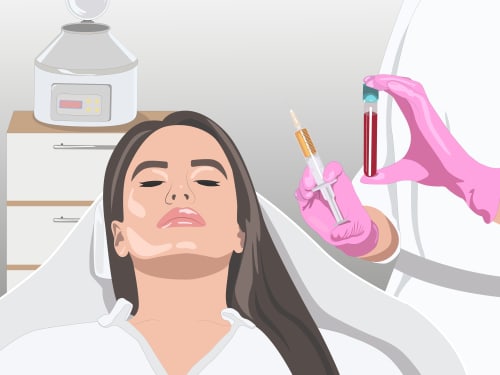
Discover the detailed science behind PRP and iPRF therapies. Learn how growth factors, platelets, and cellular mechanisms drive hair restoration and skin rejuvenation at a molecular level.