
Glycine
Glycine is the simplest amino acid in the human body – its side chain is a single hydrogen atom, making it the smallest of the twenty standard amino acids. This structural simplicity is not incidental to its skin relevance: glycine is the only amino acid small enough to fit at the centre of collagen’s triple-helix without distorting the structure, and it occupies every third position along the entire length of the collagen chain. In type I collagen, which makes up approximately 70% of the dermis’s dry weight, glycine accounts for roughly one third of all amino acid residues. No other amino acid comes close to this level of structural dependency in a single protein. [1]
Conditionally Essential: The Glycine Supply Problem
Glycine is classified as non-essential – the body can synthesise it, primarily from serine via the enzyme glycine hydroxymethyltransferase. The practical reality, however, is more nuanced. A metabolic flux analysis published in the Journal of Biosciences (Meléndez-Hevia et al., 2009) calculated all known sources and consumption pathways for glycine in a 70 kg adult. The findings were striking: endogenous synthesis yields approximately 3g of glycine per day, and dietary intake in a typical diet provides a further 1.5–3g – giving a combined availability of roughly 4.5–6g daily. The estimated demand for all metabolic uses, including collagen synthesis, falls short of this supply by approximately 10g per day. [2]
The constraint lies in the biochemistry of the synthesis pathway itself. Glycine hydroxymethyltransferase produces glycine from serine in a 1:1 stoichiometric ratio with the generation of one-carbon units for mitochondrial metabolism – and it is this one-carbon unit requirement that limits how much glycine the reaction can produce. The pathway cannot simply be upregulated to meet increased demand without disrupting the mitochondrial one-carbon metabolism it is coupled to. The result is that glycine sits in a permanent state of relative scarcity in the average adult – technically synthesisable, but not synthesisable in quantities that fully meet collagen’s requirements. This is why glycine is increasingly described as conditionally essential in the context of active tissue repair and collagen maintenance, even though it does not meet the formal definition of an essential amino acid. [2]
Clinical Pearl The glycine supply shortfall has a direct implication for collagen synthesis rate. Under conditions of glycine scarcity, fibroblasts attempting procollagen synthesis experience delays at the glycine incorporation step – the chain stalls, waiting on glycine availability, whilst prolyl and lysyl hydroxylation (which do not require glycine) continues. This mismatch between chain elongation and hydroxylation pacing is thought to contribute to structurally impaired collagen output independently of vitamin C status.
Glycine in Wound Healing and Tissue Repair
Beyond its structural role in steady-state collagen, glycine has a demonstrable effect on active tissue repair. In vitro research using articular chondrocytes found that increasing glycine concentration to 1.5mM produced approximately 225% collagen synthesis increase over control at 15 days – a larger relative increase than the same concentration increase produced for proline or lysine, confirming that glycine is the rate-limiting substrate in active collagen production when its availability is low. [1]
In vivo wound healing research in mice found that both oral and topical glycine administration significantly increased collagen synthesis, fibroblast accumulation, new blood vessel formation, and epithelial tissue repair compared to controls – with the effect dose-dependent and measurable from day 9. Histological sections confirmed increased hydroxyproline levels in wound tissue, the standard marker for new collagen deposition. [3]
Glycine in the Context of Protein Restriction
The glycine supply problem becomes more clinically relevant when total protein intake is reduced – whether through caloric restriction, appetite suppression from GLP-1 receptor agonist medications, or restrictive dietary patterns. Under these conditions, both endogenous synthesis (which depends on serine from dietary protein) and dietary glycine intake decline simultaneously, creating the greatest gap between glycine availability and collagen demand precisely when the body may be managing tissue changes from weight loss. Clients experiencing skin quality changes or hair shedding during periods of rapid weight loss may have a glycine availability component to their presentation, alongside the more commonly discussed growth factor and hormonal mechanisms.
References
de Paz-Lugo P, Lupiáñez JA, Meléndez-Hevia E (2018). High glycine concentration increases collagen synthesis by articular chondrocytes in vitro: acute glycine deficiency could be an important cause of osteoarthritis. Amino Acids, 50(10), 1357-1365 . doi.org/10.1007/s00726-018-2611-x
Meléndez-Hevia E, De Paz-Lugo P, Cornish-Bowden A, et al. (2009). A weak link in metabolism: the metabolic capacity for glycine biosynthesis does not satisfy the need for collagen synthesis. J Biosci, 34(6), 853-72 . doi.org/10.1007/s12038-009-0100-9
Pazoki Zahra, Eidi Maryam, Ebrahimikia Yasaman, et al. (2024). Synergistic effects of royal jelly and glycine on the healing of skin wounds in mice. Gulhane Medical Journal, 66(1), 1-7 . doi.org/10.4274/gulhane.galenos.2023.46338
Molecular Structure
- Formula
- C₂H₅NO₂
- Weight
- 75.07 g/mol
- IUPAC
- 2-azaniumylacetate
Computational Identifiers
| InChI | InChI=1S/C2H5NO2/c3-1-2(4)5/h1,3H2,(H,4,5) | |
|---|---|---|
| InChIKey | DHMQDGOQFOQNFH-UHFFFAOYSA-N | |
| Canonical SMILES | C(C(=O)[O-])[NH3+] | |
Data sourced from: PubChem (NCBI) ↗ | ||
Biological Relationships
Influenced By
- this Required by Fibroblast Evidence: Glycine is most abundant amino acid in collagen (every third Gly-X-Y residue); fibroblast collagen synthesis is directly limited by glycine availability. Standard collagen biochemistry.
Learn More
This topic is discussed in 2 articles:
-
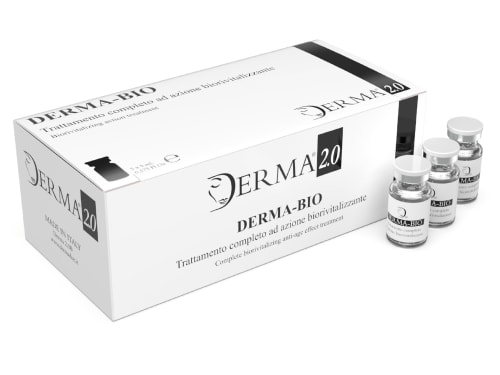
Discover the science behind Derma Bio, a mesotherapy product designed to combat signs of aging and achieve a brighter, smoother, and more youthful appearance.
-
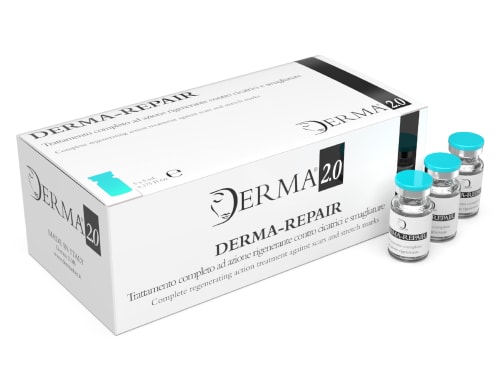
Scars and stretch marks can be a source of self-consciousness. Derma-Repair, a medical-grade mesotherapy solution, offers a powerful approach to address these concerns.