
Proline
Proline is a non-essential amino acid with an unusual structural feature: its side chain loops back to bond with the nitrogen of its own amino group, forming a rigid five-membered ring. This ring structure restricts the conformational flexibility of the peptide backbone wherever proline appears – a property that, in most proteins, would be an inconvenience. In collagen, it is a functional necessity. The repeating Gly-X-Y sequence of the collagen chain places proline predominantly in the X position, where its rigidity contributes directly to the characteristic triple-helix architecture that gives collagen fibrils their tensile strength and resistance to deformation. Together with glycine, proline and its derivative hydroxyproline account for more than half of all amino acid residues in collagen – making it, alongside glycine, the primary structural substrate the body requires to build and maintain the dermal matrix. [1]
How the Body Makes Proline
Proline is classified as non-essential because the body can synthesise it through two established routes. The primary pathway runs from glutamine → glutamate → pyrroline-5-carboxylate (P5C) → proline, mediated by the enzymes ALDH18A1 (P5C synthase) and PYCR (pyrroline-5-carboxylate reductase). A secondary route proceeds from arginine → ornithine → P5C → proline, via the same terminal steps. The rate-limiting enzyme in the primary pathway, ALDH18A1, is also the limiting step for overall collagen synthesis – meaning that the capacity of the body to synthesise proline sets a ceiling on how fast collagen can be produced, independent of the availability of other substrates. [3]
Human skin fibroblast research has confirmed this substrate dependency directly. When fibroblasts were cultured in glutamine-deprived medium – removing the primary precursor for endogenous proline synthesis – collagen expression declined measurably. Adding exogenous proline to glutamine-deprived medium partly restored collagen synthesis, whilst glutamine alone increased collagen expression to 172–243% of control values over 24–48 hours. The practical implication is that proline availability in fibroblasts is contingent on glutamine supply: when glutamine is low (as it is during severe caloric restriction or physiological stress), proline biosynthesis is compromised, and fibroblast collagen output declines even if dietary protein intake appears nominally adequate. [5]
Proline and the Collagen Recycling Loop
Proline is also recovered from degraded collagen through the action of prolidase – an enzyme that cleaves proline from collagen-derived dipeptides, returning it to the free amino acid pool for re-use in new collagen synthesis. This recycling loop means that collagen turnover itself contributes to the proline supply, creating a degree of self-sufficiency in tissues with active remodelling. Prolidase activity is measurably reduced in chronically inflamed skin and in certain metabolic states, meaning that the recycling contribution can fail independently of synthesis capacity. When both the biosynthesis pathway and the recycling loop are compromised simultaneously, the proline deficit available to fibroblasts can be more significant than either pathway failing alone. [2]
Hydroxyproline: The Modified Form That Stabilises the Helix
Proline incorporated into the collagen chain is not the final form. After the procollagen chain has been assembled – but before the triple helix forms – the enzyme prolyl 4-hydroxylase (P4H) converts most proline residues in the Y position to 4-hydroxyproline (Hyp). This post-translational modification is obligatory for collagen stability at body temperature. Unhydroxylated collagen chains can assemble a triple helix at reduced temperatures but denature and unfold at normal physiological temperature (37°C). The hydroxyl group added to the proline ring stabilises the helix through a stereoelectronic effect – it constrains the ring geometry into a specific conformation (C-γ exo puckering) that reinforces the hydrogen bonding network holding the three chains together. [4]
Prolyl 4-hydroxylase requires four cofactors to function: oxygen, iron (Fe²⁺), alpha-ketoglutarate (α-KG), and vitamin C (ascorbate). Vitamin C is the most clinically significant of these because it serves as an electron donor that regenerates Fe²⁺ after each hydroxylation reaction – without it, the enzyme undergoes oxidative inactivation after a single catalytic cycle and cannot continue. The consequence is not simply slower hydroxylation: unhydroxylated procollagen chains are structurally unstable, recognised as misfolded by the cell’s quality control systems, and degraded intracellularly before secretion. Vitamin C deficiency therefore results in collagen that is synthesised at the mRNA level but never reaches the extracellular matrix as functional protein. [1]
Clinical Pearl Hydroxyproline has a second clinical relevance beyond its structural role: it is the standard biochemical marker for collagen content in biopsy tissue. Because hydroxyproline is almost uniquely found in collagen (it constitutes approximately 13% of collagen’s amino acid composition and is absent from most other proteins), measuring tissue hydroxyproline concentration is the established method for quantifying collagen density in research settings. When clinical studies report “collagen density increased at 12 weeks,” they are typically measuring hydroxyproline by colorimetric assay.
The Hydroxylation Cofactor Competition
There is a less commonly discussed dimension to the hydroxylation reaction that adds clinical depth. Prolyl 4-hydroxylase’s requirement for alpha-ketoglutarate (α-KG) as a co-substrate places it in direct competition with the family of α-KG-dependent demethylase enzymes responsible for DNA and histone demethylation – the enzymes that regulate epigenetic gene expression. Under conditions where α-KG is limited (metabolic stress, nutritional restriction), the hydroxylation of proline in collagen and the demethylation of epigenetic marks compete for the same co-substrate pool. This competition is thought to be one of the mechanisms through which metabolic state influences tissue repair gene expression – a pathway that connects nutritional status to collagen production at a level beyond simple substrate availability. [3]
References
Albaugh VL, Mukherjee K, Barbul A (2017). Proline Precursors and Collagen Synthesis: Biochemical Challenges of Nutrient Supplementation and Wound Healing. J Nutr, 147(11), 2011-2017 . doi.org/10.3945/jn.117.256404
Karna E, Szoka L, Huynh TYL, et al. (2020). Proline-dependent regulation of collagen metabolism. Cell Mol Life Sci, 77(10), 1911-1918 . doi.org/10.1007/s00018-019-03363-3
Phang JM (2022). The regulatory mechanisms of proline and hydroxyproline metabolism: Recent advances in perspective. Front Oncol, 12, 1118675 . doi.org/10.3389/fonc.2022.1118675
Rappu P, Salo AM, Myllyharju J, et al. (2019). Role of prolyl hydroxylation in the molecular interactions of collagens. Essays Biochem, 63(3), 325-335 . doi.org/10.1042/ebc20180053
Szoka L, Karna E, Hlebowicz-Sarat K, et al. (2017). Exogenous proline stimulates type I collagen and HIF-1α expression and the process is attenuated by glutamine in human skin fibroblasts. Mol Cell Biochem, 435(1-2), 197-206 . doi.org/10.1007/s11010-017-3069-y
Molecular Structure
- Formula
- C₅H₉NO₂
- Weight
- 115.13 g/mol
- IUPAC
- (2S)-pyrrolidin-1-ium-2-carboxylate
Computational Identifiers
| InChI | InChI=1S/C5H9NO2/c7-5(8)4-2-1-3-6-4/h4,6H,1-3H2,(H,7,8)/t4-/m0/s1 | |
|---|---|---|
| InChIKey | ONIBWKKTOPOVIA-BYPYZUCNSA-N | |
| Canonical SMILES | C1CC([NH2+]C1)C(=O)[O-] | |
| Isomeric SMILES | C1C[C@H]([NH2+]C1)C(=O)[O-] | |
Data sourced from: PubChem (NCBI) ↗ | ||
Biological Relationships
Influenced By
- this Required by Fibroblast Evidence: Proline is obligate substrate for collagen synthesis; fibroblasts hydroxylate proline to hydroxyproline via prolyl hydroxylase in procollagen maturation. Standard collagen biochemistry.
Learn More
This topic is discussed in 2 articles:
-
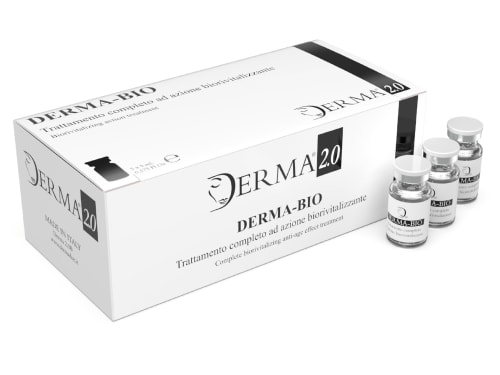
Discover the science behind Derma Bio, a mesotherapy product designed to combat signs of aging and achieve a brighter, smoother, and more youthful appearance.
-
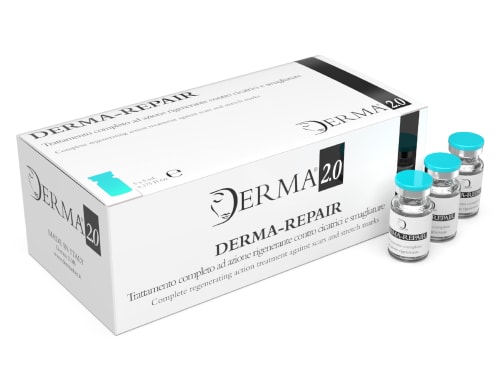
Scars and stretch marks can be a source of self-consciousness. Derma-Repair, a medical-grade mesotherapy solution, offers a powerful approach to address these concerns.