
Vitamin C
Vitamin C’s role in skin is not antioxidant support with a collagen benefit on the side. It operates at two mechanistically distinct and equally critical points: procollagen hydroxylation, where it is the obligate enzymatic cofactor without which collagen molecules are degraded before secretion rather than built defectively; and MMP-1 suppression, where it interrupts the ROS-driven AP-1 transcription cascade that UV exposure activates within hours. Post-menopausal skin faces a particular vulnerability at the hydroxylation step; fibroblasts increase procollagen gene expression as a compensatory response, but hydroxylation efficiency declines, making vitamin C supplementation unusually relevant at exactly this life stage.
Vitamin C – biologically active as L-ascorbic acid – is one of very few topical actives whose skin mechanism is both genuinely well-established and genuinely dual in nature. Its two functions in the dermis are not variations on the same theme; they operate through entirely separate biochemical pathways, at different stages of collagen biology, addressing different failure modes. Understanding them as distinct, rather than as aspects of a single “vitamin C supports collagen” story, is what allows their clinical application to be precise.
The Hydroxylation Cofactor: Where Deficiency Is Absolute
Procollagen synthesis begins when fibroblasts transcribe procollagen mRNA in response to TGF-β signalling. The resulting polypeptide chains must then be hydroxylated before they can form the stable triple helix that defines functional collagen. This hydroxylation is performed by two enzymes: prolyl 4-hydroxylase, which modifies proline residues to produce hydroxyproline; and lysyl hydroxylase, which modifies lysine residues to produce hydroxylysine. [5]
Both enzymes require vitamin C as an obligate cofactor. The mechanism is not catalytic in the conventional sense; vitamin C does not emerge from the reaction unchanged and available for reuse. Instead, the iron centre within these hydroxylase enzymes is oxidised during each hydroxylation cycle, and vitamin C is required to reduce it back to its active Fe²⁺ form, enabling the next reaction to proceed. Without continuous vitamin C availability, the enzyme cycles stall. [6]
The consequence of hydroxylation failure is absolute rather than proportional. Under-hydroxylated procollagen chains cannot form the characteristic triple helix of functional collagen; instead, they are recognised as malformed and degraded intracellularly before secretion. Vitamin C depletion does not produce less collagen – it produces procollagen that is destroyed before it can contribute to the extracellular matrix. This is why scurvy’s most dramatic tissue manifestations involve collagen structures: wounds that fail to heal, blood vessel walls that rupture, skin that deteriorates. The biochemistry is categorical: there is no collagen synthesis pathway that does not pass through vitamin C. [5]
Hydroxylated proline (hydroxyproline) is also critical for mature cross-linking: hydroxylysine residues form the covalent intermolecular cross-links that stabilise collagen fibrils in the ECM, and their absence (even in secreted collagen) produces structurally weaker fibrils with reduced tensile strength. The effect of vitamin C at the hydroxylation step therefore compounds from the intracellular stage through to the final mechanical properties of the deposited matrix. Skin with adequate vitamin C produces more collagen and better collagen simultaneously.
Beyond hydroxylation, vitamin C also directly stimulates procollagen gene expression through a hydroxylation-independent pathway. The mechanism involves malondialdehyde (a lipid peroxidation byproduct) and Sp1/Sp3 transcription factor binding to the COL1A1 promoter region, which ascorbic acid modulates. [3] This means vitamin C acts at three distinct points in collagen synthesis: cofactor for hydroxylation, signal for triple helix stability, and independent stimulus for procollagen transcription.
MMP-1 Suppression: The Degradation Side
UV exposure initiates collagen degradation through a well-characterised cascade. UV radiation generates reactive oxygen species (ROS) in keratinocytes and fibroblasts; ROS activate the MAPK signalling pathway, which phosphorylates and activates the AP-1 transcription factor complex (c- Fos and c-Jun). AP-1 drives transcription of MMP-1 – the primary collagenase responsible for cleaving Type I and Type III collagen at a single site within the triple helix – alongside MMP-3 and MMP-9. A single minimal erythema dose of UV can suppress procollagen synthesis for 24 hours whilst simultaneously driving this MMP upregulation. [6]
Vitamin C interrupts this cascade by scavenging the ROS that initiate AP-1 activation. By reducing the oxidative signal before it reaches the MAPK pathway, it prevents the downstream AP-1 activation rather than blocking MMP transcription directly. [1] The distinction matters: vitamin C is not an MMP inhibitor in the pharmacological sense. It is an upstream antioxidant whose action prevents the activation of the transcription factor that drives MMP-1 expression. Its photoprotective effect is therefore pre-emptive rather than curative: it reduces the oxidative trigger before the degradation cascade is set in motion, rather than halting the cascade once activated.
This is why vitamin C applied before UV exposure is more effective than applied after. The 2018 UVB reconstituted epidermis study confirmed that pre-treatment with ascorbic acid significantly reduced DNA double-strand breaks, apoptosis, and TNF-α release, while post-treatment produced more limited protection. [2] Morning application, when UV exposure is ahead of the skin, is not a convention but a mechanistic requirement. Antioxidant protection operates forward in time, not retrospectively.
The Perimenopause Hydroxylation Bottleneck
The menopausal procollagen paradox established in the Collagen entity and the Oestrogen Decline entity is directly relevant here. Post-menopausal fibroblasts increase procollagen gene expression as a compensatory response to oestrogen withdrawal; the transcription step is working harder, not less. But hydroxylation efficiency declines alongside this compensatory increase, and procollagen hydroxylation is vitamin C-dependent. The result: more procollagen mRNA being produced, but less functional collagen being deposited, because the hydroxylation step – the critical quality-control gate – is the bottleneck.
For post-menopausal clients, vitamin C is therefore not simply one of many useful actives. It is addressing the specific rate-limiting step that is preventing compensatory fibroblast activity from translating into deposited collagen. Treatments that increase procollagen synthesis signal (iPRF, RF microneedling, skin boosters) will produce more complete results when the hydroxylation pathway they depend on is adequately supplied. [6]
Formulation: Why Delivery Matters as Much as Concentration
L-ascorbic acid is the most biologically active form that does not require conversion to function, unlike derivatives such as ascorbyl glucoside or sodium ascorbyl phosphate. Its clinical challenge is stability: it oxidises readily in the presence of oxygen, light, and neutral-to-alkaline pH, with aqueous solutions degrading measurably within days of opening. [1]
Effective topical L-ascorbic acid requires pH below 3.5 to achieve meaningful skin penetration – studies show 20-fold greater efficacy for L-ascorbic acid at pH 3.2 compared with equivalent concentrations of ascorbyl phosphate or ascorbyl palmitate at neutral pH. [4] The stratum corneum’s hydrophobic character limits penetration further; the acidic formulation environment partially overcomes this by maintaining ascorbic acid in its protonated, more lipid-compatible form.
Oral vitamin C does not reliably deliver adequate concentrations to skin. Gut absorption is saturable. Once plasma vitamin C reaches approximately 70–80 µmol/L, additional oral doses are largely excreted rather than retained. Plasma saturation does not guarantee skin saturation: skin vitamin C concentrations in photoaged areas are typically significantly lower than in adjacent unexposed skin, and oral supplementation does not reliably equalise this difference. [6] Topical and oral vitamin C are not interchangeable; they deliver to different biological compartments.
Clinical Application
The question vitamin C creates clinically is a sequencing and pairing question more than a standalone treatment question. Because its two mechanisms – hydroxylation support and MMP-1 suppression – operate at different points in collagen biology, vitamin C is nearly always working in support of something else: either amplifying what a synthesis-stimulating treatment has initiated, or protecting against the UV-driven degradation that would otherwise erode it.
The clinical case for vitamin C is strongest when the client’s skin is actively being asked to produce collagen: post-treatment, during a professional treatment course, or in the specific post-menopausal context where the hydroxylation bottleneck has become the rate-limiting step. In these settings, vitamin C is not background maintenance; it is an active participant in the outcome.
Phase 1: Establish Topical Vitamin C Before Beginning a Treatment Course
For any client undertaking a collagen-focused treatment series – iPRF, RF microneedling, skin boosters – establishing a stable, effective topical vitamin C routine two to four weeks before the first session ensures that the hydroxylation pathway is adequately supplied when the treatment-driven procollagen synthesis increase begins. A fibroblast receiving a strong TGF-β signal from iPRF but operating with depleted vitamin C will produce under-hydroxylated procollagen; transcription upregulated, maturation bottlenecked.
The formulation choice matters here. A well-formulated L-ascorbic acid at 10–20% and pH below 3.5, applied in the morning before UV exposure, addresses both the hydroxylation supply and the ROS-driven MMP-1 suppression simultaneously. Vitamin C derivatives with better stability profiles (ascorbyl glucoside, sodium ascorbyl phosphate) may be better tolerated on reactive or post-procedure skin but require conversion and deliver lower effective concentrations. For clients whose primary goal is maximum collagen synthesis support, L-ascorbic acid at a clinically relevant pH and concentration is the more complete option when tolerated.
Pairing Logic
Vitamin C + retinoids: The combination addresses the full collagen synthesis and maintenance pathway. Retinoids upregulate TGF-β signalling and suppress MMP expression through RAR/RXR nuclear receptor pathways – the growth factor regulation side. Vitamin C supplies the hydroxylation cofactor and the upstream MMP-1 suppression through the ROS-scavenging route. These are non-overlapping mechanisms operating on the same outcome, which is why this pairing produces consistently better results than either alone for photoaged or perimenopausal skin.
Vitamin C + niacinamide: Together they address complementary dermal goals – vitamin C through procollagen hydroxylation and MMP-1 ROS suppression; niacinamide through fibroblast NAD⁺ replenishment, SASP reduction, and ceramide synthesis. As established in the Niacinamide entity, the yellowing concern sometimes raised about this pairing relates to high-temperature formulation conditions, not skin application. Applied as separate morning and evening products where preference dictates, they cover more of the collagen maintenance picture than any single active.
Vitamin C + iPRF or RF microneedling: Professional treatments dramatically increase the procollagen synthesis signal; vitamin C ensures the hydroxylation pathway can process the output. The clinical logic is the same as ensuring a factory has raw materials before increasing production – the synthesis stimulus and the processing capacity need to be aligned. Post-treatment, vitamin C also attenuates the ROS burden from the controlled inflammatory response, potentially moderating the MMP activity that follows injury-induced inflammation.
The closing aim across all of this is to ensure that what professional treatments are stimulating the skin to produce is actually reaching the extracellular matrix as functional, mature collagen rather than being lost at the hydroxylation step, degraded by MMP-1 before it matures, or diluted by inadequate cofactor availability. Vitamin C is not glamorous in that role. It is doing essential biochemical groundwork that makes every collagen-focused investment perform closer to its potential.
References
Al-Niaimi F, Chiang NYZ (2017). Topical Vitamin C and the Skin: Mechanisms of Action and Clinical Applications. J Clin Aesthet Dermatol, 10(7), 14-17 . PMC5605218
Kawashima S, Funakoshi T, Sato Y, et al. (2018). Protective effect of pre- and post-vitamin C treatments on UVB-irradiation-induced skin damage. Sci Rep, 8(1), 16199 . doi.org/10.1038/s41598-018-34530-4
Kishimoto Y, Saito N, Kurita K, et al. (2013). Ascorbic acid enhances the expression of type 1 and type 4 collagen and SVCT2 in cultured human skin fibroblasts. Biochem Biophys Res Commun, 430(2), 579-84 . doi.org/10.1016/j.bbrc.2012.11.110
Oliveira Andressa Costa de, Morocho-Jacome Ana Lucia, Martins Tércio Elyan Azevedo, et al. (2025). New discoveries of the action of L-ascorbic acid (vitamin C) – Enhanced efficacy in formulations. Brazilian Journal of Pharmaceutical Sciences, 61 . doi.org/10.1590/s2175-97902025e24274
Pinnell SR (1985). Regulation of collagen biosynthesis by ascorbic acid: a review. Yale J Biol Med, 58(6), 553-9 . PMC2589959
Pullar JM, Carr AC, Vissers MCM (2017). The Roles of Vitamin C in Skin Health. Nutrients, 9(8) . doi.org/10.3390/nu9080866
Molecular Structure
- Formula
- C₆H₈O₆
- Weight
- 176.12 g/mol
- IUPAC
- (2R)-2-[(1S)-1,2-dihydroxyethyl]-3,4-dihydroxy-2H-furan-5-one
Computational Identifiers
| InChI | InChI=1S/C6H8O6/c7-1-2(8)5-3(9)4(10)6(11)12-5/h2,5,7-10H,1H2/t2-,5+/m0/s1 | |
|---|---|---|
| InChIKey | CIWBSHSKHKDKBQ-JLAZNSOCSA-N | |
| Canonical SMILES | C(C(C1C(=C(C(=O)O1)O)O)O)O | |
| Isomeric SMILES | C([C@@H]([C@@H]1C(=C(C(=O)O1)O)O)O)O | |
Data sourced from: PubChem (NCBI) ↗ | ||
Also Known As
- Ascorbic acid
- L-ascorbic acid
Biological Relationships
Biological Interactions
- Stimulates Collagen Evidence: Ascorbic acid directly stimulates procollagen mRNA expression in fibroblasts AND serves as obligate cofactor for hydroxylation; acts at two independent synthesis pathway points (PMC5579659; entity full_description).
- Inhibits Matrix metalloproteinase Evidence: Vitamin C suppresses UV-induced MMP-1 expression via reduction of ROS-driven AP-1 transcription factor activation. Entity text; PMC3057026.
Influenced By
- this Required by Collagen Evidence: Vitamin C is obligate cofactor for prolyl 4-hydroxylase and lysyl hydroxylase; depletion produces structurally defective procollagen degraded intracellularly before secretion (PMC9495646).
- this Required by Fibroblast Evidence: Fibroblasts that are synthesising procollagen in a vitamin C-depleted environment produce structurally defective collagen that is degraded intracellularly before secretion
Learn More
This topic is discussed in 8 articles:
-

Getting adequate rest is the best investment you can make into your beauty. We take a look at some of your body’s natural skin rejuvenation processes that occur during sleep.
-

Water‑soluble vitamin that stabilises collagen by supporting hydroxylation enzymes and suppresses UV‑driven ROS that trigger MMP‑1 collagen breakdown.
-

Your 40s bring real hormonal shifts that affect your skin. Discover what’s actually happening and the skincare, nutrition, and treatments that support your skin through perimenopause.
-
Searching for the best lip balm for dry lips? Discover which ingredients have real evidence behind them, why your lips get dry, and how to choose products that actually work.
-

Discover how to restore and maintain your skin’s natural defences. From the causes of skin barrier damage to advanced treatments. Achieve healthy, radiant skin with our expert advice.
-
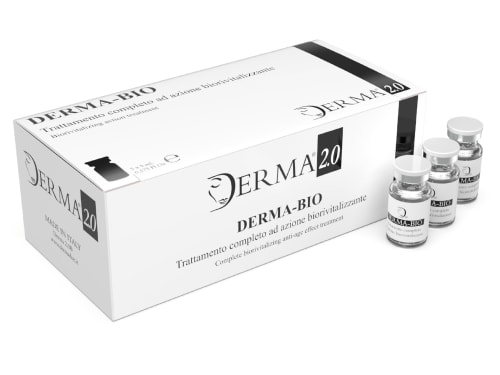
Discover the science behind Derma Bio, a mesotherapy product designed to combat signs of aging and achieve a brighter, smoother, and more youthful appearance.
-

-
Water‑soluble vitamin that stabilises collagen by supporting hydroxylation enzymes and suppresses UV‑driven ROS that trigger MMP‑1 collagen breakdown.