
What Is Acne?
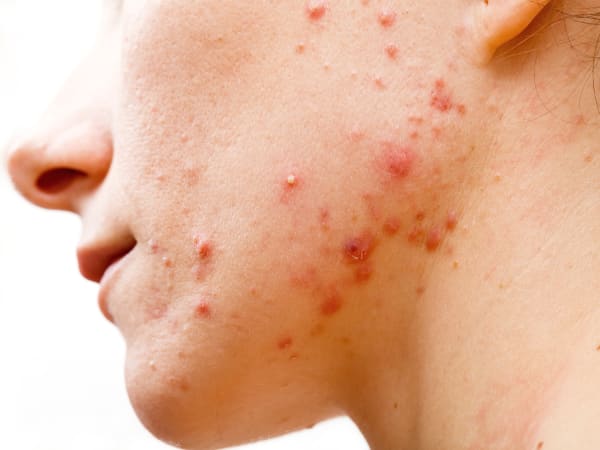
Acne is a disorder resulting from the action of hormones on the skin’s oil glands ( sebaceous glands), which leads to plugged pores and outbreaks of lesions commonly called pimples or zits. Acne lesions usually occur on the face, neck, back, chest, and shoulders. Acne vulgaris is the eighth most common global disease[1], affecting between 40 to 50 million individuals in the United States.[2] In the UK, over 70 000 patients are referred for specialist care each year [3]. Acne is not a serious health threat, although severe acne can lead to disfiguring, permanent scarring, which can upset people affected by the disorder.
Who Gets Acne?
People of all races and ages get acne. It is most common in adolescents and young adults. Nearly 85% of people between the ages of 12 and 24 develop the disorder. [4] For most people, acne tends to go away by the time they reach their thirties; however, some people in their forties and fifties continue to have this skin problem.
How Does Acne Develop?
Doctors describe acne as a disease of the pilosebaceous units (PSU). PSUs are found over most of the body and consist of a sebaceous gland connected to a canal, called a follicle, that contains fine hair (see “Fig 1: Normal Pilosebaceous Unit” diagram, below). These units are most numerous on the face, upper back, and chest. The sebaceous glands make an oily substance called sebum that normally empties onto the skin surface through the opening of the follicle, commonly called a pore. Cells called keratinocytes line the follicle.
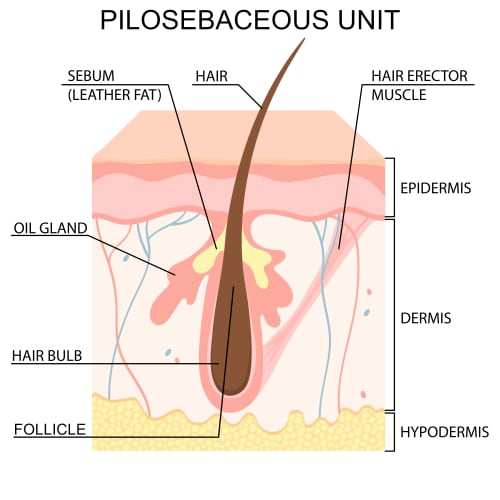
The hair, sebum, and keratinocytes that fill the narrow follicle may produce a plug - an early sign of acne. The plug prevents sebum from reaching the skin surface through a pore. The mixture of oil and cells allows bacteria Propionibacterium acnes (P. acnes) that normally live on the skin to grow in the plugged follicles. These bacteria produce chemicals and enzymes and attract white blood cells that cause inflammation. (Inflammation is a characteristic reaction of tissues to disease or injury, marked by four signs: swelling, redness, heat, and pain.) When the wall of the plugged follicle breaks down, it spills everything into the nearby skin—sebum, shed skin cells, and bacteria—leading to lesions or pimples.
Types of Lesions
People with acne frequently have a variety of lesions, some of which are shown in the diagrams below. The basic acne lesion is called the comedo (KOM-uh-doh). This is simply an enlarged and plugged hair follicle. If the plugged follicle stays beneath the skin, it is called a closed comedo and produces a white bump called a whitehead. A comedo that reaches the skin’s surface and opens up (an open comedo) is called a blackhead because it looks black on the skin’s surface. This black discolouration is not due to dirt. Both whiteheads and blackheads may stay in the skin for a long time.

Other troublesome acne lesions can develop, including the following:
- Papules: inflamed lesions that usually appear as small, pink bumps on the skin and can be tender to the touch
- Pustules (pimples): - papules topped by pus-filled lesions that may be red at the base
- Nodules: large, painful, solid lesions that are lodged deep within the skin
- Cysts: deep, painful, pus-filled lesions that can cause scarring
What Causes Acne?
The exact cause of acne is unknown, but doctors believe it results from several related factors. One important factor is an increase in hormones called androgens (male sex hormones). These increase in both boys and girls during puberty and cause the sebaceous glands to enlarge and make more sebum. Hormonal changes related to pregnancy or starting or stopping birth control pills can also cause acne.
Another factor is heredity or genetics. Researchers believe that the tendency to develop acne can be inherited from parents. For example, studies have shown that many school-age boys with acne have a family history of the disorder. Certain drugs, including androgens and lithium, are known to cause acne. Greasy cosmetics may alter the cells of the follicles and make them stick together, producing a plug.
Factors That Can Make Acne Worse
Factors that can cause an acne flare include:
- Changing hormone levels in adolescent girls and adult women 2 to 7 days before their menstrual period starts
- Friction caused by leaning on or rubbing the skin
- Pressure from bike helmets, backpacks, or tight collars
- Environmental irritants, such as pollution and high humidity
- Squeezing or picking at blemishes
- Hard scrubbing of the skin.
Myths About the Causes of Acne
There are many myths about what causes acne.
Chocolate and greasy foods are often blamed, but foods seem to have little effect on the development and course of acne in most people.
Another common myth is that dirty skin causes acne. However, blackheads and other acne lesions are not caused by dirt.
Finally, stress does not cause acne.
How Is Acne Treated?
Acne is often treated by dermatologists (doctors specialising in skin problems). These doctors treat all kinds of acne, particularly severe cases. Doctors who are general or family practitioners, paediatricians, or internists may treat patients with milder cases of acne. Additionally, aestheticians who are trained skincare specialists can offer treatments suitable for mild acne, particularly comedones (blackheads and whiteheads).
Treatment aims to heal existing lesions, stop new lesions from forming, prevent scarring, and minimise the psychological stress and embarrassment caused by this disease. Drug treatment is aimed at reducing several problems that play a part in causing acne: abnormal clumping of cells in the follicles, increased oil production, bacteria, and inflammation. Depending on the extent of the person’s acne, the doctor will recommend one of several over-the-counter (OTC) medicines or prescription medicines that are topical (applied to the skin) or systemic (taken by mouth). The doctor may suggest using more than one topical medicine or combining oral and topical types.
In recent years, dermatologists and aestheticians have begun incorporating laser treatments into acne management plans alongside traditional medications. One such option is the Nd:YAG laser. This laser targets specific areas with a beam of light, reaching deep into the skin to reduce inflammation and sebum production contributing to acne breakouts. Lasers may be particularly beneficial for patients with acne that is persistent or prone to scarring.
Treatment for Blackheads, Whiteheads, and Mild Inflammatory Acne
Doctors usually recommend an OTC or prescription topical medication for people with mild signs of acne. Topical medicine can be applied directly to the acne lesions or the skin over the affected area.
Benzoyl peroxide, resorcinol, salicylic acid, and sulphur are the most common topical OTC medicines for acne treatment. Each works a little differently. Benzoyl peroxide is best at killing P. acnes and may reduce oil production. Resorcinol, salicylic acid, and sulphur help break down blackheads and whiteheads. Salicylic acid also helps cut down the shedding of cells lining the follicles of the oil glands. Topical OTC medications are available in many forms, such as gel, lotion, cream, soap, or pad.
In some patients, OTC acne medicines may cause side effects such as skin irritation, burning, or redness. Some people find that the side effects lessen or stop with continued use. Severe or prolonged side effects should be reported to the doctor.
When used regularly, OTC topical medicines are somewhat effective in treating acne. Patients must consider that for their skin to look and feel better, it can take 8 weeks or more.
While topical medications have been a mainstay for treating milder forms of acne, some patients may also benefit from laser skin condition treatments. These procedures utilise concentrated beams of light to target specific areas of the skin.
Nd:YAG lasers can be helpful for individuals with persistent blackheads, whiteheads, or mild inflammatory acne. The laser’s energy reduces inflammation and sebum production within the targeted area, hindering the development of new breakouts. Laser treatment may additionally benefit post-inflammatory hyperpigmentation (dark spots) left behind by acne lesions.
Laser treatments are not a one-size-fits-all solution and may not be necessary for everyone. Factors like skin type and acne severity will influence if this treatment is appropriate. Consulting with a qualified dermatologist or aesthetician can help determine if laser treatment could benefit your acne management plan.
Keep in mind that similar to topical medications, laser treatment often requires multiple sessions to achieve optimal results.
Treatment for Moderate to Severe Inflammatory Acne
Patients with moderate to severe inflammatory acne may be treated with prescription topical or oral medicines, alone or in combination.
Prescription Topical Medicines
Several prescription topical medicines are used for treating acne, including antibiotics, benzoyl peroxide, tretinoin, adapalene, and azelaic acid. Antibiotics and azelaic acid help stop or slow the growth of bacteria and reduce inflammation. Tretinoin, a type of drug called a retinoid that contains an altered form of vitamin A, is an effective topical medicine for stopping the development of new comedones. It works by unplugging existing comedones, allowing topical treatments such as antibiotics to enter the follicles. The doctor may also prescribe retinoids or retinoid-like drugs, such as tazarotene or adapalene, that help decrease comedo formation.
Like OTC topical medicines, prescription topical medicines come as creams, lotions, solutions, or gels. The doctor will consider the patient’s skin type when prescribing a product. Creams and lotions provide moisture and can benefit people with sensitive skin. Gels and solutions are generally alcohol based and tend to dry the skin. Therefore, patients with very oily skin or those who live in hot, humid climates may prefer them. The doctor will tell the patient how to apply the medicine and how often to use it.
Some people develop side effects from using prescription topical medicines. Initially, the skin may look worse before improving. Common side effects include stinging, burning, redness, peeling, scaling, or skin discolouration. With some medicines, like retinoids, these side effects usually decrease or go away after the medicine is used for a while. Patients should report prolonged or severe side effects to their doctor. Between 4 and 8 weeks will likely pass before patients see their skin improve.
Prescription Oral Medicines
The doctor often prescribes oral antibiotics (taken by mouth) for patients with moderate to severe acne. Oral antibiotics are thought to help control acne by curbing the growth of bacteria and reducing inflammation. Prescription oral and topical medicines may be combined. For example, benzoyl peroxide may be combined with clindamycin, erythromycin, or sulphur.
Other common antibiotics used for acne treatment are tetracycline, minocycline, and doxycycline. Some people have side effects when taking these antibiotics, such as an increased tendency to sunburn, upset stomach, dizziness or light-headedness, and changes in skin colour. Tetracycline is not given to pregnant women, nor children under 8 years of age because it might discolour developing teeth. Tetracycline and minocycline may also decrease the effectiveness of birth control pills. Therefore, a backup or another form of birth control may be needed. Prolonged treatment with oral antibiotics may be necessary to achieve the desired results.
Treatment for Severe Nodular or Cystic Acne
A dermatologist should treat people with nodules or cysts. For patients with severe inflammatory acne that does not improve with medicines such as those described above, a doctor may prescribe isotretinoin (Accutane), a retinoid. Isotretinoin is an oral drug, usually taken once or twice daily with food for 15 to 20 weeks. It markedly reduces the size of the oil glands so that much less oil is produced. As a result, the growth of bacteria is decreased.
Advantages of Isotretinoin (Accutane)
Isotretinoin is a very effective medicine that can help prevent scarring. After 15 to 20 weeks of treatment with isotretinoin, acne completely or almost completely goes away in up to 90 per cent of patients. In those patients where acne recurs after a course of isotretinoin, the doctor may institute another course of the same treatment or prescribe other medicines.
Disadvantages of Isotretinoin (Accutane)
Isotretinoin can cause birth defects in the developing foetus of a pregnant woman. It is important that women of childbearing age are not pregnant and do not get pregnant while taking this medicine. Women must use two separate effective forms of birth control at the same time for 1 month before treatment begins, during the entire course of treatment, and for 1 full month after stopping the drug. They should ask their doctor when it is safe to get pregnant after they have stopped taking Accutane.
Some people with acne become depressed by the changes in the appearance of their skin. Changes in mental health may be intensified during treatment or soon after completing a course of medicines like Accutane. A doctor should be consulted if a person feels unusually sad or has other symptoms of depression, such as loss of appetite or trouble concentrating.
Other possible side effects include dry eyes, mouth, lips, nose, or skin; itching; nosebleeds; muscle aches; sensitivity to the sun; and, sometimes, poor night vision. More serious side effects include changes in the blood, such as an increase in triglycerides and cholesterol, or a change in liver function. Side effects usually go away after the medicine is stopped.
Treatments for Hormonally Influenced Acne in Women
Clues that help the doctor determine whether acne in an adult woman is due to an excess of androgen hormones are hirsutism (excessive growth of hair in unusual places), premenstrual acne flares, irregular menstrual cycles, and elevated blood levels of certain androgens. The doctor may prescribe one of several drugs to treat women with this type of acne. Low-dose oestrogen birth control pills help suppress the androgen produced by the ovaries. Low-dose corticosteroid drugs, such as prednisone or dexamethasone, may suppress the androgen produced by the adrenal glands. Finally, the doctor may prescribe an antiandrogen drug, such as spironolactone (Aldactone). This medicine reduces excessive oil production. Side effects of antiandrogen drugs may include irregular menstruation, tender breasts, headache, and fatigue.
Other Treatments for Acne
Doctors may use other types of procedures in addition to drug therapy to treat patients with acne. For example, the doctor may remove the patient’s comedones during office visits. Sometimes the doctor will inject cortisone directly into lesions to help reduce the size and pain of inflamed cysts and nodules.
Early treatment is the best way to prevent acne scars. Once scarring has occurred, the doctor may suggest a medical or surgical procedure to help reduce the scars. A superficial laser may be used to treat irregular scars. An Nd:YAG laser allows energy to go deeper into the skin and tighten the underlying tissue and plump out depressed scars. Dermabrasion (or microdermabrasion), which is a form of “sanding down” scars, is sometimes combined with subsurface laser treatment. Another treatment option for deep scars caused by cystic acne is the fat transfer from one part of the body to the face.
How Should People With Acne Care for Their Skin?
Clean Skin Gently
Most doctors recommend that people with acne gently wash their skin with a mild cleanser, once in the morning and once in the evening and after heavy exercise. Some people with acne may try to stop outbreaks and oil production by scrubbing their skin and using strong detergent soaps and rough scrub pads. However, scrubbing will not improve acne; in fact, it can make the problem worse. Patients should ask their doctor or another health professional for advice on the best type of cleanser to use. Patients should wash their face from under the jaw to the hairline. It is important that patients thoroughly rinse their skin after washing it. Astringents are not recommended unless the skin is very oily, and then they should be used only on oily spots. Doctors also recommend that patients regularly shampoo their hair. Those with oily hair may want to shampoo it every day.
Avoid Frequent Handling of the Skin
People who squeeze, pinch, or pick their blemishes risk developing scars or dark blotches. People should avoid rubbing and touching their skin lesions.
Shave Carefully
Men who shave and who have acne can test both electric and safety razors to see which is more comfortable. Men who use a safety razor should use a sharp blade and soften their beard thoroughly with soap and water before applying shaving cream. Nicking blemishes can be avoided by shaving lightly and only when necessary.
Avoid a Sunburn or Suntan
Many of the medicines used to treat acne can make a person more prone to sunburn. A sunburn that reddens the skin or suntan that darkens the skin may make blemishes less visible and make the skin feel drier. However, these benefits are only temporary, and there are known risks of excessive sun exposure, such as more rapid skin aging and a risk of developing skin cancer.
Choose Cosmetics Carefully
People being treated for acne often need to change some of the cosmetics they use. All cosmetics, such as foundation, blush, eye shadow, and moisturisers, should be oil free. Patients may find it difficult to apply foundation evenly during the first few weeks of treatment because the skin may be red or scaly, particularly with the use of topical tretinoin or benzoyl peroxide. Oily hair products may eventually spread over the forehead, causing closed comedones. Products that are labelled as noncomedogenic (do not promote the formation of closed pores) should be used; in some people, however, even these products may cause acne.
What Research Is Being Done on Acne?
Medical researchers are working on new drugs to treat acne, particularly topical antibiotics to replace some of those in current use. As with many other types of bacterial infections, doctors are finding that, over time, the bacteria that are associated with acne are becoming resistant to treatment with certain antibiotics. Research is also being conducted by industry on the potential side effects of isotretinoin and the long-term use of medicines used for treating acne.
Scientists are working on other means of treating acne. For example, researchers are studying the biology of sebaceous cells and testing a laser in laboratory animals to treat acne by disrupting sebaceous glands. Scientists are also studying the treatment of androgenic disorders, including acne, in men by inhibiting an enzyme that changes testosterone to a more potent androgen.
References
- Vos, T., Flaxman, A. D., Naghavi, M., Lozano, R., Michaud, C., Ezzati, M., Shibuya, K., Salomon, J. A., Abdalla, S., Aboyans, V., Abraham, J., Ackerman, I., Aggarwal, R., Ahn, S. Y., Ali, M. K., Almazroa, M. A., Alvarado, M., Anderson, H. R., Anderson, L. M., … Murray, C. J. (2012). Years lived with disability (YLDs) for 1160 sequelae of 289 diseases and injuries 1990–2010: a systematic analysis for the Global Burden of Disease Study 2010. Lancet, 380(9859), 2163–2196. doi.org/10.1016/s0140-6736(12)61729-2
- White, G. M. (1998). Recent findings in the epidemiologic evidence, classification, and subtypes of acne vulgaris. Journal of the American Academy of Dermatology, 39(2), S34–S37. doi.org/10.1016/s0190-9622(98)70442-6
- Xu J, Mavranezouli I, Kuznetsov L, Stephen Murphy M, Healy E. Management of acne vulgaris: summary of NICE guidance BMJ 2021; 374 :n1800 doi:10.1136/bmj.n1800
- Bhate, K., & Williams, H. (2013). Epidemiology of acne vulgaris. British Journal of Dermatology/British Journal of Dermatology, Supplement, 168(3), 474–485. doi.org/10.1111/bjd.12149