
Cholesterol
Cholesterol is the second most abundant lipid class in the stratum corneum, comprising approximately 25% of the intercellular lipid matrix. In skin biology, its role is entirely distinct from its cardiovascular associations: dietary cholesterol and serum cholesterol have no meaningful bearing on stratum corneum cholesterol, which the epidermis synthesises locally and independently. In the barrier context, cholesterol is not a risk factor but a structural necessity – and one that is often underrepresented in barrier repair formulations precisely because its connection to cardiovascular health creates a hesitancy in both formulators and consumers that the skin science does not support.
The Minimum Threshold for Lamellar Phase Formation
The most revealing finding about cholesterol’s structural role comes from model membrane research using physiological lipid mixtures. Studies examining ceramide, cholesterol, and fatty acid combinations at varying ratios established that a minimum molar fraction of approximately 0.2 cholesterol, within a ceramide:cholesterol:fatty acid mixture, is required for the formation of both the long periodicity phase and the short periodicity phase simultaneously. Below this threshold, neither lamellar phase organises correctly; the lipid mixture fails to assemble the architecture that barrier function depends on, regardless of how much ceramide is present. pubs.rsc
This finding has direct implications for how barrier repair formulations should be evaluated. A ceramide-rich product without a cholesterol component is not addressing the full structural requirement. Both lamellar phases require cholesterol as a co-constituent, not as an optional addition. Cholesterol fills the spaces between ceramide tails in the crystalline packing arrangement, preventing over-crystallisation that would make the matrix brittle whilst maintaining the tight lateral packing that controls permeability. It is the component that balances rigidity with resilience across both phases. pubs.rsc
The Cholesterol Sulfate Cycle
Cholesterol in the stratum corneum exists in dynamic equilibrium with its sulphated form, cholesterol sulfate, and understanding this cycle clarifies why the ratio between the two matters as much as the total cholesterol content.
During keratinocyte differentiation, cholesterol sulfate rises from approximately 1% to 5% of total lipid content as cells move from the basal to the granular layer. In the outer stratum corneum, enzymatic desulphation by steroid sulphatase converts it back to cholesterol, and the ratio declines toward 1% again. This cycle is not incidental: cholesterol sulfate acts as a serine protease inhibitor, slowing the enzymatic breakdown of corneodesmosomes that holds corneocytes together. The gradient controls the pace of desquamation precisely. At high CholS:Chol ratios, proteases are inhibited and the outer layers are retained; as desulphation proceeds, protease activity increases and corneocytes shed normally. [1]
When this cycle is disrupted, barrier function deteriorates in characteristic ways. X-linked ichthyosis, caused by steroid sulphatase deficiency, is the clinical disease model: cholesterol sulfate accumulates, protease inhibition becomes excessive, desquamation fails, and the stratum corneum thickens into the scaling pattern the condition is named for. The CholS:Chol ratio also increases the permeability of the lipid phase when it is elevated, confirming that desulphation is not merely cosmetically relevant but essential for barrier tightness. This cycle connects directly to the acid mantle: the acidic pH of the stratum corneum restricts the serine kallikrein proteases that the cholesterol sulfate gradient also controls, meaning healthy free fatty acid production and normal cholesterol sulphate metabolism work in parallel to regulate corneocyte shedding. [2]
HMG-CoA Reductase: The Barrier’s First Repair Signal
After barrier disruption, whether from tape stripping, solvent exposure, or harsh cleansing, the epidermis upregulates HMG- CoA reductase, the rate-limiting enzyme of cholesterol synthesis, within hours. Studies using acetone treatment and tape stripping confirmed measurably increased epidermal HMG-CoA reductase mRNA and enzyme activity after acute barrier disruption, and showed that artificially correcting barrier function prevented this increase entirely. Cholesterol synthesis is, in this sense, the barrier’s fastest-responding repair signal – preceding the slower ceramide synthesis ramp-up and reflecting the critical minimum threshold requirement for lamellar phase reassembly. [4]
The implication for chronic stress is therefore more specific than simply ” cortisol impairs barrier function.” Cortisol suppresses HMG-CoA reductase activity directly, inhibiting the very enzyme the barrier activates first when it detects disruption. Under prolonged stress, the barrier loses its fastest repair signal at the same time as it loses its ceramide synthesis capacity, which explains why stress-related skin deterioration can feel disproportionate to any single external cause, and why recovery takes weeks rather than days once the stress resolves.
Topical cholesterol in a barrier repair formulation provides the structural substrate immediately, bypassing the synthesis step entirely. Research on ternary mixtures combining Ceramide NP with cholesterol and free fatty acids in physiological ratios produced TEWL reductions of 38–45% within 14 days of twice-daily application, confirming the additive benefit of cholesterol within the full lipid triad versus ceramide alone. onerchem
At Creative Touch, we look for cholesterol as a named component in barrier repair formulations, rather than accepting multi-ceramide claims without it. The lamellar phase formation research makes clear that ceramide without cholesterol is structurally incomplete. For clients navigating perimenopause, chronic stress, or post-inflammatory barrier recovery, the cholesterol dimension of their homecare routine is as relevant as the ceramide dimension, even if it appears less prominently on product labels.
Clinical Application
Cholesterol synthesis in the stratum corneum has a property that distinguishes it from ceramide and free fatty acid production: it is the barrier’s fastest emergency repair signal. HMG-CoA reductase activity rises measurably within hours of barrier disruption, preceding the slower ceramide synthesis upregulation, and is the first step the epidermis takes when it detects a lamellar phase failure. This makes cholesterol synthesis uniquely sensitive to both the treatments that trigger controlled repair cascades and the stressors that specifically suppress it, particularly cortisol, which targets HMG-CoA reductase directly. [3]
Niacinamide: Quantifiable Across All Three Lipid Classes
Niacinamide is the most evidenced topical active for supporting cholesterol synthesis specifically, with primary keratinocyte research demonstrating a 1.5-fold increase in cholesterol synthesis alongside a 2.3-fold increase in free fatty acid synthesis and greater than fourfold increase in ceramide synthesis. It is worth being transparent about those proportions: niacinamide’s cholesterol synthesis effect is real but more modest than its ceramide effect, reflecting the fact that ceramide is the lipid class with the most direct dependence on the SPT pathway that niacinamide upregulates most powerfully. The cholesterol benefit is best understood as part of niacinamide’s broader role as a lipid synthesis activator across all three barrier classes simultaneously, rather than as a cholesterol-targeted treatment in its own right. [6]
For daily barrier maintenance, particularly in clients with perimenopausal or stress-driven lipid decline, niacinamide’s ability to address the full triad in a single active makes it a practical first layer of synthesis support.
Controlled Injury Treatments: Activating the HMG-CoA Repair Signal
Because HMG-CoA reductase is the first enzyme the skin upregulates after barrier disruption, any professional treatment that creates controlled micro-injury engages this response. Thulium fractional laser and microneedling both trigger the rapid HMG-CoA reductase activation alongside the broader lipid metabolism gene upregulation documented in clinical responders. This means that cholesterol synthesis is stimulated as part of the same repair cascade that increases ceramide production and lamellar body secretion. [5]
This is particularly relevant for clients whose cholesterol synthesis is chronically suppressed through cortisol elevation. The HMG-CoA reductase upregulation triggered by controlled injury overrides the cortisol suppression signal at the treatment site. Professional treatment thus does something that topical support alone cannot: it re-activates the cholesterol synthesis pathway that stress has been progressively downregulating, through a mechanism that does not require cortisol to be reduced first.
Resolving Cortisol Suppression: The Stress-Specific Angle
Whilst CAP and polynucleotides support barrier lipid recovery broadly through cytokine modulation, their relevance to cholesterol specifically is amplified by the cortisol-HMG-CoA relationship. In clients where chronic psychological stress is a primary driver of barrier decline, the cortisol suppression of cholesterol synthesis runs in parallel with IL-4/ IL-13 suppression of ceramide and elongase activity. Treatments that modulate NF-κB signalling, including RF microneedling, which has demonstrated measurable NF-κB and IL-8 reduction in treated tissue, work alongside the HMG-CoA re-activation produced by the needling mechanism. The anti-inflammatory and synthesis-stimulating effects reinforce rather than duplicate each other. [7]
For stress-driven barrier compromise specifically, we discuss with clients both the professional treatment options and the practical reality that cortisol suppression of HMG-CoA reductase will continue between treatment sessions if the stress state persists. This is not a reason to defer treatment, but it is a reason to frame realistic recovery timelines honestly and to explore whether lifestyle-level cortisol management forms part of the broader plan.
Topical Cholesterol: The Most Direct Supply Route
The professional treatment discussion should not obscure the simplest intervention: topical cholesterol in a physiological ternary formulation supplies the structural substrate directly, bypassing synthesis entirely. For clients in acute barrier failure, whether from over-exfoliation, post-procedural sensitivity, or sudden environmental stress, topical cholesterol as part of a ceramide:cholesterol:fatty acid formulation provides immediate lamellar phase support without waiting for synthesis recovery. The 38–45% TEWL reduction demonstrated in ternary model membrane research confirms that cholesterol’s direct structural contribution is clinically meaningful in its own right, independently of what professional treatments are doing upstream. onerchem
The clinical distinction is between the repair phase, where topical cholesterol provides the substrate the barrier is failing to produce fast enough, and the maintenance phase, where professional synthesis-stimulating treatments improve the skin’s own production capacity over time. Both have a role, and the most complete recovery protocols address both simultaneously rather than sequencing them.
References
Elias PM, Williams ML, Choi EH, et al. (2014). Role of cholesterol sulfate in epidermal structure and function: lessons from X-linked ichthyosis. Biochim Biophys Acta, 1841(3), 353-61 . doi.org/10.1016/j.bbalip.2013.11.009
Fandrei F, Engberg O, Opálka L, et al. (2022). Cholesterol sulfate fluidizes the sterol fraction of the stratum corneum lipid phase and increases its permeability. J Lipid Res, 63(3), 100177 . doi.org/10.1016/j.jlr.2022.100177
Jackson SM, Wood LC, Lauer S, et al. (1992). Effect of cutaneous permeability barrier disruption on HMG-CoA reductase, LDL receptor, and apolipoprotein E mRNA levels in the epidermis of hairless mice. J Lipid Res, 33(9), 1307-14 . pubmed.ncbi.nlm.nih.gov/1402399
Proksch E, Elias PM, Feingold KR (1990). Regulation of 3-hydroxy-3-methylglutaryl-coenzyme A reductase activity in murine epidermis. Modulation of enzyme content and activation state by barrier requirements. J Clin Invest, 85(3), 874-82 . doi.org/10.1172/jci114514
Sakuraba K, Kojima Y, Terahara T, et al. (2023). Non-invasive Microneedle Application Increases Ceramide and Natural Moisturizing Factors in a Reconstructed Human Skin Model. Biol Pharm Bull, 46(9), 1310-1315 . doi.org/10.1248/bpb.b23-00294
Tanno O, Ota Y, Kitamura N, et al. (2000). Nicotinamide increases biosynthesis of ceramides as well as other stratum corneum lipids to improve the epidermal permeability barrier. Br J Dermatol, 143(3), 524-31 . doi.org/10.1111/j.1365-2133.2000.03705.x
Wen X, Li Y, Hamblin MR (2020). A Microneedling Fractional Radiofrequency Device for the Treatment of Nevus Comedonicus. Dermatol Surg, 46(1), 148-150 . doi.org/10.1097/dss.0000000000001848
Molecular Structure
- Formula
- C₂₇H₄₆O
- Weight
- 386.70 g/mol
- IUPAC
- (3S,8S,9S,10R,13R,14S,17R)-10,13-dimethyl-17-[(2R)-6-methylheptan-2-yl]-2,3,4,7,8,9,11,12,14,15,16,17-dodecahydro-1H-cyclopenta[a]phenanthren-3-ol
Computational Identifiers
| InChI | InChI=1S/C27H46O/c1-18(2)7-6-8-19(3)23-11-12-24-22-10-9-20-17-21(28)13-15-26(20,4)25(22)14-16-27(23,24)5/h9,18-19,21-25,28H,6-8,10-17H2,1-5H3/t19-,21+,22+,23-,24+,25+,26+,27-/m1/s1 | |
|---|---|---|
| InChIKey | HVYWMOMLDIMFJA-DPAQBDIFSA-N | |
| Canonical SMILES | CC(C)CCCC(C)C1CCC2C1(CCC3C2CC=C4C3(CCC(C4)O)C)C | |
| Isomeric SMILES | C[C@H](CCCC(C)C)[C@H]1CC[C@@H]2[C@@]1(CC[C@H]3[C@H]2CC=C4[C@@]3(CC[C@@H](C4)O)C)C | |
Data sourced from: PubChem (NCBI) ↗ | ||
Biological Relationships
Influenced By
- this Interacts with Ceramides Evidence: Text: Ceramides interact with cholesterol in physiological ratio in lamellar structures; pmc.ncbi.nlm.nih.gov/articles/PMC10841493/
- this Required by Stratum corneum Evidence: Cholesterol is one of three obligate SC lipid matrix components in repeating bilayer phases; ~25% of SC lipid by weight; enzyme activity for ceramide processing depends on SC pH (PMC11450438).
Learn More
This topic is discussed in 6 articles:
-

Lipid comprising approximately 25% of stratum corneum lipids, stabilising the lipid structure
-

Barrier lipid comprising ~25% of the stratum corneum matrix. Essential for forming both lamellar phases and regulating desquamation through its sulfate cycle.
-

Getting adequate rest is the best investment you can make into your beauty. We take a look at some of your body’s natural skin rejuvenation processes that occur during sleep.
-

You’ve successfully lost weight with Mounjaro, but what happens when you stop taking it? Evidence-based approaches to maintaining weight loss.
-
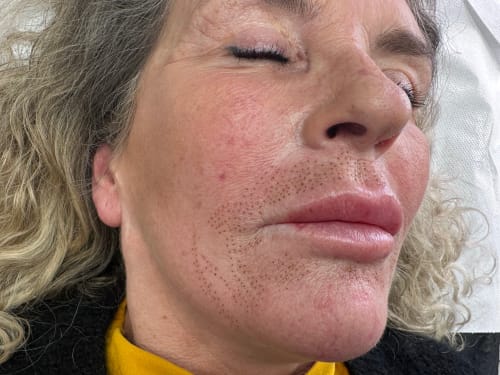
Find out how Plasma Fibroblast Therapy can rejuvenate your skin by stimulating collagen and elastin. Learn what areas can be treated, how the procedure works, and what to expect after treatment.
-

If you can’t stop thinking about food, it might not be addiction. Discover why chronic dieting and restriction create a biological backlash, and how to fix it.