
Sebum
Sebum is the lipid-rich secretion produced by sebaceous glands and delivered to the skin surface through the follicular canal, where it spreads to form a continuous surface film across the stratum corneum. It is not a single substance but a complex mixture whose composition is distinctive among mammals – and specifically among primates – in ways that matter for understanding both its functions and the limitations of any claim that a topical fat can replicate it. In its glandular form, sebum consists primarily of triglycerides (approximately 57%), wax esters (26%), squalene (12%), cholesterol and cholesterol esters, and smaller amounts of free fatty acids. By the time it reaches the skin surface, the triglyceride fraction has been substantially hydrolysed to free fatty acids by lipases from the cutaneous microbiota – predominantly Cutibacterium acnes – a transformation that is part of normal sebum function rather than microbial disruption of it. [3]
Composition and Distinctive Human Fatty Acids
The fatty acid profile of human sebum is defined by the sapienic acid pathway – a metabolic route operating exclusively in human sebaceous glands that produces sapienic acid (C16:1 Δ6) as the dominant fatty acid at approximately 25% of total sebum fatty acids, alongside its elongation product sebaleic acid (C18:2 Δ5,8). Neither molecule is produced by any other mammalian species, and both are absent from all animal fats and plant oils. This uniquely human fatty acid pathway contributes to sebum’s antimicrobial activity against gram-positive skin pathogens including Staphylococcus aureus, and is part of what makes sebum’s surface chemistry compositionally distinctive from any topical fat that might be applied in its place. [1]
Squalene, present at approximately 12%, functions as a sacrificial antioxidant at the skin surface, quenching reactive oxygen species generated by UV irradiation before they reach underlying lipids and cellular structures. It is effective under moderate UV load, but under sustained or intense UV exposure it generates peroxidated products – squalene monohydroperoxide and squalene peroxide – that are comedogenic and implicated in the microcomedone formation that initiates acne vulgaris.
Functions of the Sebum Film
The sebum film serves several partially independent functions at the skin surface. As an emollient, it softens the stratum corneum and reduces surface friction. As an occlusant, it contributes to the physical barrier against transepidermal water loss, supplementing the ceramide-based lamellar architecture of the stratum corneum without replacing it. As an antimicrobial film, its free fatty acid fraction – particularly sapienic acid and its downstream metabolites – creates a chemically hostile surface environment for pathogenic bacteria whilst supporting the resident commensal microbiota. It also contributes to the maintenance of the skin’s slightly acidic surface pH (approximately 4.5–5.5), which is itself antimicrobial and supportive of barrier enzyme function. [3]
Variation and Ageing
Sebum output varies substantially across body sites, with the face and scalp producing the highest volumes – up to 400–900 sebaceous glands per cm² on the forehead – and the palms, soles, and vermilion border of the lips producing none. Males produce approximately four times more sebum than females, driven by higher DHT concentrations from type 1 5-alpha reductase activity in sebaceous glands. Female sebum output fluctuates with the ovulatory cycle and declines measurably at menopause with oestrogen and androgen withdrawal.
With age, sebum quality declines independently of volume changes. Wax ester content decreases, the sapienic acid pathway shows reduced activity, and squalene peroxidation becomes proportionally higher under equivalent UV exposure as antioxidant capacity diminishes. The surface lipid film of aged skin is therefore less effective as antimicrobial defence and less protective against oxidative damage even when sebum volume appears maintained – a distinction between sebum quantity and sebum function that is clinically relevant for both acne management and anti-ageing treatment planning. [2]
Clinical Application
Sebum comes up in clinic across three distinct conversations – acne and sebum dysregulation, lip care, and topical formulation choices – and the biology is useful precisely because it reframes each conversation away from simplistic “oil is bad” or “oil is good” framing toward something more specific.
Acne: Sebum Dysregulation Rather Than Sebum Excess
The standard client framing of acne as “too much oil” is an oversimplification that leads to counterproductive skincare choices. Sebum overproduction is one component of acne pathogenesis – driven by DHT/type 1 5-alpha reductase activity in sebaceous glands – but the composition of sebum matters as much as the volume. In acne-prone skin, sebum shows reduced linoleic acid content and elevated squalene peroxidation under UV exposure, producing a surface lipid film that is both more comedogenic and more inflammatory than normal sebum. The microcomedone – the initiating lesion of acne – forms when peroxidated squalene and follicular hyperkeratinisation combine to obstruct the follicular opening.
This matters for client advice in two ways. First, clients who aggressively strip surface oils with harsh cleansers in response to acne are disrupting the residual antimicrobial and barrier functions of normal sebum without necessarily reducing the DHT-driven overproduction. Second, clients with acne who are also getting significant UV exposure are compounding the squalene peroxidation mechanism – photoprotection is part of acne management, not just anti-ageing advice.
Lips: Sebum Absence as the Structural Argument
The vermilion border’s complete absence of sebaceous glands removes the emollient, occlusive, and antimicrobial functions that sebum provides elsewhere on the face. The oral mucosa provides some moisture contribution and the rich vascular supply supports healing, but there is no local lipid-producing infrastructure. Whatever surface lipid protection the vermilion border has must come from external application – which makes the formulation choice genuinely consequential rather than cosmetically optional. A stable, low-PUFA topical that approximates the emollient and occlusive functions of sebum is a well-reasoned recommendation for this specific anatomical context.
Topical Formulation Choices
Understanding sebum composition gives the clinic a precise basis for topical recommendations that goes beyond generic “moisturising” framing. Sebum is dominated by wax esters, triglycerides, squalene, and a uniquely human fatty acid fraction, not by linoleic acid or other PUFAs. Topical formulations high in linoleic acid do not replicate sebum composition; they deliver a fatty acid profile that is structurally quite different from what healthy skin produces. The case for tallow-based formulations rests partly on their closer alignment with the saturated and monounsaturated fatty acid character of the sebum lipid film – acknowledging that sapienic acid, sebaleic acid, wax esters, and squalene are absent from tallow and cannot be replicated by any topical fat. The honest version of the recommendation is compositional proximity, not equivalence.
For clients asking directly whether tallow “mimics sebum,” the accurate answer is: “It shares the saturated and monounsaturated character of sebum’s fatty acid fraction more closely than seed oils do, but sebum is a considerably more complex mixture that no topical fat fully replicates.”
References
Flori E, Mastrofrancesco A, Ottaviani M, et al. (2023). Desaturation of sebaceous-type saturated fatty acids through the SCD1 and the FADS2 pathways impacts lipid neosynthesis and inflammatory response in sebocytes in culture. Exp Dermatol, 32(6), 808-821 . doi.org/10.1111/exd.14780
Hou X, Wei Z, Zouboulis CC, et al. (2022). Aging in the sebaceous gland. Front Cell Dev Biol, 10, 909694 . doi.org/10.3389/fcell.2022.909694
Makrantonaki E, Ganceviciene R, Zouboulis C (2011). An update on the role of the sebaceous gland in the pathogenesis of acne. Dermatoendocrinol, 3(1), 41-9 . doi.org/10.4161/derm.3.1.13900
Also Known As
- skin oil
Biological Relationships
Influenced By
- this Affected by Dermatitis Evidence: Seborrhoeic dermatitis: Malassezia metabolises sebum triglycerides into pro-inflammatory free fatty acids including oleic acid; sebum is the direct substrate driving SD inflammatory cascade (PMC12562114; entity full_description).
Learn More
This topic is discussed in 8 articles:
-
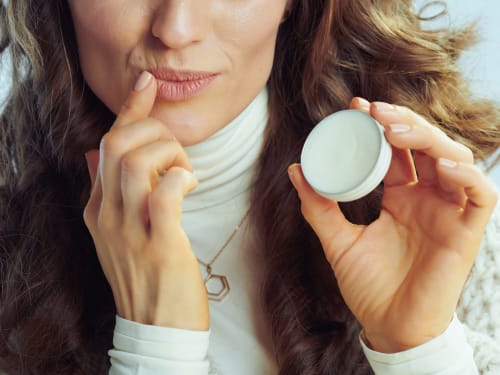
Natural protective oil produced by sebaceous glands; lips cannot produce sebum and must rely on external sources for lipid protection
-
The complex lipid mixture secreted by sebaceous glands onto the skin surface via the follicular canal.
-
The complex lipid mixture secreted by sebaceous glands onto the skin surface via the follicular canal.
-

Getting adequate rest is the best investment you can make into your beauty. We take a look at some of your body’s natural skin rejuvenation processes that occur during sleep.
-
Wondering how long eyelash extensions last? Discover the secrets to long-lasting lashes at Creative Touch
-

Discover how to restore and maintain your skin’s natural defences. From the causes of skin barrier damage to advanced treatments. Achieve healthy, radiant skin with our expert advice.
-
Discover the surprising ways air pollution can damage your skin. Learn how to protect your complexion from environmental pollutants and achieve a healthier, more radiant glow.
-
Natural skin oil produced by sebaceous glands, production regulated by oestrogen
-
Struggling with acne or other skin issues? Vitamin B12 could be the answer. Learn how this essential nutrient impacts skin health and how to optimise your intake.