
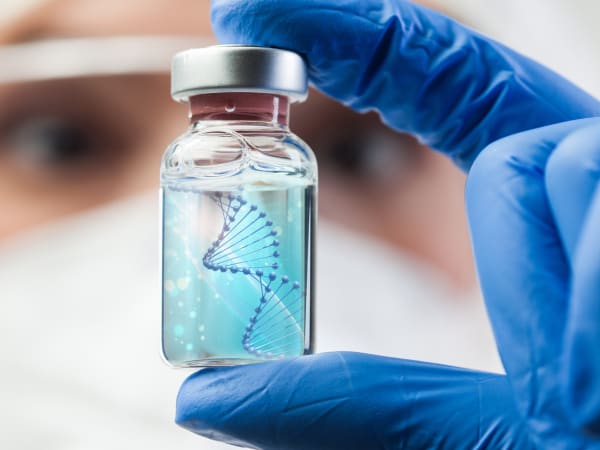
The field of aesthetic medicine is ever-evolving. Innovative treatments continue to emerge, offering exciting possibilities for anybody seeking to enhance their appearance.
One such breakthrough is the use of polynucleotides (PNs) treatment. These complex molecules have garnered significant attention for their remarkable ability to revitalise and rejuvenate the skin.
How Polynucleotides Work
Polynucleotides are naturally occurring biopolymers derived from DNA and RNA, which play a critical role in cellular repair and regeneration.
Collagen and Elastin Boost: By stimulating fibroblasts, polynucleotides enhance the production of collagen and elastin, resulting in firmer, more resilient skin. [1]
Cellular Regeneration: These molecules promote tissue repair and regeneration, helping to heal damaged skin and improve its overall health. [1]
Inflammation Reduction: Polynucleotides exhibit anti-inflammatory properties, reducing redness and irritation, making them ideal for post-treatment recovery. [2]
Hydration Enhancement: By improving the extracellular matrix, polynucleotides help retain moisture and keep the skin hydrated and plump. [3]
A Brief History of Polynucleotides in Aesthetics
While polynucleotides have been effective in wound healing and tissue repair, their transition into cosmetic treatments - offering innovative solutions for skin rejuvenation - is relatively recent.
Their application in aesthetic medicine began with recognition of their ability to stimulate fibroblast activity, leading to increased collagen and elastin production for maintaining skin structure and elasticity.
The introduction of high-purity polynucleotide injectables has revolutionised how practitioners approach skin rejuvenation. Studies have shown that these treatments can substantially improve intrinsic skin quality, including increased glow, reduced pore size, and enhanced elasticity. [4]
Various brands have developed polynucleotide products tailored for aesthetic applications, such as Plenhyage and Lumi-Pro Eyes. These products are versatile and suitable for multiple body areas, including the face, neck, décolletage, and even delicate regions like under the eyes. [3]
The Benefits of Polynucleotide Treatments
Reduced Fine Lines and Wrinkles: Polynucleotides can effectively diminish the appearance of wrinkles, leaving you with a smoother, more youthful complexion.
Improved Skin Texture: Experience a noticeable improvement in skin texture, as polynucleotides help to refine pores and enhance overall skin quality.
Protect Skin Barrier: Can strengthen microcirculation and promote DNA synthesis, enhancing skin tissue remodelling and skin barrier health.
Versatility: Can treat various body areas, including the face, neck, décolletage, and even the delicate under-eye region.
Safety and Tolerability: Polynucleotide treatments have a strong safety profile, making them widely suitable for patients.
Long-Lasting Results: While initial improvements can be seen shortly after treatment, the full effects continue to develop over several weeks as collagen synthesis increases.
The Long-Term Efficacy
One of the most compelling aspects of polynucleotide treatments is their potential for long-lasting results. While more extensive research is ongoing, existing studies show promising evidence of sustained efficacy.
A clinical trial conducted in 2007 followed 143 patients who received polynucleotide injections for skin rejuvenation. Over six months, participants experienced significant skin elasticity and hydration improvement, maintained throughout the follow-up period. Both patients and physicians reported high satisfaction levels. [5]
A consensus report from 2020 looked at the potential long-term benefits of polynucleotide treatments. The report highlighted the ability of polynucleotides to induce lasting improvements in skin quality when injected into various areas, including the face, décolletage, and neck. The most notable aesthetic outcomes were observed in the cheeks, perioral region, and neck. [3]
In another study published in 2024, researchers found that polynucleotides may be useful for the treatment or prevention of skin pathologies such as atopic dermatitis. By promoting fibroblast proliferation and migration, which are involved in the process of re-epithelialisation, polynucleotide treatment may improve skin barrier function in patients. Polynucleotides may modulate the immune response, which would also be beneficial for patients with atopic dermatitis. [6]
While additional long-term research is necessary, evidence suggests that polynucleotide treatments provide significantly enhanced skin rejuvenation. These treatments appear well-tolerated with minimal side effects, making them a promising option for individuals seeking long-lasting results.
Understanding the Risks
While polynucleotide treatments have demonstrated promising results in skin rejuvenation, it’s important to acknowledge the potential risks associated with their use.
Temporary Side Effects
- Swelling and Bruising: Mild swelling and bruising at the injection site typically resolve within a few days.
- Infection: The risk of infection is minimal when following proper hygiene protocols.
Allergic Reactions
Although rare, individuals with sensitivities may experience allergic reactions to the components of polynucleotide products. These reactions can range from mild itching to more severe symptoms.
Long-Term Considerations
While current research suggests a favourable safety profile for polynucleotide treatments, ongoing studies on the long-term implications of repeated use are necessary.
Individual Variability
Responses to polynucleotide treatments can vary among individuals. Age, skin type, and underlying health conditions may influence treatment outcomes and the likelihood of adverse effects. Some patients may experience limited benefits or no significant improvements.
Polynucleotides vs. Other Aesthetic Treatments
Polynucleotides have gained traction in aesthetic medicine for their regenerative properties, particularly in skin rejuvenation. When comparing their efficacy to other aesthetic treatments - mesotherapy, hyaluronic acid fillers, and laser therapies - several key points emerge based on recent studies and clinical observations.
Mechanism of Action
Polynucleotides: Stimulate fibroblast activity, leading to increased collagen and elastin production. Enhance hydration and exhibit anti-inflammatory properties.
Mesotherapy: Involves injecting a cocktail of nutrients into the skin. While it can improve hydration, it doesn’t directly target collagen production.
Hyaluronic Acid Fillers: Temporarily add volume and hydration but don’t stimulate collagen.
Laser Therapies: These therapies can improve texture and pigmentation but often involve downtime and potential side effects.
Clinical Effectiveness
Polynucleotides: Studies show significant improvements in skin elasticity, fine lines, and skin barrier health.
Mesotherapy: Results can be less predictable and require multiple sessions.
Hyaluronic Acid Fillers: Temporary effects lasting 6-12 months.
Laser Therapies: Effective for specific issues but can be invasive.
Safety Profile
Polynucleotides: Generally well-tolerated with minimal side effects.
Mesotherapy: This may lead to irritation or infection if not performed correctly.
Hyaluronic Acid Filler: Carry risks like vascular occlusion or allergic reactions.
Laser Therapy: This treatment can have more significant side effects like redness or pigmentation changes.
Versatility
Polynucleotides: Can be used for various applications, including facial rejuvenation and scar treatment.
Mesotherapy: Primarily focused on hydration and revitalisation.
Hyaluronic Acid Fillers: Primarily focused on adding volume.
Laser Therapies: Target specific issues like pigmentation or texture.
Summary
| Feature | PNs | Meso | HA Fillers | Laser |
|---|---|---|---|---|
| Mechanism of Action | Stimulates collagen & elastin | Delivers nutrients | Adds volume and hydration | Targets specific issues |
| Clinical Efficacy | Significant improvements | Less predictable | Temporary effects | Effective for specific issues |
| Safety Profile | Generally safe | Potential for irritation | Risk of occlusion or allergic reactions | Can have significant side effects |
| Versatility | Wide range of applications | Primarily for hydration | Primarily for volume | Target specific issues |
The unique, combined benefits that polynucleotides provide us include regeneration, hydration, and anti-inflammation. Compared to other treatments, the results are more sustained and are often less invasive. While each treatment has strengths and weaknesses, polynucleotides are a stand-out option for effective and long-lasting skin rejuvenation.
Combining Polynucleotides with Radio-Frequency Microneedling
Polynucleotides can be used as a valuable ‘priming’ treatment before other aesthetic procedures, such as lasers, fillers, or microneedling. After preparing the skin with polynucleotides, these subsequent treatments can often achieve more significant and long-lasting results. [3]
Polynucleotides combined with radio-frequency microneedling (RFMN) represent a synergistic approach to skin rejuvenation. This double treatment can deliver exceptional results by leveraging the unique properties of both modalities.
Enhanced Skin Regeneration
- Polynucleotides stimulate fibroblast activity, promoting collagen and elastin production.
- RFMN creates micro-injuries, stimulating the healing and absorption of polynucleotides.
- Together, they accelerate skin regeneration for improved texture and elasticity.
Increased Hydration and Elasticity
- Polynucleotides attract water molecules, enhancing skin hydration.
- RFMN creates micro-channels for deeper penetration of polynucleotides.
- Combined, they improve skin turgor and reduce signs of ageing.
Reduced Inflammation and Faster Recovery
- Polynucleotides have anti-inflammatory properties, reducing redness and swelling after RFMN.
- Promotes quicker recovery and enhances patient comfort.
Synergistic Collagen Production
- RFMN stimulates collagen remodelling.
- Polynucleotides provide essential signals for fibroblast activation.
- Together, they accelerate collagen synthesis for improved skin structure.
Versatility for Various Skin Concerns
- Suitable for melasma, acne scars, and general skin laxity.
- Address multiple concerns simultaneously.
Long-lasting Results
- Improved immediate outcomes and longer-lasting effects due to ongoing collagen synthesis and skin healing.
Patients can experience a thoroughly comprehensive approach to skin rejuvenation by combining PNs and RFMN - one that delivers exceptional results.
Summary
Combining regeneration, hydration, and anti-inflammatory properties makes polynucleotides an outstanding option as an aesthetic treatment. Compared to other approaches, they offer more sustained results and are often less invasive.
While each treatment has unique advantages, polynucleotides are a compelling choice for anyone seeking an effective and long-lasting skin rejuvenation treatment.
The Future of Polynucleotides
As research advances, we can anticipate even more innovative applications and formulations of polynucleotides. Their versatility and potential for addressing a wide range of skin concerns make them a promising avenue for future developments in aesthetic medicine.
With ongoing research and advancements, polynucleotides may become even more pivotal in providing individuals with natural and effective solutions for achieving radiant, youthful skin.
Polynucleotides at Creative Touch
After exploring the benefits of polynucleotides, are you ready to experience their transformative effects first-hand? At Creative Touch, we provide personal skin treatments tailored to the individual needs of our clients in South Yorkshire.
Book your consultation today and discover how our polynucleotide treatments can help you achieve a more radiant, youthful, and confident you.
References
Colangelo, M. T., Govoni, P., Belletti, S., Squadrito, F., Guizzardi, S., & Galli, C. (2021). Polynucleotide biogel enhances tissue repair, matrix deposition and organization. Journal of Biological Regulators and Homeostatic Agents, 35(1), 355–362. doi.org/10.23812/20-320-l
Kuppa, S. S., Kim, H., Kang, J., Lee, S., Yang, H., Sankaranarayanan, J., & Seon, J. (2023). Polynucleotides suppress inflammation and stimulate matrix synthesis in an in vitro Cell-Based osteoarthritis model. International Journal of Molecular Sciences, 24(15), 12282. doi.org/10.3390/ijms241512282
Cavallini, M., Bartoletti, E., Maioli, L., Massirone, A., Palmieri, I. P., Papagni, M., Priori, M., & Trocchi, G. (2020). Consensus report on the use of PN‐HPTTM (polynucleotides highly purified technology) in aesthetic medicine. Journal of Cosmetic Dermatology, 20(3), 922–928. doi.org/10.1111/jocd.13679
Lee, K. W. A., Chan, K. W. L., Lee, A., Lee, C. H., Wan, J., Wong, S., & Yi, K. (2024). Polynucleotides in Aesthetic Medicine: A review of current practices and Perceived effectiveness. International Journal of Molecular Sciences, 25(15), 8224. doi.org/10.3390/ijms25158224
Cavallini, M., & Papagni, M. (2007). Long chain polynucleotides gel and skin biorevitalization. ResearchGate. researchgate.net/publication/289215376
Segarra, S., Bošnjak, I., Mioč, I., Čurčija, B., Csik, V., Krešić, S., Romero-Rueda, J., Rodríguez, A., & Martínez-Puig, D. (2024). Yeast-Derived nucleotides enhance fibroblast migration and proliferation and provide clinical benefits in atopic dermatitis. International Journal of Molecular Sciences, 25(5), 2890. doi.org/10.3390/ijms25052890