
What’s in this audio? (Click to expand)
- Introduction: Why trusted products suddenly sting and how compromised barriers send whispers before the shout.
- The 3:1:1 Architecture: Decoding the precise ceramide-cholesterol-fatty acid ratio required for protective lamellar structure and why EOS/EOP anchoring matters.
- Three Critical Functions: How healthy barriers prevent TEWL, maintain acidic pH for beneficial bacteria, and shield against environmental invasion.
- The Inflammation Paradox: Why IL-4 and IL-13 cytokines actively suppress filaggrin and claudin-1 production, sabotaging your repair efforts.
- Circadian Repair Windows: How TEWL peaks at night creating optimal absorption for lipid-rich occlusives during sleep mode.
- Microbiome & Stress Axes: S. epidermidis strains manufacturing ceramide precursors, cortisol inhibiting lipid synthesis, and AGEs disrupting barrier building blocks.
- UK Environmental Challenges: The 12% eczema increase from hard water, volatile heating cycles, menopause lipid decline, and rapid weight loss impacts.
- Home Repair Protocols: The mandatory “Less is More” reset, chelating ingredients for hard water, niacinamide supporting endogenous ceramide synthesis.
- Internal Support Evidence: Omega-3 EPA/DHA modulating IL-4/IL-13, oral glucosylceramides showing 31.9% hydration gains, and the honest collagen supplement truth.
- Professional Treatments: Cold plasma inflammation modulation, iPRF/PRP growth factors, polynucleotides for inflammatory calming, and thulium laser lipid metabolism activation.
- Healthcare Navigation: Managing 43-week NHS dermatology waits, when aesthetics clinics bridge gaps, and clear responsibility lines for optimal care.
If you’ve noticed that products which once worked beautifully now cause stinging, or your makeup just won’t sit right no matter what you try, your skin might be trying to tell you something. Persistent dryness despite diligent moisturising, unexplained sensitivity, and that frustrating dullness that no cream seems to shift. These aren’t just annoyances, but signs your skin barrier needs support.
Your skin barrier is central to healthy skin. When strong, hydration and resilience follow; when weak, even the best routine struggles.
This guide will help you understand what’s happening beneath the surface, recognise when your barrier needs help, and discover evidence-based approaches to repair. From what you can do at home to when professional treatments might accelerate your recovery, we’ll explore the science without overwhelming you, and provide practical guidance you can actually use.

Your Skin Isn’t Fighting You: The Truth About Barrier Damage
When your skin feels tight, reactive, or perpetually dry, it’s not a personal failing. It’s a biological SOS from your skin barrier. We look past the marketing hype to understand the actual mechanics of epidermal renewal.
Video Transcript (click to view)
Have you ever felt like you’re in a fight with your own skin? You know, one day everything’s great, and the next it just feels like it’s completely turned against you?
Well, what if I told you your skin isn’t fighting you, it’s actually trying to send you a message?
OK, let’s dive into what it’s saying and more importantly, how we can all start listening.
Let’s talk about one of the most frustrating things ever in skin care. You have that Holy Grail serum, right? The one you’ve used and loved for months, and then one day out of nowhere, it stings when you put it on?
Yeah, that stinging sensation is often the very first whisper from your skin that something’s not quite right, that its defences are down. And look, it’s not just the stinging, is it? It’s that awful tight feeling you get right after washing your face, the one that makes you practically sprint for your moisturiser.
Or when your makeup just looks wrong. It’s clinging to patches you didn’t even know were there. It’s that general dullness or sensitivity that just won’t budge.
If any of this is ringing a bell, you are in exactly the right place. So to solve all these mysteries, we’ve got to meet the hero of our story, the skin barrier. Honestly, it’s the key to understanding why your skin is acting out, and it’s absolutely central to getting things back on track.
OK, so the science-y name for it is the Stratum Corneum, but really just think of it as your body’s own personal living shield against the world. It’s made-up of these tough little skin cells, but the real magic, the secret sauce, is in the special fats, or lipids, that hold everything together. They keep the good stuff in, like moisture and the bad stuff out like irritants.
And you know, the best way to picture this is the classic brick and mortar analogy. It’s perfect. Your skin cells are the strong, sturdy bricks, but it’s the lipid mortar in between that’s holding them all together nice and tight.
If that mortar starts to crumble, the whole wall becomes weak, leaky, and super easy to damage. And if we zoom in on that mortar, it’s not just one thing. It’s this super specific mix of healthy fats and get this, ceramides make up around 50% of that structure. That’s half of it. It’s no wonder they’re such a huge deal in skin care, right? They’re literally the main ingredient holding your wall together.
So we know what it is, but how can you tell if your barrier is in trouble? Let’s run through a really quick, simple check you can do right now. Let’s do this together. I’ll read them out and you just do a mental yes or no.
#1: do products sting that never used to?
#2: does your skin feel tight, like within 30 minutes of washing it?
#3: is your skin way more reactive to things like cold wind, or even just a light touch?
#4, has it got noticeably rougher or flakier?
#5: are you just seeing more general redness and sensitivity?
Go ahead and count up your yesses. So did you land on three or more?
If you did, well, there’s your answer. That’s a really clear signal. Your skin barrier isn’t just whispering anymore. It’s pretty much shouting for your help.
And this right here is the absolute key. It’s the big a-ha moment of this whole thing. The redness and inflammation you feel, it isn’t just a symptom of the damage, it actually becomes part of the problem. It kicks off this vicious cycle where the inflammation actively stops your skin from producing the lipids it needs to repair itself. So to heal, you absolutely have to break that cycle.
Let’s play detective for a minute. If your barrier is damaged, something is causing it. And a lot of the time, it’s not just one big thing, but a few different factors working together.
So let’s take a look at the most common culprits. Number one offender: a lot of the time it’s our own good intentions. We get a little too enthusiastic with the exfoliating acids or retinoids. Next up, harsh cleansers. You know that squeaky clean feeling. Yeah, that’s actually the sound of all your protective oils being stripped away.
Then of course you’ve got environmental stuff like the sun and pollution and even internal stress which jacks up your cortisol and literally slows down your skin’s repair process. For a lot of people, especially about 60% of households in the UK, even the hard water from your tap could be working against you.
So you might be thinking, “how do I fix this?”. Well, here’s the big secret, and it might surprise you. Repairing your skin barrier isn’t about adding a dozen new fancy products. It’s actually about taking things away. It’s all about strategic simplicity.
It’s all about doing less, not more, and doing that less the right way. You’ve got to give your skin the space and the time it needs to heal itself. Your job is to stop doing the things that are hurting it and just provide the simple, correct support it needs to do its job.
So here it is, your simple, powerful game plan for the next two to four weeks. In the morning it’s super simple. A gentle cleanse, or honestly even just a splash of water, a good barrier repair moisturiser, and of course, sunscreen. That’s it.
In the evening, gentle cleanse with that same moisturiser and then a thin occlusive layer to seal everything in.
And the most important step of all, you have to hit pause. Stop all your actives. No retinoids, no acids, no potent vitamin C. Just let your skin breathe and heal.
When you’re looking for that simple moisturiser, these are the ingredient heroes you want to see on the label.
First, you want ceramides. Ideally a mix of them. They’re the literal building blocks. Then you have a total superstar niacinamide. It does 2 amazing things. It calms down that inflammation, and it helps your skin make its own ceramides. Panthenol is fantastic for soothing and healing.
And then your nighttime secret weapon is a simple occlusive, something like petroleum or squalane to lock all that goodness in while you sleep.
All right, so after you’ve spent a few weeks in that healing phase, the game changes. You’ve put in the work to repair the wall. Now it’s all about maintenance. It’s about making sure it stays strong for the long haul because prevention is so much easier than repair.
So to keep it healthy when you bring back those powerful actives, you have to do it slowly, like one at a time. Maybe just once a week to start with. And pay attention to the seasons. What your skin needs in the dead of winter is totally different from what it needs in the summer. Don’t forget to support it from the inside out with things like Omega-3s.
But maybe the biggest thing is this. You just have to listen. Remember that first little sting, that slight tightness. Those are the early warnings. Learning to hear them is the real key to stopping major damage before it even starts.
Because really, that’s what this all comes down to, isn’t it? Your skin has this amazing, intelligent ability to take care of itself. It knows how to heal. The most powerful thing you can do is understand what’s getting in its way, remove the obstacles, and then just let it do its job.
The question is. Are you getting out of its way?
At Creative Touch, our approach is centred on working with your body’s natural processes, rather than against them. Your skin knows how to heal itself. Sometimes it just needs the right support.
What Is Your Skin Barrier and Why Does It Matter?
Your skin barrier, known as the stratum corneum, is the very outermost layer of your skin that acts as a protective shield. The stratum corneum is made up of skin cells held together by special fats, called lipids. These lipids include ceramides, cholesterol, and fatty acids. The barrier stops too much water from leaving your skin, keeps out harmful things from the environment, and blocks substances that might irritate your skin. When the barrier is healthy, it helps keep your skin hydrated, strong, and comfortable.
If your skin were a brick wall, the stratum corneum would be the outer layer protecting everything behind it. However, unlike the brick wall, your barrier is a living, dynamic system that constantly regenerates and adapts to its environment.

The Stratum Corneum: Your Living Shield
Your barrier consists of corneocytes - flattened, protein-rich cells -embedded in a lipid matrix (a mix of fats and oils). The “bricks and mortar” analogy is useful, but what makes your barrier remarkable is the specific composition of that mortar. Research has established that healthy skin maintains a ratio (by weight) of approximately 3:1:1 of ceramides (a type of lipid), cholesterol (a waxy substance), and fatty acids (molecules that are part of fats and oils). [[1], [2]]
The lipid matrix contains:
- Ceramides (~50% of lipids): Multiple subtypes, each serving distinct functions
- Cholesterol (~25%): Stabilises the lipid structure
- Free fatty acids (~15-25%): Complete the protective matrix
What’s fascinating is that not all ceramides are equal. Ceramide NP handles your primary hydration function, whilst Ceramide EOS and EOP (though they make up only about 10% of total ceramides) play a critical “anchoring” role in forming what scientists call the long periodicity phase (LPP), the most important structure for barrier integrity. [3]
This is why multi-ceramide products consistently outperform single-ceramide formulations. Your barrier needs the full team working together.
What a Healthy Barrier Does for You
When your barrier is functioning optimally, it:
Prevents transepidermal water loss (TEWL)—keeping moisture where it belongs rather than evaporating into the air. This is measurable and one of the key indicators dermatologists use to assess barrier health.
Defends against pathogens, allergens, and pollutants—your barrier is your first line of defence against everything from bacteria to air pollution. When it’s compromised, things that should stay out get in.
Maintains optimal skin pH: healthy skin sits around pH 4.5-5.5, slightly acidic. This ” acid mantle” supports beneficial bacteria whilst discouraging problematic microorganisms.
Supports microbiome balance: billions of helpful bacteria living on your skin contribute to barrier function. They produce ceramide precursors and help defend against harmful pathogens.
Regulates inflammation: a strong barrier prevents the allergen penetration that triggers inflammatory responses. When your barrier fails, inflammation increases, which further compromises the barrier, creating a vicious cycle.

Signs Your Skin Barrier Needs Support
Barrier damage rarely announces itself with dramatic symptoms. More often, it’s a gradual shift. Subtle changes compound over time until you realise something’s definitely not right.
Early Warning Signs
These are the whispers before the shout:
Your favourite serum suddenly stings. Products that you have used for months now cause discomfort. This is often the first sign. Your barrier has thinned enough that actives penetrate too deeply, too quickly.
Persistent tightness after cleansing, even when you’re using a gentle cleanser. Healthy skin should feel comfortable within minutes of washing. If you’re rushing for moisturiser because your face feels uncomfortably tight, your barrier is struggling to retain moisture.
Dullness that won’t shift. When your barrier is compromised, skin cell turnover becomes irregular. Dead cells accumulate unevenly, creating that lacklustre appearance that no amount of exfoliation seems to fix (and more exfoliation often makes it worse).
Makeup application becomes frustrating. Foundation clings to dry patches you didn’t know you had. Powder settles into fine lines that weren’t visible before. Your skin’s surface texture has changed because the barrier isn’t smooth and intact.
More Pronounced Symptoms
When barrier damage progresses:
Increased sensitivity becomes your new normal. Weather changes affect you more. Products you could once tolerate now cause reactions. Your skin feels vulnerable because, quite literally, its protective shield is weakened.
Persistent redness that won’t calm down. This is inflammation becoming visible. Your barrier isn’t blocking allergens effectively, triggering an immune response that shows as redness and sometimes heat.
Rough, flaky texture despite moisturising. When the lipid matrix breaks down, skin cells don’t shed smoothly. They cluster and flake, creating that rough sandpaper feel.
Increased breakouts. Counterintuitively, barrier damage can trigger acne. When the barrier fails, bacteria gain easier access to deeper skin layers. Your skin responds with inflammation and spots.
Reactive flare-ups of existing conditions. If you have eczema, rosacea, or seborrhoeic dermatitis, you’ll notice these worsen when your barrier is compromised.

The Inflammation Connection
Here’s something important that recent research has clarified: barrier damage and inflammation form a bidirectional relationship. It’s not simply that a damaged barrier causes inflammation—the inflammation itself further breaks down your barrier. [4]
When your barrier is compromised, allergens penetrate more easily. This triggers your immune system to release inflammatory cytokines, particularly IL-4 and IL-13. These cytokines actively suppress the production of barrier proteins, including filaggrin and claudin-1, proteins essential for maintaining barrier integrity. [5] The inflammation is literally preventing your skin from repairing itself properly.
This is why addressing inflammation is essential for barrier repair, not just treating the structural damage. It’s also why anti-inflammatory treatments like cold plasma therapy can be so effective, because they break the cycle.
Quick Barrier Check:
- Do products sting that didn’t before?
- Does your skin feel tight within 30 minutes of cleansing?
- Is your skin more reactive to weather or touch?
- Has your skin become noticeably rougher or flakier?
- Are you experiencing more redness or sensitivity?

What’s Compromising Your Skin Barrier?
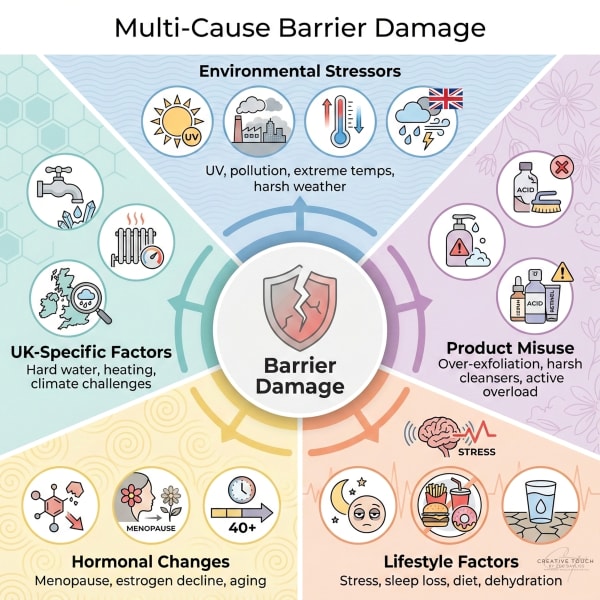
Understanding what’s damaging your barrier is the first step to protecting it. Often, it’s not a single culprit but a combination of factors working together.
Over-Exfoliation and Harsh Products
The “more is better” approach to skincare is one of the most common causes of barrier damage we see. AHAs, BHAs, retinoids - these are valuable tools, but they work precisely because they disrupt the barrier temporarily to trigger renewal. When you use them too frequently or combine multiple actives without adequate recovery time, you’re preventing your barrier from completing its natural repair cycle.
Signs you’re overdoing actives:
- Persistent redness or sensitivity
- Peeling that doesn’t resolve
- Products stinging that previously didn’t
- Increased breakouts (paradoxically, from trying to treat skin)
Harsh cleansers are another frequent offender. That squeaky-clean feeling? That’s your skin stripped of natural oils. Healthy skin should feel comfortably clean, not tight.
Environmental Stressors
UV radiation doesn’t just cause immediate sunburn. It progressively breaks down collagen and elastin whilst damaging lipids in the barrier itself. Sun damage is cumulative and accelerates barrier decline.
Pollution generates free radicals that damage both the barrier structure and the cells beneath. If you live in a town or city (and most of us do), pollution is affecting your skin daily.
Temperature extremes stress your barrier. Cold outdoor air reduces natural oil production, whilst indoor central heating strips moisture from the air and from your skin. British winters create the perfect storm for barrier stress: bitter cold outside, dry heat inside, and that damp chill that seems to penetrate everything.
UK-Specific Factor: Hard Water
Here’s something that affects approximately 60% of UK households but rarely gets discussed: hard water. If you live in areas of Yorkshire, the Southeast, or East Anglia, you’re likely washing your face with water containing significant calcium and magnesium carbonate.
These minerals interfere with your skin’s natural pH and disrupt normal barrier function. Research involving over 300,000 adults in the UK Biobank study found that living in hard water areas was associated with a 12% increase in the odds of having eczema. [6] The calcium ions literally alter how your skin barrier functions, increasing transepidermal water loss and reducing the effectiveness of your moisturisers.
The good news? This is addressable. Chelating ingredients in your cleanser (like gluconolactone or phytic acid) bind to those mineral ions before they interact with your skin. A final rinse with micellar water can help too. We’ll cover practical hard water solutions later in this guide. For a more in-depth guide, our separate article on hard water and your skin looks deeper into the science.
Hormonal Changes
If you’re in your 40s, hormonal shifts are likely playing a significant role in your barrier health. Declining oestrogen during perimenopause and menopause directly affects ceramide production, your barrier’s most important lipid.
The statistics are sobering: women experience approximately 30% collagen loss in the first five years after menopause, followed by 2% loss annually. [7] But it’s not just collagen. Oestrogen influences lipid synthesis, natural oil production, and skin hydration. As oestrogen declines, your barrier becomes inherently more vulnerable.
This doesn’t mean barrier damage is inevitable, but it does require more active support than it did in your 30s. The approaches in this guide work, but they’re particularly important during this life stage.
For a deeper guide to caring for your skin in your 40s, see our article Skincare After 40: Working With Your Body Through Perimenopause.
Rapid Weight Loss and Skin Barrier Stress
Significant weight loss affects your skin in ways that extend beyond the often-discussed concern about loose skin. When your body composition changes rapidly - whether through lifestyle changes or GLP-1 medications like Mounjaro - your barrier can come under stress.
Nutritional shifts during weight loss impact the building blocks your skin needs for barrier lipid production. Your body is adapting to new metabolic demands, whilst your skin is trying to adapt to new contours. The barrier itself can become compromised during this transition, not just the dermal structure beneath it.
If you’re on a weight loss journey, this is when barrier support becomes particularly important. Adequate protein intake, omega-3 supplementation, and a strengthened topical routine can help your skin adapt while maintaining barrier integrity.
Lifestyle Factors
Sleep deprivation impairs your skin’s natural overnight repair processes. Your barrier follows a circadian rhythm. Permeability actually increases at night (we’ll explore this in detail shortly), which is when repair normally happens. Short-change your sleep, and you’re literally cutting short your repair window.
Chronic stress elevates cortisol, which specifically inhibits lipid production including cholesterol and ceramides. [8] This explains why your skin “falls apart” during high-stress periods: the stress hormone is directly suppressing barrier repair.
Diet matters more than many realise. Processed foods, excessive sugar, and nutrient deficiencies all impact skin health. Your barrier needs building blocks - fatty acids, proteins, vitamins - to regenerate. Inadequate nutrition can lead to exacerbated skin damage. [21]
Dehydration reduces the water content your barrier needs to function. Whilst drinking water alone won’t cure dry skin, chronic dehydration does impair barrier function.
The Sugar-Barrier Connection
Here’s an emerging area of research that’s particularly relevant if you’re working to improve your diet: glycation. When sugar molecules bind to proteins in your skin, they form Advanced Glycation End-products (AGEs). Most glycation research has focused on how AGEs cross-link collagen, contributing to wrinkles and loss of elasticity.
But emerging evidence suggests AGEs may also affect barrier lipid production pathways, particularly ceramide synthesis. [[9], [10]] Whilst the specific mechanisms need more research (this isn’t as established as the dermal effects) the broader message is clear: high sugar and processed food intake creates systemic changes that your skin reflects.
The practical takeaway? Reducing processed sugar supports skin health broadly, including your barrier. If you suspect food patterns are affecting your skin (and overall health), our Food Addiction Test can help you assess whether a structured approach might help.
“Stress Skin” - The Cortisol Effect
The connection between psychological stress and skin goes deeper than you might think. Cortisol doesn’t just make you feel stressed, it has direct biochemical effects on your skin barrier.
Elevated cortisol specifically inhibits lipid production, particularly cholesterol and ceramides. Research has shown it measurably delays barrier recovery time. [8] This is the brain-skin axis in action: your psychological state creates hormonal changes that affect your physical barrier.
This explains why skin problems often worsen during difficult life periods. You’re not imagining it, the stress is biochemically compromising your barrier’s ability to repair itself. Whilst you can’t always eliminate stress, knowing this connection helps you understand why extra barrier support during stressful times isn’t indulgence.
Supporting Your Barrier at Home
Repairing your barrier doesn’t require a complicated 12-step routine or expensive miracle products. Often, it’s about doing less, not more, and doing it right.
Working with Your Skin’s Natural Clock
Here’s something fascinating that makes scientific sense of why night creams exist: your skin barrier follows a circadian rhythm. Research shows that barrier permeability peaks during evening and night hours, meaning transepidermal water loss increases whilst you sleep. [11]
This might sound problematic, but it’s actually your skin’s repair mode. That increased permeability also means better absorption of the lipids and actives you apply. Meanwhile, your skin enters “protection mode” during the day - sebum production and antioxidant activity peak in the morning hours.
The practical application? Antioxidants and SPF make sense for daytime defence. Lipid-rich repair products work hardest at night. Occlusives (ingredients that seal moisture in) are particularly important before bed, when they prevent water loss during that high-permeability window.
This is the science behind why your grandmother insisted on night cream. She might not have known about circadian rhythms, but she was onto something.
For more on how your skin repairs itself overnight, see our guide to nighttime skin rejuvenation.
The “Less Is More” Reset
When your barrier is actively damaged, the best thing you can do is simplify. Temporarily strip your routine back to absolute basics:
Morning:
- Gentle, pH-balanced cleanser (or just water if your skin isn’t oily)
- Barrier repair moisturiser with ceramides
- SPF (non-negotiable, even when it’s cloudy)
Evening:
- Gentle cleanser
- Barrier repair moisturiser
- Occlusive layer (like squalane or a petrolatum-based balm)
That’s it. No actives, no treatments, no “but what about…” additions. Give this 2-4 weeks. Your skin needs the breathing space to repair without constant challenges.
Pause retinoids, acids, vitamin C, and anything potentially irritating. You can reintroduce these gradually once your barrier is stable, but during active damage, they’re working against your repair process.
Ingredient Heroes for Barrier Repair
When choosing products during your repair phase, these ingredients are genuinely helpful:
Ceramides, but look for multi-ceramide complexes, not single types. Your barrier needs Ceramide NP for hydration, Ceramide AP for structure, and Ceramides EOS/EOP for that critical anchoring function. A product listing “ceramides” without specifying types might contain only one, insufficient for proper repair.
Research has also shown that undissolved ceramides forming crystals in formulations are less effective. [12] Properly formulated ceramide products are worth seeking out.
Cholesterol and fatty acids complete the lipid trio. Some formulations include all three in that optimal 3:1:1 by weight ratio. These are particularly effective.
Niacinamide ( vitamin B3) doesn’t just calm inflammation, it actively supports your skin’s natural ceramide synthesis. Look for products with 2-5% niacinamide.
Hyaluronic acid is a humectant, meaning it draws water into your skin. Whilst it doesn’t replace barrier lipids, it supports hydration whilst your lipid matrix repairs.
Occlusives seal everything in. Petrolatum (yes, basic petroleum jelly) is one of the most effective occlusives available. Squalane, shea butter, and lanolin also work well. Apply these as your final step at night.
Panthenol (provitamin B5) has anti-inflammatory properties and supports wound healing. That’s relevant because barrier damage is, essentially, a form of microscopic wounding.
What Should a Barrier Repair Cream Contain?
If you’re shopping for a barrier cream, here’s what to look for:
Essential ingredients:
- Ceramides (ideally multiple types: NP, AP, EOS)
- Cholesterol
- Fatty acids
Beneficial additions:
- Niacinamide (2-5%)
- Glycerin or hyaluronic acid
- Panthenol
To seal it all in:
- Occlusive layer—petrolatum, squalane, or shea butter
Avoid during active repair:
- Fragrance or essential oils
- High concentrations of actives ( retinol, acids)
- Alcohol (in high concentrations)
- Long lists of synthetic preservatives
The Microbiome Connection
Your skin hosts billions of beneficial bacteria that support barrier function. Staphylococcus epidermidis, one of your skin’s most abundant residents, actually produces enzymes that help create ceramides. Cutibacterium acnes (yes, the acne bacterium) can increase barrier proteins including filaggrin when balanced properly.
The keyword is “balanced.” Recent research revealed something fascinating: S. epidermidis strains from healthy skin and eczema-prone skin behave completely differently. Healthy strains support barrier function, whilst strains from compromised skin can actually activate inflammatory pathways. [[13], [14]]
This has important implications: harsh antibacterial products don’t just kill problem bacteria, they disrupt the entire ecosystem, potentially allowing problematic strains to dominate. During barrier repair, gentle products that preserve your microbiome are essential.
We explore this microbial balance in far greater depth, including how specific species and strains influence barrier repair, in our dedicated article: Your Skin Microbiome: What Is It?
Nutritional Support from Within
Your barrier repairs using building blocks from your bloodstream. Topical care is essential, but internal support accelerates recovery.
Omega-3 fatty acids ( EPA and DHA) have strong evidence for skin health. They’re anti-inflammatory and support cell membrane fluidity. A 16-week study showed improvements when participants reached an HS-Omega-3 Index of 8-11%. [15] Most people don’t get enough from diet alone. Supplementation bridges that gap.
We offer Zinzino BalanceOil+, which includes testing to measure your omega-3 levels, taking the guesswork out of supplementation.
Vitamin B12 is essential for cell regeneration. Many adults are unknowingly deficient, particularly vegetarians and older adults. If you’re consistently tired alongside skin problems, B12 deficiency is worth investigating. See our article on B12 and skin health.
Oral ceramides ( phytoceramides from wheat or rice) show promising evidence. A recent open-label study using a rice-derived supplement containing 1.8 mg of glucosylceramides daily for 12 weeks demonstrated significant improvements in skin hydration. The results showed the greatest improvement on the arm, with a 31.9% increase in hydration, along with a 22.8% increase on the cheek. [16] The evidence isn’t as extensive as omega-3 research, but the results are encouraging.
Collagen supplements deserve an honest assessment: evidence is mixed. A 2025 meta-analysis by Myung and Park found that high-quality studies and those not funded by supplement companies showed no significant effect on skin hydration, elasticity, or wrinkles. Only low-quality and industry-funded studies showed benefits. [17] We won’t promise collagen supplements will definitely help; the science doesn’t support that claim.
What supports collagen production? Adequate protein intake overall, vitamin C (essential for collagen synthesis), avoiding excessive UV exposure, not smoking, and professional treatments like PRP or polynucleotides.
Wondering how long recovery takes? Here’s what to expect:
Week 1: Irritation should start calming. You might not see dramatic changes, but discomfort should ease.
Week 2: Visible improvements begin. Redness reduces, texture smooths slightly, and products absorb more comfortably.
Week 3: Noticeable difference. Skin feels less tight, flakiness subsides, and sensitivity decreases.
Week 4: For mild barrier damage, substantial healing. Moderate cases continue improving.

Professional Treatments for Barrier Restoration
Sometimes home care isn’t enough—or you want to accelerate your recovery. Professional treatments can provide targeted support, particularly when barrier damage is moderate to severe or when inflammation is driving ongoing problems.
Regenerative Treatments
iPRF and PRP Therapy
Injectable Platelet-Rich Fibrin (iPRF) and Platelet-Rich Plasma (PRP) use your body’s own growth factors to stimulate collagen, elastin, and barrier repair. The treatment involves drawing a small amount of your blood, processing it to concentrate growth factors, and then reintroducing these into your skin.
What makes this particularly effective for barrier repair is that these growth factors stimulate your skin’s own regenerative processes at a cellular level and don’t just target surface damage. It’s especially valuable for skin that’s reactive, sensitive, or struggling to heal on its own.
Learn more: iPRF Treatment | PRP Skin Treatment
DNA-derived molecules that stimulate regeneration and have notable anti-inflammatory properties. Research shows polynucleotides can improve barrier function even in conditions like atopic dermatitis, where chronic inflammation has compromised the barrier. They work by modulating cellular repair whilst calming the inflammatory response that often prevents proper healing.
Learn more: Polynucleotide Treatment | Polynucleotides Overview
Inflammation-Modulating Treatments
Cold Plasma Therapy
This is a newer treatment that’s particularly suited for compromised, reactive skin. Cold Atmospheric Plasma generates reactive oxygen and nitrogen species at body-safe temperatures (20-40°C), creating no thermal damage.
What makes cold plasma unique for barrier repair is its ability to simultaneously modulate inflammation, kill problematic bacteria without disrupting overall microbiome balance, and stimulate tissue regeneration. A 2021 clinical pilot study with 22 atopic dermatitis patients showed significant improvement in modified atopic dermatitis antecubital severity (ADAS) scores by week 4 (p<0.001). [18]
Unlike more aggressive treatments, cold plasma is non-ablative, so it doesn’t remove or damage tissue. This makes it suitable even during active barrier compromise when many other treatments would be too harsh.
Learn more: Cold Plasma Treatment
Red and near-infrared light wavelengths support collagen production and have anti-inflammatory benefits. LED therapy is completely non-invasive and comfortable, making it suitable even when your barrier is actively compromised. It’s often used alongside other treatments to support healing and calm inflammation.
Note: Blue light therapy has different applications (primarily antimicrobial for acne) and isn’t typically used during barrier repair phases when inflammation is a concern.
Learn more: LED Light Therapy Treatment
Resurfacing Treatments (After Barrier Stabilisation)
Once your barrier has stabilised, certain resurfacing treatments can improve texture and stimulate deeper remodelling. These should wait until you’re no longer in active repair mode.
The 1927nm thulium laser provides gentle resurfacing with less downtime than traditional ablative lasers. What’s particularly interesting from a barrier perspective, is that research on nonablative fractional laser rejuvenation shows ‘fast responders’ had greater activation of lipid metabolism genes for fatty acids and ceramides. [19]
In other words, whilst there’s an initial controlled disruption, the treatment stimulates your skin’s own lipid production machinery, potentially strengthening barrier function long-term.
Learn more: Thulium Fractional Laser Treatment
Microneedling and RF Microneedling creates controlled micro-injuries that stimulate collagen and barrier repair responses. They can be combined with PRP for enhanced results. Like laser treatments, this is for after initial barrier stabilisation, not during active damage.
Learn more: Microneedling | RF Microneedling
Supporting Treatments
Hyaluronic acid injections provide deep hydration support, whilst vitamin cocktails deliver nutrients directly where they’re needed. Profhilo offers bio-remodelling effects that support overall skin quality.
Professional Facials
During barrier repair, gentle facials focusing on hydration and barrier support can be valuable. Avoid aggressive exfoliation or potentially irritating treatments. Our practitioners can recommend appropriate options based on your current barrier state.
Learn more: Professional Facial Treatments
Treatment Decision Guide
Which treatment might suit your concern?
- Active inflammation + barrier damage: Cold Plasma, LED
- Reactive, sensitised skin: iPRF, Polynucleotides, Cold Plasma
- Post-procedure healing support: LED, gentle hydrating facials
- Texture improvement after repair: Thulium Laser, Microneedling (only once stabilised)
- Deep hydration support: Skin Boosters, Profhilo
Signs You Need a Professional Assessment
Knowing when to seek professional assessment is important. Your barrier can repair itself with appropriate support, but some situations benefit from, or require, professional intervention.
Consider booking a consultation if:
No improvement after 4-6 weeks of consistent, simplified home care. If you’ve followed gentle protocols diligently and seen no positive change, there may be underlying factors that need professional identification.
Symptoms worsening despite gentle care. If your barrier is deteriorating even with barrier-supportive products, something more significant is happening.
Suspected underlying conditions. Barrier damage can be a symptom of eczema, rosacea, psoriasis, or seborrhoeic dermatitis. Professional diagnosis matters because these conditions need specific management approaches beyond barrier repair alone.
Significant impact on quality of life. If your skin discomfort is affecting your confidence, sleep, or daily activities, don’t wait months trying different home approaches. Professional support can accelerate recovery meaningfully.
Signs of infection. Oozing, yellow crusting, or pain suggests bacterial involvement requiring medical attention.
The UK Healthcare Reality
Let’s be honest about NHS dermatology access: current waiting times average approximately 43 weeks from referral to first appointment. [20] Some areas report waits exceeding a year. Whilst the NHS is invaluable for serious conditions, these timelines can be challenging when barrier damage is affecting your daily life.
Private aesthetics clinics like Creative Touch can provide interim support and assessment. We can’t replace dermatology when serious medical conditions require diagnosis, but we can help with barrier repair, inflammation management, and supporting your skin whilst you wait for NHS appointments if needed.
When to see whom:
- GP: Suspected infection, severe symptoms, dermatitis diagnosis needed
- Private aesthetics clinic: Barrier repair support, professional treatments, cosmetic concerns alongside barrier issues
- Dermatologist: Complex conditions, treatment-resistant problems, medication management
During a barrier health consultation at Creative Touch, we assess your current barrier state, identify contributing factors, and create a personalised repair plan combining appropriate home care with any professional treatments that might accelerate your recovery.
Conditions That Mimic Simple Barrier Damage
Sometimes what looks like straightforward barrier damage is actually a diagnosed condition that happens to cause barrier compromise:
Atopic dermatitis (eczema) involves genetic barrier defects alongside inflammation. Barrier repair is essential, but it needs to address the underlying atopic tendency.
Contact dermatitis means you’re reacting to a specific allergen or irritant. Identifying and removing the trigger is crucial—barrier support alone won’t resolve it if you’re still exposed.
Rosacea causes inflammation that compromises the barrier, but the underlying vascular and inflammatory components need addressing too. See our guide on rosacea.
Seborrhoeic dermatitis involves yeast overgrowth alongside barrier issues. Antifungal treatment might be necessary.
This is why professional assessment matters when home care isn’t resolving symptoms. Getting the right diagnosis leads to the right treatment approach.
Book a consultation to discuss your specific concerns and discover whether professional treatment might accelerate your barrier recovery.
Keeping Your Barrier Strong
Once your barrier has healed, the goal shifts to maintaining that strength and preventing future damage. This is about understanding your skin’s needs and adapting your approach accordingly.
Building Resilience
Gradual reintroduction of actives is key. If you paused retinoids or acids during repair, bring them back slowly. Start with once weekly, then twice, gradually increasing to your previous frequency only if your skin tolerates it well. One product at a time, with 1-2 weeks between additions, allows you to identify any problems early.
Seasonal adjustments matter in British climate. Our guide on autumn skincare covers the transition from summer to winter, when barrier stress typically increases. Central heating, cold winds, and reduced humidity create challenges that your barrier needs support to manage.
Hard water mitigation remains important if you live in an affected area. Continue using chelating cleansers or that final micellar water rinse. Consider a shower filter if you’re serious about long-term barrier protection. These modifications become habit and provide ongoing protection.
Ongoing internal support through diet and supplementation helps maintain barrier health from within. Omega-3s, B vitamins, and adequate protein provide building blocks for continuous barrier maintenance and renewal.
Signs Your Barrier Is Healthy
How do you know your efforts are working? A healthy barrier reveals itself through:
Products absorb comfortably without any stinging or burning. Serums and treatments feel soothing, not irritating.
Your skin looks plump and well-hydrated throughout the day, not just immediately after moisturising.
Makeup applies smoothly and stays put without clinging to dry patches or separating around texture.
You experience fewer reactive flare-ups. Weather changes don’t dramatically affect your skin. The occasional late night or stressful week doesn’t trigger major issues.
Your skin has regained resilience to minor stressors. You can tolerate appropriate exfoliation, your actives work without irritation, and environmental factors don’t send your skin into crisis mode.
Face vs Body Barrier
Most barrier advice naturally focuses on facial skin, which is thinner, more exposed to environmental stressors, and receives more frequent product application. Your body’s barrier is thicker and generally more robust.
However, body skin faces its own challenges: friction from clothing, less frequent moisturising, exposure to hot showers and harsh body washes. Hands are particularly vulnerable due to frequent washing, especially in recent years with increased sanitiser use.
The principles remain similar (gentle cleansing, barrier-supportive moisturising) but facial skin typically needs more careful attention and more frequent support.
Prevention Is Easier Than Repair
Your barrier is telling you things constantly. Listen to those early warnings: the slight tightness, that first sting from a product, minor sensitivity that’s new. These are your skin’s polite requests for adjustments before they become demands.
Build actives gradually rather than diving into an aggressive routine. Don’t neglect the basics whilst chasing trendy ingredients. And recognise that your barrier’s needs change. What worked in your 30s might need modification in your 40s; what your skin tolerates in summer might be too much in winter.
Regular professional check-ins can help you stay ahead of problems, particularly if you’re using stronger actives, managing specific skin concerns, or navigating hormonal changes that affect barrier function.
Barrier Repair FAQs
- Can skin barrier damage be permanent?
However, chronic damage, underlying conditions like eczema, or continued exposure to damaging factors can create persistent problems. Long-standing barrier dysfunction becomes harder to resolve without addressing the root causes and may benefit from professional support to accelerate recovery.
The reassuring truth: your barrier wants to heal. Given the right support and removal of damaging factors, it’s remarkably good at it.
- Can the barrier repair itself?
Yes, your skin barrier has remarkable self-healing capacity. It’s designed to regenerate continuously as part of normal skin function. With appropriate support - gentle products, avoiding further damage, adequate nutrition - most barrier damage resolves within 4-8 weeks.
The key is removing what’s causing the damage whilst providing the building blocks for repair: ceramides, cholesterol, and fatty acids topically, along with supporting nutrition internally.
Think of it this way: your barrier wants to repair itself. Your job is to stop preventing that repair and provide the materials it needs.
For detailed week-by-week expectations and factors affecting your repair speed, see our complete skin barrier repair timeline.
- How do I know if my barrier is healing?
Early signs appear within the first week or two: reduced stinging when applying products, less overall redness, and fewer sudden reactive flare-ups.
As healing progresses into weeks 2-4, you’ll notice your skin holds moisture better, feels less tight after cleansing, and texture improves. Products start sitting better on your skin rather than emphasising dry patches.
Full recovery means products absorb comfortably without any burning sensation, your skin feels balanced rather than tight or overly greasy, and you’re less reactive to environmental changes like weather shifts or indoor heating.
The timeline varies based on damage severity, but positive changes within 2-3 weeks usually indicate you’re on the right track.
- Does collagen repair the skin barrier?
Collagen primarily supports the dermis (the deeper skin layer), not the barrier itself, which is part of the epidermis. The stratum corneum (your actual barrier) is composed of ceramides, cholesterol, and fatty acids binding together protein-rich cells.
Whilst collagen is essential for overall skin structure and may indirectly support skin health, it doesn’t directly repair barrier function. For barrier repair, you need ceramides, cholesterol, and fatty acids specifically.
This is why collagen supplements, even if they worked as advertised (and evidence suggests they often don’t), wouldn’t be the primary solution for barrier damage. Focus on barrier-specific ingredients (ceramides, especially) rather than collagen for barrier repair.
- Is hyaluronic acid good for barrier repair?
Hyaluronic acid is a helpful supporting ingredient, but not a complete solution. It’s a humectant, meaning it draws water into your skin, which improves hydration and supports the aqueous environment your barrier cells need to function.
However, hyaluronic acid doesn’t provide the lipids - ceramides, cholesterol, and fatty acids - that your barrier structure actually requires for repair. Think of it as helping with hydration whilst the ceramides do the structural repair work.
Use hyaluronic acid alongside barrier-repair moisturisers, not instead of them. A serum with hyaluronic acid under a ceramide-rich cream is an effective layering strategy during barrier repair.
- How does barrier repair differ for men?
Men’s skin has some physiological differences that affect barrier health: approximately 20-25% thicker epidermis, higher sebum production, and larger pores. The barrier itself is generally more robust structurally.
However, men face unique challenges: regular shaving removes barrier cells, cultural resistance to “skincare” means less protective routine support, and lower SPF usage increases UV damage. When men’s barriers fail, they often lack the product “buffer” that regular skincare users have.
The repair principles remain the same - ceramides, gentle care, time - but men often need reassurance that basic skincare isn’t vanity, it’s practical barrier protection. A simple three-product routine (gentle cleanser, ceramide moisturiser, SPF) makes a substantial difference.
Your Skin’s Natural Wisdom
Your skin barrier is more sophisticated than it might seem. A dynamic, self-renewing system that constantly adapts to protect you. When it’s compromised, the solution isn’t fighting against it or forcing dramatic interventions. Instead, we should be working with our skin’s natural intelligence, removing obstacles to healing, and providing the support it needs.
The key principles we’ve explored:
Understanding your barrier’s structure helps you recognise what’s happening when things go wrong. The lipid matrix is your first line of defence.
Damage rarely comes from a single source. Over-exfoliation, environmental stress, hormonal changes, hard water, lifestyle factors all compound. This is why addressing multiple factors simultaneously often brings better results than focusing on just one.
Repair requires patience and consistency. Your barrier regenerates on a 2-4 week cycle. A dramatic overnight transformation isn’t realistic, but steady improvement over weeks absolutely is.
The approach that works: simplify during active damage, support both topically and internally, address inflammation alongside structural repair, and know when professional treatments can accelerate recovery.
This can feel overwhelming if you’re currently experiencing barrier damage. Start simple: gentle cleanser, ceramide moisturiser, SPF. Give it 2-3 weeks of consistency. The improvements you see will guide your next steps.
At Creative Touch, we understand that every barrier problem has unique factors: your age, your environment, your specific triggers, and your skin’s individual characteristics. There’s no one-size-fits-all protocol because your skin isn’t generic.
If you’re struggling with persistent barrier issues despite home care efforts, or if you’d simply like professional guidance tailored specifically to your skin, we’re here. A barrier health consultation allows us to assess your current state, identify contributing factors you might have missed, and create a genuinely personalised repair plan.
Your barrier can heal. Sometimes it just needs the right support.
Ready to give your skin the support it deserves? Book a barrier health consultation at Creative Touch, where we’ll assess your skin’s unique needs and create a personalised repair plan combining appropriate home care with professional treatments when they’ll help.
References
Lim, S., Kim, E., Lee, C., Park, G., Yoo, K., Nam, S., Shin, K., Park, K., Choi, E. (2021). A Lipid Mixture Enriched by Ceramide NP with Fatty Acids of Diverse Chain Lengths Contributes to Restore the Skin Barrier Function Impaired by Topical Corticosteroid. Skin Pharmacology and Physiology, 35(2), 112-123. doi.org/10.1159/000518517
doi: 10.1159/000518517Zettersten, E., Ghadially, R., Feingold, K., Crumrine, D., Elias, P. (1997). Optimal ratios of topical stratum corneum lipids improve barrier recovery in chronologically aged skin. Journal of the American Academy of Dermatology, 37(3), 403-408. doi.org/10.1016/S0190-9622(18)30737-0
doi: 10.1016/S0190-9622(18)30737-0Vávrová, K., Kováčik, A., Opálka, L. (2017). Ceramides in the skin barrier. European Pharmaceutical Journal, 64(2), 28-35. doi.org/10.1515/afpuc-2017-0004
doi: 10.1515/afpuc-2017-0004Dainichi, T., Iwata, M. (2023). Inflammatory loops in the epithelial–immune microenvironment of the skin and skin appendages in chronic inflammatory diseases. Frontiers in Immunology, 14. doi.org/10.3389/fimmu.2023.1274270
doi: 10.3389/fimmu.2023.1274270D’Avino, P., Kim, J., Li, M., Gessner, P., Westermann, P., Pat, Y., Beha, C., Traidl‐Hoffmann, C., Bost, J., Gaudenzio, N., Messner, C., Akdis, C., Mitamura, Y. (2025). Distinct Roles of
doi: 10.1111/all.70060IL ‐4,IL ‐13, andIL ‐22 in Human Skin Barrier Dysfunction and Atopic Dermatitis. Allergy. doi.org/10.1111/all.70060Lopez, D., Singh, A., Waidyatillake, N., Su, J., Bui, D., Dharmage, S., Lodge, C., Lowe, A. (2022). The association between domestic hard water and eczema in adults from the UK Biobank cohort study. British Journal of Dermatology, 187(5), 704-712. doi.org/10.1111/bjd.21771
doi: 10.1111/bjd.21771Raine-Fenning, N., Brincat, M., Muscat-Baron, Y. (2003). Skin Aging and Menopause. American Journal of Clinical Dermatology, 4(6), 371-378. doi.org/10.2165/00128071-200304060-00001
doi: 10.2165/00128071-200304060-00001Choi, E., Brown, B., Crumrine, D., Chang, S., Man, M., Elias, P., Feingold, K. (2005). Mechanisms by Which Psychologic Stress Alters Cutaneous Permeability Barrier Homeostasis and Stratum Corneum Integrity. Journal of Investigative Dermatology, 124(3), 587-595. doi.org/10.1111/j.0022-202X.2005.23589.x
doi: 10.1111/j.0022-202X.2005.23589.xYokota, M., Masaki, H., Okano, Y., Tokudome, Y. (2017). Effect of glycation focusing on the process of epidermal lipid synthesis in a reconstructed skin model and membrane fluidity of stratum corneum lipids. Dermato-Endocrinology, 9(1), e1338992. doi.org/10.1080/19381980.2017.1338992
doi: 10.1080/19381980.2017.1338992Chen, C., Zhang, J., Li, L., Guo, M., He, Y., Dong, Y., Meng, H., Yi, F. (2022). Advanced Glycation End Products in the Skin: Molecular Mechanisms, Methods of Measurement, and Inhibitory Pathways. Frontiers in Medicine, 9(), . doi.org/10.3389/fmed.2022.837222
doi: 10.3389/fmed.2022.837222Yosipovitch, G., Xiong, G., Haus, E., Sackett-Lundeen, L., Ashkenazi, I., Maibach, H. (1998). Time-Dependent Variations of the Skin Barrier Function in Humans: Transepidermal Water Loss, Stratum Corneum Hydration, Skin Surface pH, and Skin Temperature. Journal of Investigative Dermatology, 110(1), 20-23. doi.org/10.1046/j.1523-1747.1998.00069.x
doi: 10.1046/j.1523-1747.1998.00069.xSchild, J., Kalvodová, A., Zbytovská, J., Farwick, M., Pyko, C. (2024). The role of ceramides in skin barrier function and the importance of their correct formulation for skincare applications. International Journal of Cosmetic Science, 46(4), 526-543. doi.org/10.1111/ics.12972
doi: 10.1111/ics.12972Ochlich, D., Rademacher, F., Drerup, K., Gläser, R., Harder, J. (2022). The influence of the commensal skin bacterium Staphylococcus epidermidis on the epidermal barrier and inflammation: Implications for atopic dermatitis. Experimental Dermatology, 32(4), 555-561. doi.org/10.1111/exd.14727
doi: 10.1111/exd.14727Landemaine, L., Da Costa, G., Fissier, E., Francis, C., Morand, S., Verbeke, J., Michel, M., Briandet, R., Sokol, H., Gueniche, A., Bernard, D., Chatel, J., Aguilar, L., Langella, P., Clavaud, C., Richard, M. (2023). Staphylococcus epidermidis isolates from atopic or healthy skin have opposite effect on skin cells: potential implication of the AHR pathway modulation. Frontiers in Immunology, 14. doi.org/10.3389/fimmu.2023.1098160
doi: 10.3389/fimmu.2023.1098160Balić, A., Vlašić, D., Žužul, K., Marinović, B., Bukvić Mokos, Z. (2020). Omega-3 Versus Omega-6 Polyunsaturated Fatty Acids in the Prevention and Treatment of Inflammatory Skin Diseases. International Journal of Molecular Sciences, 21(3), 741. doi.org/10.3390/ijms21030741
doi: 10.3390/ijms21030741Leo, T., Tan, E., Amini, F., Rehman, N., Ng, E., Tan, C. (2022). Effect of Rice (Oryza sativa L.) Ceramides Supplementation on Improving Skin Barrier Functions and Depigmentation: An Open-Label Prospective Study. Nutrients, 14(13), 2737. doi.org/10.3390/nu14132737
doi: 10.3390/nu14132737Myung, S., Park, Y. (2025). Effects of Collagen Supplements on Skin Aging: A Systematic Review and Meta-Analysis of Randomized Controlled Trials. The American Journal of Medicine, 138(9), 1264-1277. doi.org/10.1016/j.amjmed.2025.04.034
doi: 10.1016/j.amjmed.2025.04.034Kim, Y., Lim, D., Lee, M., Lee, W., Chang, S., Won, C. (2021). Prospective, comparative clinical pilot study of cold atmospheric plasma device in the treatment of atopic dermatitis. Scientific Reports, 11(1), . doi.org/10.1038/s41598-021-93941-y
doi: 10.1038/s41598-021-93941-yGarza, L., Sheu, M., Kim, N., Tsai, J., Alessi Cesar, S., Lee, J., Hawkins, S., Chien, A., Kang, S. (2023). Association of Early Clinical Response to Laser Rejuvenation of Photoaged Skin with Increased Lipid Metabolism and Restoration of Skin Barrier Function. Journal of Investigative Dermatology, 143(3), 374-385.e7. doi.org/10.1016/j.jid.2022.07.024
doi: 10.1016/j.jid.2022.07.024Skin Care Network (2025). Dermatology & National Waiting Times. Skin Care Network. skincarenetwork.co.uk/…ional-waiting-times/ (Accessed: 2025-12-14)
Ryczaj, K., Beken, B., Akdis, C. (2025). Feeding the Skin Barrier: The Impact of Macro‐ and Micronutrients on Skin Barrier Function. Clinical and Translational Allergy, 15(11), . doi.org/10.1002/clt2.70105
doi: 10.1002/clt2.70105