
Glycerin
Glycerin is the most widely used humectant in topical skincare and lip care, and one of the few cosmetic ingredients whose mechanism of action is genuinely physiological rather than purely exogenous. It is endogenously present in the stratum corneum as a natural moisturising factor (NMF) component, actively transported into keratinocytes via aquaporin-3 (AQP3), and incorporated as glycerol-3-phosphate into the ceramide biosynthesis pathway that builds and maintains the lipid lamellar barrier. Topical glycerin therefore operates across three concurrent mechanisms – hygroscopic water retention, AQP3-facilitated intracellular hydration, and structural barrier reinforcement through ceramide substrate provision – that collectively explain why its clinical performance consistently exceeds what surface humectancy alone would predict.
Its limitations are formulation-dependent rather than intrinsic: at high concentrations in low-humidity environments, glycerin can draw moisture outward from deeper tissue if not paired with adequate occlusive co-ingredients. In well-formulated products at 2–10% with appropriate occlusive support, it remains the reference standard humectant against which newer alternatives are benchmarked, with a safety and tolerability profile suited to all skin types including sensitive and compromised tissue.
Glycerin (propane-1,2,3-triol; also glycerol, glycerine) is a small trihydroxy polyol with a molecular weight of 92 Da, miscible with water in all proportions and endogenously present in human tissue as an intermediary metabolite and structural lipid precursor. In topical formulations it typically appears at 2–10% in leave-on products, where its three hydroxyl groups provide the hydrogen-bonding capacity underlying its hygroscopic action. Its physiological roles in the skin – NMF contribution, AQP3 substrate transport, ceramide biosynthesis – are described in the sections below.
Mechanism of Action
Glycerin retains water in the stratum corneum through two complementary mechanisms. The primary mechanism is hygroscopic: glycerin’s three hydroxyl groups form hydrogen bonds with water molecules, binding free water within the corneal layers and reducing its availability for evaporation. [1] The secondary mechanism operates at the cellular level via AQP3 – the aquaglyceroporin expressed in basal and spinous keratinocytes that transports both water and glycerol across cell membranes. Topical glycerin increases the glycerol gradient available for AQP3-facilitated transport, supporting intracellular hydration and – critically – providing substrate for keratinocyte lipid biosynthesis, since glycerol-3-phosphate is incorporated into ceramide synthesis pathways that reinforce the intercellular lipid lamellae of the stratum corneum. [2]
The AQP3 evidence is robust at the mechanistic level: AQP3-deficient mice show approximately threefold reduced stratum corneum water content, reduced skin elasticity, and impaired barrier restoration after disruption – defects corrected by topical glycerol replacement. [2] This positions glycerin’s action as genuinely restorative of a physiological transport pathway, not simply a surface-level occlusive or film-forming effect.
Concentration Dependency and the Low-Humidity Caveat
Glycerin’s humectant action is concentration- and humidity-dependent in ways that have direct formulation implications. At concentrations up to approximately 3%, glycerin substantially improves stratum corneum water-holding capacity (WHC); above 3%, a plateau occurs – the skin reaches effective saturation with bound water, and additional glycerin provides diminishing hydration returns. springer.com At concentrations above 10% in leave-on products, two issues emerge: tackiness and – in low-humidity environments below approximately 50% relative humidity – a net drawing of water from deeper dermal layers toward the surface and then into dry ambient air, producing net dehydration rather than net hydration. alliancechemical.com Well-formulated products pair glycerin with occlusive agents ( petrolatum, dimethicone, plant waxes) that seal the surface after humectant action, preventing the outward moisture migration that high-concentration glycerin can otherwise drive in dry conditions.
For lip formulations specifically, this concentration dependency is clinically relevant. Lips are exposed to low ambient humidity, wind, and intraoral air movement – conditions that accelerate transepidermal water loss from the mucosal surface. A lip product relying on glycerin as its primary active requires sufficient occlusive co-ingredients to retain the water glycerin draws in; without them, it may transiently improve surface feel whilst accelerating moisture loss over the application period.
Barrier Function Beyond Humectancy
Beyond water retention, glycerin actively supports stratum corneum structural integrity through two additional mechanisms. First, it promotes controlled desmosomal degradation – the enzymatic process by which corneodesmosomes are cleaved to allow orderly desquamation of corneocytes. Impaired desquamation is a feature of dry, hyperkeratotic skin; glycerin’s facilitation of this process contributes to surface smoothing that is structural rather than merely cosmetic. Second, as noted above, intracellular glycerol supports ceramide elongation in keratinocytes, reinforcing the lipid lamellar structure of the barrier at a biosynthetic level rather than simply hydrating the existing structure.
These barrier-active properties have been confirmed in disrupted skin models: low-dose glycerin (1–10%) applied following sodium lauryl sulphate ( SLS) challenge significantly improved WHC of the impaired stratum corneum, though it did not fully normalise barrier function – glycerin’s primary contribution in disrupted skin is hygroscopic compensation of reduced water-holding capacity rather than direct lipid membrane repair.
Safety and Tolerability
Glycerin has an exceptional safety profile at cosmetic use concentrations. Contact sensitisation is rare – case reports document a small number of allergic contact dermatitis reactions, primarily at concentrations of 10–50%, with the clinical relevance of patch-test reactions at standard concentrations remaining uncertain. Undiluted glycerin is hygroscopically aggressive and can cause blistering through osmotic dehydration of superficial tissue – this is a concentration effect irrelevant at cosmetic use levels, but worth noting in the context of DIY or undiluted applications. In well-formulated leave-on products at 2–10%, glycerin is considered suitable for all skin types including sensitive and compromised skin, and has been studied specifically as a barrier-supportive agent in eczema and post-procedure skin.
References
Chen HJ, Lee PY, Chen CY, et al. (2022). Moisture retention of glycerin solutions with various concentrations: a comparative study. Sci Rep, 12(1), 10232 . doi.org/10.1038/s41598-022-13452-2
Hara M, Verkman AS (2003). Glycerol replacement corrects defective skin hydration, elasticity, and barrier function in aquaporin-3-deficient mice. Proc Natl Acad Sci U S A, 100(12), 7360-5 . doi.org/10.1073/pnas.1230416100
Molecular Structure
- Formula
- C₃H₈O₃
- Weight
- 92.09 g/mol
- IUPAC
- propane-1,2,3-triol
Computational Identifiers
| InChI | InChI=1S/C3H8O3/c4-1-3(6)2-5/h3-6H,1-2H2 | |
|---|---|---|
| InChIKey | PEDCQBHIVMGVHV-UHFFFAOYSA-N | |
| Canonical SMILES | C(C(CO)O)O | |
Data sourced from: PubChem (NCBI) ↗ | ||
Also Known As
- Glycerol
Biological Relationships
Biological Interactions
- Inhibits Transepidermal water loss Evidence: Glycerin as humectant reduces TEWL by maintaining stratum corneum hydration. Explicitly listed in entity executive summary. DOI:10.69849/revistaft/pa10202506242233
Learn More
This topic is discussed in 3 articles:
-
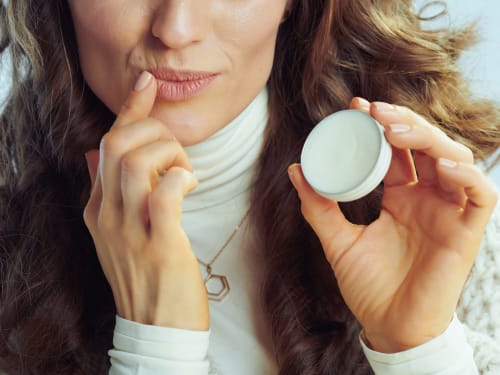
Humectant that draws moisture from the environment and deeper skin layers
-

Elevate your autumn skincare routine with our expert advice and innovative treatments: achieve a radiant complexion as the seasons change and the leaves fall.
-

Humectant that draws moisture into skin