

This episode examines the critical distinction between the restriction response and true food addiction, using evidence from the landmark 1944 Minnesota Starvation Experiment through to a comprehensive 2026 BMJ systematic review tracking weight regain after modern GLP-1 medications.
What’s in this audio? (Click to expand)
- Introduction: Setting the stage for understanding weight regain as biology, not personal failure, particularly after stopping weight management medications.
- The Weight Loss Paradox: Why 66% of lost weight returns within one year and what this tells us about conventional approaches.
- Minnesota Starvation Experiment: The 1944 study that proved restriction triggers food obsession, depression, and metabolic slowdown in healthy individuals.
- Hormonal Warfare: How leptin drops by 50% and ghrelin surges during restriction, creating overwhelming biological drives that override willpower.
- Modern WMM Evidence: The 2026 BMJ systematic review showing rapid weight regain and health marker reversal after stopping GLP-1 medications.
- Long-Term Maintenance Strategies: Comparing weight management medications versus behavioural programmes and why skill-building matters for sustained success.
- Restriction vs Addiction: Critical self-assessment questions to distinguish biological starvation response from true food addiction requiring different interventions.
- The Satiety First Approach: How protein and fat trigger your body’s natural GLP-1 through the ileal brake mechanism for sustainable appetite regulation.
- Skin Health & Cortisol: The hidden cost of chronic restriction on collagen synthesis, skin barrier function, and accelerated aging.
- Your Path Forward: Practical guidance for choosing nutritional rehabilitation versus therapeutic support based on your unique timeline and triggers.
Introduction
The shame, frustration, and self-blame can be crushing. Is it food addiction? A lack of willpower? Or is there a deeper, more fundamental reason you feel so out of control around food?
What if those intense urges, the constant food thoughts, and the desperate binges aren’t a sign of ‘addiction’ in the way we usually think about it, but a primal biological response to simply not eating enough?

The key to understanding this paradox lies in a ground-breaking study conducted 80 years ago, during World War II. This research still profoundly shapes how we might view and treat eating struggles today.
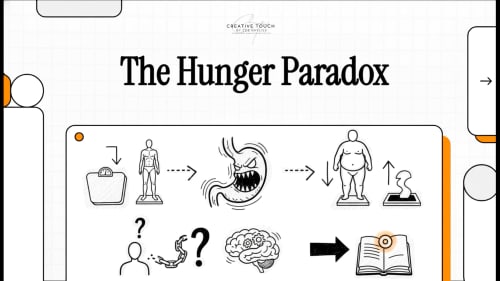
The Science of Hunger: Why Willpower Isn’t the Problem
Have you ever wondered why the more you diet, the more you obsess over food? In this short explainer, we dive into the landmark Minnesota Starvation Experiment to reveal what happens to the human brain and body when we don’t eat enough.
View Full Transcript
You know that feeling, right? That super frustrating cycle? You go on a diet, you lose some weight, but then the hunger comes roaring back with a vengeance and the weight just piles back on.
It feels like a personal failure every single time. But what if I told you the problem isn’t your willpower? What if it’s actually a predictable biological feature of how we’re wired?
Let’s unpack the science behind this whole hunger paradox. OK, get ready for a kind of sobering statistic. Study after study shows that about 2/3 of the weight people lose, whether it’s on a popular diet or even some medications, is typically regained within just one year of stopping. 2/3.
I mean, that’s a huge number. It really makes you stop and think, maybe the problem isn’t the person, but the whole approach. So that’s the big question we’re tackling today, isn’t it?
Is this endless cycle really about a personal lack of willpower? Or could it be that the entire “Just Eat Less” philosophy is basically setting our bodies up to fail from the start? To really get why this happens, we have to clear up a massive misunderstanding about hunger and cravings.
So let’s look at what a lot of us think is going on, versus what the science is actually telling us. When that intense, just overwhelming hunger comes back after you’ve been good for a while, it is so easy to diagnose yourself. It totally feels like a food addiction, doesn’t it?
This uncontrollable urge that you just can’t seem to fight. It’s a really powerful feeling, but it might not be what you think it is. Let’s talk about a different idea, the restriction response.
Now, this isn’t about being addicted to a substance. It’s a completely predictable biological reaction your body has when it thinks it’s starving. When you severely cut back on food, your body hits the panic button and fights back with some incredibly powerful hormones designed to make you eat and get that weight back.
And listen, this is nothing new. The evidence for this goes way back to a landmark study in 1944, the Minnesota Starvation Experiment. They took perfectly healthy men and put them on a pretty restricted diet, around 1570 calories a day.
These guys, who had zero issues with food before, developed an intense obsession. We’re talking, dreaming about food, reading cookbooks for fun, hoarding recipes. This wasn’t a personal failing, it was a direct biological response to deprivation.
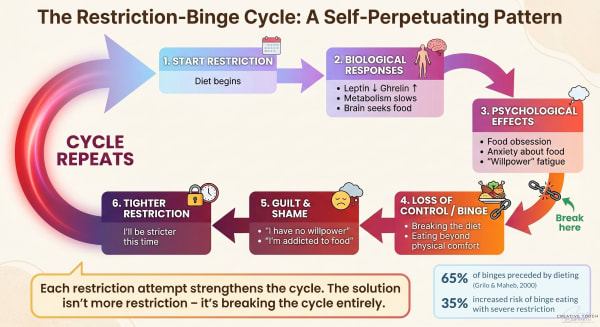
And we see this exact same pattern today. Research has found that in 65% of binge eating cases, a period of dieting came first. Just let that sink in.
The restriction wasn’t the cure, it was the trigger. It’s a massive clue that trying to fight our own biology with brute force is pretty much a losing battle. So if restriction is designed to backfire, what’s the alternative?
Well, the good news is your body already has this amazing, sophisticated system for managing your appetite. We just have to learn how to work with it instead of against it. I’m sure you’ve heard about these modern weight loss drugs that work on the GLP-1 hormone pathway, but here is the absolute key insight.
GLP-1 is not just something you get in a medication, it’s a hormone your own body produces naturally to tell your brain, “Hey, I’m full and satisfied.” The real secret is just knowing which foods flip that natural switch on. So how do we turn it on? Well.
It’s a process called the Ileal Break. It’s pretty simple really. First you eat a meal that’s rich in protein and fat.
Then as those nutrients travel way down your digestive tract, they activate these special little cells called L-cells. And finally, those cells release your body’s own GLP-1, which sends a direct message to your brain that says, “We’re good down here. You can stop eating now.” It’s literally your body’s natural off switch.
And this isn’t just a theory, it’s completely changing how doctors think about weight management. Check out this quote from Doctor David Unwin, a GP in the UK. For decades he gave the same old “eat less” advice and then blamed his patients when it didn’t work.
He then had a realisation that the advice itself was the problem. The moment he shifted his focus to teaching patients how to work with their satiety hormones, he saw incredible, lasting results. So the real takeaway here is this.
The focus has to shift away from the quantity of calories and onto the quality and type of food you’re eating. It’s all about eating in a way that turns on your body’s natural fullness signals, instead of constantly trying to fight off its hunger signals. And what’s really fascinating is that this whole idea of managing your body’s hormones instead of fighting them have benefits that go way, way beyond the scale.
In fact, it can impact your health right down to the cellular level. And you can even see the effects in the health of your skin. See, when you eat to support satiety with things like protein and healthy fats, you’re not just managing hunger.
You’re also creating really stable blood sugar levels and that helps reduce the kind of chronic low grade inflammation that often tags along with a diet high in processed carbs. Now, this is a huge deal for your skin because of a process called glycation. It sounds kind of science-y, but it’s simple when you have a bunch of extra sugar floating around in your blood from big blood sugar spikes, those sugar molecules can act like sticky little pieces of glue.
They literally attach themselves to proteins like the collagen in your skin, making it stiff and brittle. This process actively speeds up how fast your skin ages. So the connection here is crystal clear.
By choosing foods that keep your blood sugar nice and stable, you reduce that sticky glycation process. That helps protect your skin’s collagen, keeping it firm and elastic. And because you’re tamping down on that systemic inflammation, you end up with a calmer, healthier looking complexion overall.
OK, let’s bring all this together. The big takeaway is a fundamental shift in mindset. It’s about moving away from seeing your body as an enemy you have to fight.
And toward seing it as a system that you can learn to fuel correctly. It all boils down to changing the question we ask ourselves. The old broken model asks, how little can I possibly eat and get away with it?
That question is rooted in deprivation. The new, smarter model asks, am I genuinely satisfied? And that question is rooted in biology.
Encouraging you to give your body the exact signals it needs to regulate itself. And that kind of leaves us with one last thought. For so long, the whole conversation has been about discipline, control, and fighting your body’s urges.
But what if that’s been the wrong way to look at it all along? What if the real goal isn’t to fight your body at all, but to finally stop, listen and learn to speak its language.
The Minnesota Starvation Experiment: Your Brain and Body on Severe Restriction
In 1944, 36 healthy young men volunteered for a remarkable experiment led by Dr. Ancel Keys at the University of Minnesota. For six months, they consumed around 1,570 calories a day – roughly equivalent to many modern ‘crash diets’ or periods of severe calorie restriction. [2]
The researchers wanted to understand starvation’s physical and psychological effects, hoping to learn how to rehabilitate those suffering from famine in war-torn Europe.
Intense Food Obsession: Food became the absolute centre of the men’s lives. They spent hours reading cookbooks, planning elaborate meals, dreaming about food, and mixing bizarre combinations like ketchup and coffee. Food thoughts were constant and intrusive.
Metabolic Slowdown & Physical Conservation: Their bodies drastically reduced the energy they burned at rest, by as much as 40%. [3] It was a survival mechanism, clinging onto every calorie. This conservation also manifested as increased cold sensitivity and hair loss, symptoms similarly observed in modern clinical settings (for more on the latter, see our article on Mounjaro and hair loss). This metabolic adaptation is still commonly seen in people who have undergone periods of significant dieting.
Profound Psychological Changes: These previously well-adjusted, sociable men became irritable, anxious, depressed, withdrawn, and lost interest in activities they once enjoyed, including relationships. Their emotional stability crumbled under the weight of constant hunger and deprivation, mirroring modern reports of ‘hangry’ feelings or diet-induced mood swings. [4]
Severe calorie restriction doesn’t just make you hungry; it triggers profound biological and psychological changes that can look remarkably like addictive behaviours.

Why Your Diet Might Be Fueling Cravings
Modern science confirms what the Minnesota study starkly demonstrated: deliberately restricting your food intake triggers strong biological responses designed to make you seek food, particularly high-energy options.

Responses to food restriction may include:
Hormonal Chaos: Key hunger and fullness hormones become imbalanced. Leptin, the hormone that signals satiety and energy balance, plummets, sometimes by as much as 50%. [5] Simultaneously, Ghrelin, the primary hunger hormone, surges, intensifying cravings, especially for fatty and sugary foods, which signal quick energy. [[6], [21]] The specific craving for this fat-and-sugar combination is not coincidental: when both macronutrients are delivered together, as in most ultra-processed foods, competing cellular signals prevent either from being oxidised cleanly, a mechanism the Randle Cycle describes in detail. This is one reason restriction-induced binges on ultra-processed foods tend to compound metabolic difficulty rather than resolve it.
Brain Changes: Beyond hormonal shifts, restriction also influences brain function, impacting areas key to appetite regulation and control. Dietary restriction and dieting are associated with effects on cognitive control, including aspects of executive function needed for self-regulation around food. [1][7]
Simultaneously, studies show that caloric deprivation or dieting increases reactivity and attention towards food cues, making them harder to ignore. [8] Restrictive dieters, in particular, demonstrate an attentional bias where high-calorie foods tend to capture their attention more readily than lower-calorie options. [9]
The combination of potentially affected cognitive control and heightened attention to food stimuli can feel like losing your ‘brakes’ around food, increasing susceptibility to cravings and impulsive eating when faced with tempting cues.
Metabolic Adaptation: As the Minnesota study shows, the body can become more energy-efficient during and after periods of sustained calorie restriction. In some people, research suggests energy requirements for weight maintenance can be roughly 10–15% lower than expected after weight loss (even after accounting for changes in body size and composition), though the size and persistence of this effect varies between individuals and study conditions. [22] This can make maintaining further restriction harder and may increase the risk of weight regain, especially if the response is to tighten restriction even more. This adaptation also has a cellular dimension: repeated energy deficits can impair the body’s capacity to switch cleanly between fat and glucose as fuel, a phenomenon known as metabolic flexibility, which is one reason metabolic recovery from chronic dieting often takes considerably longer than the dieting period itself.
Biological forces, triggered by restriction, can drive intense cravings, obsession, and loss of control around food. They mimic the symptoms we often associate with addiction.
Not Underweight? Why the Minnesota Study May Still Explain Your Diet Struggles
It’s understandable to question the direct relevance of the Minnesota starvation experiment if you are currently overweight and struggling with dieting.
The significance of the Minnesota experiment lies not solely in the participants’ underweight outcome. It demonstrates the body’s fundamental biological and psychological response to a sustained energy deficit; consistently consuming substantially fewer calories than the body requires to function optimally.
Modern dietary practices, particularly those involving significant or prolonged calorie restriction, create a state of relative energy deficiency, regardless of an individual’s starting weight or stored body fat. [1] Your body’s sophisticated survival mechanisms are activated whenever consistent, adequate nourishment is unavailable.

While the magnitude might differ from clinical starvation, the nature of the response is consistent. The intense hunger signals, the metabolic slowdown, and the psychological preoccupation with food are predictable reactions initiated by the perceived energy shortage. These deprivation-induced symptoms, which can mimic food addiction, emerge long before an individual reaches a state of clinical underweight.
Food Addiction vs. Restriction Response: Understanding the Difference
These powerful biological shifts triggered by dietary restriction can create symptoms that are often mistaken for food addiction. So, how do we tell the difference?
Prevalence estimates vary by the tool used and the population studied. For example, one large U.S. study using the modified Yale Food Addiction Scale 2.0 (mYFAS 2.0) reported that about 15% of participants met the scale’s threshold for “food addiction,” [10] (a screening definition, not a diagnosis) while other general-population estimates - such as a representative German sample using YFAS 2.0 - are closer to 8%. [21]
For a deeper explanation of the Yale Food Addiction Scale (YFAS) - including why it’s best viewed as a research screening tool rather than a diagnosis - see our article Understanding Food Addiction: The Yale Food Addiction Scale 2.0 Explained. It also explains how dieting history can influence “addiction-like” symptom scores and why interpretation is safest when paired with appropriate professional support.
Research indicates that a significant portion of people presenting with these symptoms are experiencing the biological and psychological backlash of dietary restriction. This is supported by studies on the development of eating disorders often linked to these symptoms; for instance, in one study of individuals with Binge Eating Disorder (BED), approximately 65% reported that the onset of dieting came prior to their first binge eating episode. [11] [12]
Understanding the root cause is vital because the approach to recovery is very different.
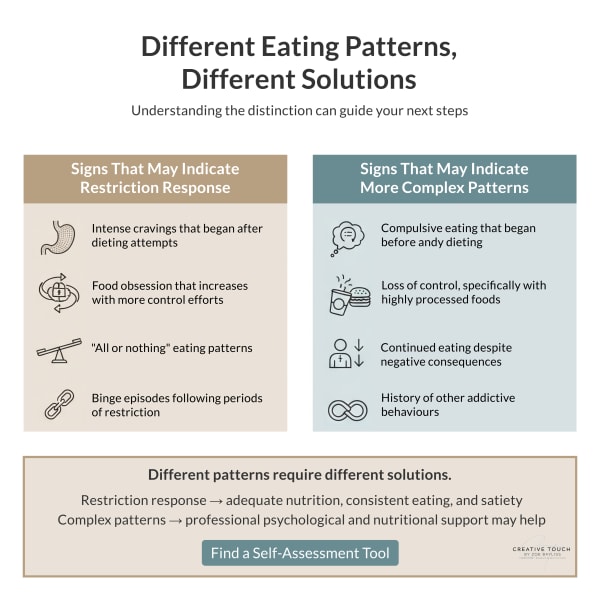
| Symptom | Restriction Response | True Food Addiction |
|---|---|---|
| Craving triggers | Hunger, missed meals | Emotional stress, boredom, specific food cues |
| Preferred foods | Any available high-calorie food | Specific ultra-processed items |
| Eating pace | Often rapid, until uncomfortably full | Often involves feelings of loss of control while eating |
| Psychological relief | Temporary reduction in hunger anxiety | Mood numbing/euphoria during eating |
| Childhood patterns | Eating difficulties typically began after starting restrictive diets | Possible early patterns of compulsive overeating or strong preference for specific hyper-palatable foods |
Note: This table is for informational purposes only and not a substitute for a professional diagnosis.
When It’s More Than Restriction: Other Factors at Play
While understanding the restriction response is important, we have to recognise that diet history isn’t the only factor driving eating struggles. For some people, compulsive eating patterns begin before attempts to diet.
In these cases, other underlying factors may be contributing to the struggle. For example, amongst people with BED, research indicates that for roughly 35%, the bingeing behaviour started before dieting attempts. [11]
To provide a clearer picture of these additional influences, here’s a summary of key clinical and behavioural correlates often associated with food addiction, as identified in academic literature:
| Correlate Category | Specific Conditions / Behaviours | Key Findings from Academic Literature |
|---|---|---|
| Eating Disorders |
|
|
| Mental Health Comorbidities |
|
|
| Other Addictive Behaviours |
|
|
| Sleep Patterns |
|
|
| Dietary Patterns |
|
|
Research links these non-diet-driven eating struggles more often to:
Childhood Trauma: Experiences of physical or sexual abuse in childhood can significantly increase the risk of developing complex eating patterns, potentially increasing the risk of ‘food addiction’ symptoms by as much as 90% in some populations. [13]
Attention Deficits: There is a notable overlap between Attention Deficit Hyperactivity Disorder (ADHD) and eating disorders, including symptoms assessed by tools like the Yale Food Addiction Scale. Research using cluster analysis to study individuals with varying ‘food addiction’ symptom profiles suggests differences based on dieting history. One study found that among individuals with more severe food addiction symptoms and less history of restrictive dieting, approximately 41% met screening criteria for Adult ADHD, compared to approximately 12% among those with less severe food addiction symptoms but a greater history of restrictive dieting. [12] This indicates a stronger association between attention deficits and food addiction symptoms that are not primarily driven by a history of restriction.
Co-occurring Conditions & Impulsivity: Individuals whose eating patterns align more with a ‘true food addiction’ profile (less linked to restrictive dieting history) often show significantly higher impulsivity scores compared to those whose symptoms are more associated with a history of restriction. [12] This difference in impulsivity suggests potential underlying differences in impulse control pathways. The same study found that individuals in the group with more severe food addiction symptoms and less history of restrictive dieting had significantly higher mean scores on a standard impulsivity measure compared to the group with less severe food addiction symptoms and more history of restrictive dieting.
For these individuals, simply addressing the restriction may not be enough; underlying psychological or neurodevelopmental factors also need to be addressed.
Why Getting the Right Assessment Matters
The Yale Food Addiction Scale remains a valuable research tool for assessing addiction-like eating symptoms. However, its results need careful interpretation, ideally by a qualified professional who understands the nuance between diet-induced symptoms and other drivers.
A high YFAS score combined with a history of chronic dieting strongly suggests focusing on nutritional rehabilitation and breaking the restriction-binge cycle first.
A high YFAS score in someone whose compulsive eating preceded dieting, or is linked to significant trauma, ADHD, or high impulsivity, points towards the need for an addiction-informed or trauma-focused treatment approach.

As specialists know, misdiagnosing a starvation response as addiction can lead to ineffective or even harmful treatment.
What This Means for Weight Management
If you’re using GLP-1 medications like Mounjaro or considering what happens when you stop, this distinction between restriction response and food addiction becomes particularly relevant.
The Post-Medication Hunger Question
GLP-1 medications work by suppressing appetite through hormonal pathways. When you discontinue them, hunger signals return, sometimes more intensely than before treatment began. This is a predictable biological response, not a character flaw.
We see this regularly with clients transitioning off Mounjaro. There’s often a moment of panic when appetite returns: “It’s all coming back. I knew I couldn’t do this without the medication.” But here’s what we’ve learned to ask: Is this hunger, or is this the same compulsive eating you experienced before?
The answer matters enormously. For most clients we work with, what returns is simply hunger; the normal biological signal they’d forgotten how to recognise after months of pharmaceutical suppression. It feels alarming precisely because they haven’t experienced genuine hunger in so long.
The critical question becomes: is this returning hunger a normal biological recalibration, a restriction response from inadequate nutrition, or evidence of deeper food addiction patterns?
A 2026 systematic review in The BMJ analysed weight regain patterns across 37 studies (9,341 participants) after stopping weight management medications. The findings paint a sobering picture: people regained weight at an average rate of 0.4 kg per month after cessation, with newer incretin mimetics like semaglutide and tirzepatide showing even faster regain at 0.8 kg per month. [27]
Critically, this weight regain was directly associated with reversal of cardiometabolic improvements: those who regained more weight experienced greater increases in blood pressure, cholesterol, and blood glucose, alongside decreased insulin sensitivity. The health benefits, not just the weight loss, disappeared with weight regain. [27]
Yet some individuals maintain losses successfully. The difference often lies in what happens when hunger returns. Those who interpret returning hunger as “addiction” often respond with tighter restriction, potentially triggering the very cascade of symptoms described in this article: hormonal chaos, food obsession, and eventual loss of control.
Research tells us these statistics mask important individual variation. In the STEP 1 trial extension, semaglutide (Wegovy) users regained an average of 11.6 percentage points over 52 weeks off-treatment - roughly two-thirds of their initial 17.3% loss. [15] Yet some benefit persisted: net losses of 5.6% and 9.9% respectively remained even after regain for semaglutide and tirzepatide users.

The key finding from the systematic review: weight regain was consistently faster after medication cessation than after behavioural weight management programmes (by 0.3 kg/month), independent of the amount of initial weight loss. This suggests that pharmaceutical appetite suppression, while highly effective during treatment, may not establish the same sustained behavioural and metabolic changes as approaches that work with natural satiety systems. [27]
A Different Approach
The emerging evidence suggests a different path. Rather than fighting returning hunger with restriction, what if you worked with your body’s natural satiety systems?
UK clinical data from Dr David Unwin’s NHS practice demonstrates that dietary approaches focused on satiety rather than restriction can maintain weight loss without constant hunger. [16] The key distinction: eating to genuine fullness with foods that trigger natural appetite-suppressing hormones, rather than eating less and enduring the biological backlash. The cellular basis for why this distinction matters, why whole-food dietary patterns built around protein and fat support stable satiety, while the fat-and-sugar combination of ultra-processed foods creates a specific metabolic difficulty, is explained in our Randle Cycle overview.
In our weight management consultations, we’ve started asking different questions. Not “how few calories can you manage?” but “are you actually satisfied after meals?” Not “what foods are you avoiding?” but “what foods leave you genuinely full for hours?” The shift in framing changes everything about how clients approach their relationship with food.
Our article on building natural satiety after Mounjaro explores this approach in detail, including the UK clinical evidence and practical strategies. If you’re currently on GLP-1 medication or planning your transition off it, understanding the difference between biological hunger and restriction response could shape your entire approach.
When to Seek Different Support
If your eating patterns match the “true food addiction” profile described in this article, particularly if compulsive eating preceded any dieting attempts, the satiety-focused approach alone may not be sufficient. In these cases, addiction-informed treatment or trauma therapy may be more appropriate starting points. [26]
One question we find particularly revealing in consultations: “Think back to before you ever tried to lose weight. What was your relationship with food like then?” For some clients, the answer is “completely normal until I started my first diet at 15.” For others, it’s “I was stealing food and hiding it from age 8.” These are fundamentally different situations requiring different approaches.
The YFAS self-assessment can help you reflect on your patterns. But remember: a high score combined with extensive dieting history often indicates restriction response. A high score in someone who never dieted before developing compulsive patterns suggests different underlying factors.
The Restriction-Skin Connection
There’s another reason this topic matters to us: chronic restriction affects your skin. We see this regularly. Clients who’ve been yo-yo dieting for years often present with skin that’s lost its resilience, healing more slowly after treatments and showing signs of premature ageing that don’t match their chronological age.
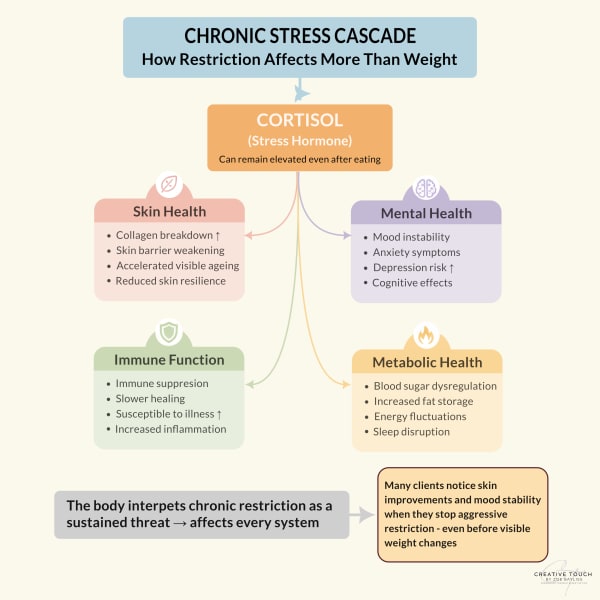
Caloric restriction increases cortisol production, the body’s primary stress hormone. [17] This isn’t speculation; it’s been demonstrated in controlled trials. A 2010 study found that three weeks of 1,200 kcal/day restriction significantly increased total cortisol output compared to those eating normally. [17]
Why does this matter for skin? Cortisol directly suppresses collagen synthesis. Research shows that elevated cortisol downregulates collagen type I production in human dermal fibroblasts, the cells responsible for maintaining skin structure. [18] Chronic cortisol elevation also increases matrix metalloproteinases (MMPs), enzymes that actively break down existing collagen. [19] A 2024 clinical study confirmed that psychological stress, mediated through cortisol and epinephrine, significantly impairs skin barrier function and wound healing whilst reducing collagen gene expression. [20]
We’ve observed this clinically. Clients in active restriction phases often have compromised skin barrier function - increased sensitivity, slower recovery from procedures, and that telltale dullness that no topical treatment quite addresses. When they shift to adequate nutrition, we often observe improvements in treatment outcomes before any weight change occurs. The skin responds to being properly nourished.
The cycle becomes self-reinforcing: restriction triggers cortisol, cortisol damages skin structure, visible skin changes create more stress about appearance, which may drive further restriction.
This is why we advocate for approaches that don’t require chronic hunger. Sustainable weight management shouldn’t come at the cost of your skin health or psychological wellbeing. Supporting your body’s nutritional needs, including through quality omega-3s such as those from our Zinzino range, helps maintain the foundations that all our aesthetic treatments build upon.
Moving Forward: Your Path to Peace with Food
If you’ve cycled through diets, battled constant cravings, and found yourself obsessing over food, this article offers a different lens. Your symptoms may be your body’s natural, powerful response to being deprived, rather than evidence of addiction or weakness.
Understanding your pattern:
Start by honestly assessing your history. Did your difficult relationship with food begin before or after dieting attempts? The answer shapes everything about what will actually help.
In our experience, many clients have never been asked this question. They’ve been told they lack willpower, need more discipline, or should try harder. But when we work through the timeline together - when the bingeing started, when the food obsession began, what they were doing nutritionally at the time - the pattern often becomes clear. The “addiction” they’ve been fighting is frequently their body fighting back against years of inadequate fuel.
If restriction came first, the path forward involves:
- Adequate, regular nutrition that genuinely satisfies
- Patience as your body recalibrates (the Minnesota participants needed 8-12 months to recover normal eating patterns)
- Compassion rather than further restriction when cravings arise
If compulsive eating preceded dieting, or if trauma, ADHD, or high impulsivity are part of your picture, additional professional support may be essential. The restriction response framework doesn’t negate the reality of food addiction; it helps distinguish between conditions that look similar but require different approaches.
Practical next steps:
Reflect on your history using our food addiction self-assessment, interpreting results through the lens of your dieting timeline.
If you’re managing weight with medication, read our guide to life after Mounjaro, which explores satiety-focused approaches that don’t rely on restriction.
If restriction response seems likely, consider working with a dietitian who understands the biology of hunger. The BDA directory can help you find qualified support.
If true food addiction patterns are present, seek professionals experienced in addiction-informed treatment or trauma therapy. Beat Eating Disorders offers UK-specific guidance.
At Creative Touch, we see the effects of chronic restriction in our clients’ skin, stress levels, and overall wellbeing. We also see the transformation when people find peace with food. Our body sculpting services support weight management goals, but we believe the foundation should be a healthy relationship with eating, not endless deprivation.
True food addiction exists and is a valid struggle. But it may be less common than the widespread issue of diet-induced eating problems. Understanding this critical distinction could be your most important step toward lasting peace and freedom around food.
References
NEDC (2024). NEDC e-Bulletin Issue 59. NEDC. nedc.com.au/…termine-how-we-think (Accessed: 2025-05-16)
Ancel Keys (1950). The Biology of Human Starvation. University of Minnesota Press. ISBN: 978-0-8166-7234-9
Müller, M., Enderle, J., Pourhassan, M., Braun, W., Eggeling, B., Lagerpusch, M., Glüer, C., Kehayias, J., Kiosz, D., Bosy-Westphal, A. (2015). Metabolic adaptation to caloric restriction and subsequent refeeding: the Minnesota Starvation Experiment revisited. The American Journal of Clinical Nutrition, 102(4), 807-819. doi.org/10.3945/ajcn.115.109173
doi: 10.3945/ajcn.115.109173American Psychological Association (2025). The psychology of hunger. https://www.apa.org. apa.org/monitor/2013/10/hunger (Accessed: 2025-05-16)
Lecoultre, V., Ravussin, E., Redman, L. (2011). The Fall in Leptin Concentration Is a Major Determinant of the Metabolic Adaptation Induced by Caloric Restriction Independently of the Changes in Leptin Circadian Rhythms. The Journal of Clinical Endocrinology & Metabolism, 96(9), E1512-E1516. doi.org/10.1210/jc.2011-1286
doi: 10.1210/jc.2011-1286Perello, M., Dickson, S. (2015). Ghrelin Signalling on Food Reward: A Salient Link Between the Gut and the Mesolimbic System. Journal of Neuroendocrinology, 27(6), 424-434. doi.org/10.1111/jne.12236
doi: 10.1111/jne.12236Kemps, E., Tiggemann, M., Marshall, K. (2005). Relationship between dieting to lose weight and the functioning of the central executive. Appetite, 45(3), 287-294. doi.org/10.1016/j.appet.2005.07.002
doi: 10.1016/j.appet.2005.07.002Stice, E., Burger, K., Yokum, S. (2013). Caloric deprivation increases responsivity of attention and reward brain regions to intake, anticipated intake, and images of palatable foods. NeuroImage, 67(), 322-330. doi.org/10.1016/j.neuroimage.2012.11.028
doi: 10.1016/j.neuroimage.2012.11.028Jiang, W., Zhang, H., Yang, H., Zhang, Z., Wang, A. (2024). The Absence of Attentional Bias to Low-Calorie Food Stimuli in Restrictive Dieters: Differences in the Allocation of Attentional Resources to High-Calorie Foods. Brain Sciences, 14(6), 551. doi.org/10.3390/brainsci14060551
doi: 10.3390/brainsci14060551Schulte, E., Gearhardt, A. (2017). Associations of Food Addiction in a Sample Recruited to Be Nationally Representative of the United States. European Eating Disorders Review, 26(2), 112-119. doi.org/10.1002/erv.2575
doi: 10.1002/erv.2575Grilo, C., Masheb, R. (2000). Onset of dieting vs binge eating in outpatients with binge eating disorder. International Journal of Obesity, 24(4), 404-409. doi.org/10.1038/sj.ijo.0801171
doi: 10.1038/sj.ijo.0801171Wiss, D., Brewerton, T. (2020). Separating the Signal from the Noise: How Psychiatric Diagnoses Can Help Discern Food Addiction from Dietary Restraint. Nutrients, 12(10), 2937. doi.org/10.3390/nu12102937
doi: 10.3390/nu12102937Mason, S., Flint, A., Field, A., Austin, S., Rich‐Edwards, J. (2013). Abuse victimization in childhood or adolescence and risk of food addiction in adult women. Obesity, 21(12), . doi.org/10.1002/oby.20500
doi: 10.1002/oby.20500Kalm, L., Semba, R. (2005). They Starved So That Others Be Better Fed: Remembering Ancel Keys and the Minnesota Experiment. The Journal of Nutrition, 135(6), 1347-1352. doi.org/10.1093/jn/135.6.1347
doi: 10.1093/jn/135.6.1347Wilding, J., Batterham, R., Davies, M., Van Gaal, L., Kandler, K., Konakli, K., Lingvay, I., McGowan, B., Oral, T., Rosenstock, J., Wadden, T., Wharton, S., Yokote, K., Kushner, R., (2022). Weight regain and cardiometabolic effects after withdrawal of semaglutide: The
doi: 10.1111/dom.14725STEP 1 trial extension. Diabetes, Obesity and Metabolism, 24(8), 1553-1564. doi.org/10.1111/dom.14725Unwin, D., Delon, C., Unwin, J., Tobin, S., Taylor, R. (2023). What predicts drug-free type 2 diabetes remission? Insights from an 8-year general practice service evaluation of a lower carbohydrate diet with weight loss. BMJ Nutrition, Prevention & Health, 6(1), 46-55. doi.org/10.1136/bmjnph-2022-000544
doi: 10.1136/bmjnph-2022-000544Tomiyama, A., Mann, T., Vinas, D., Hunger, J., DeJager, J., Taylor, S. (2010). Low Calorie Dieting Increases Cortisol. Psychosomatic Medicine, 72(4), 357-364. doi.org/10.1097/PSY.0b013e3181d9523c
doi: 10.1097/PSY.0b013e3181d9523cChae, M., Bae, I., Lim, S., Jung, K., Roh, J., Kim, W. (2021). AP Collagen Peptides Prevent Cortisol-Induced Decrease of Collagen Type I in Human Dermal Fibroblasts. International Journal of Molecular Sciences, 22(9), 4788. doi.org/10.3390/ijms22094788
doi: 10.3390/ijms22094788Segerstrom, S., Miller, G. (2004). Psychological Stress and the Human Immune System: A Meta-Analytic Study of 30 Years of Inquiry.. Psychological Bulletin, 130(4), 601-630. doi.org/10.1037/0033-2909.130.4.601
doi: 10.1037/0033-2909.130.4.601Pujos, M., Chamayou‐Robert, C., Parat, M., Bonnet, M., Couret, S., Robiolo, A., Doucet, O. (2024). Impact of Chronic Moderate Psychological Stress on Skin Aging: Exploratory Clinical Study and Cellular Functioning. Journal of Cosmetic Dermatology, 24(1), . doi.org/10.1111/jocd.16634
doi: 10.1111/jocd.16634Hauck, C., Weiß, A., Schulte, E., Meule, A., Ellrott, T. (2017). Prevalence of ‘Food Addiction’ as Measured with the Yale Food Addiction Scale 2.0 in a Representative German Sample and Its Association with Sex, Age and Weight Categories. Obesity Facts, 10(1), 12-24. doi.org/10.1159/000456013
doi: 10.1159/000456013Redman, L., Heilbronn, L., Martin, C., de Jonge, L., Williamson, D., Delany, J., Ravussin, E., (2009). Metabolic and Behavioral Compensations in Response to Caloric Restriction: Implications for the Maintenance of Weight Loss. PLoS ONE, 4(2), e4377. doi.org/10.1371/journal.pone.0004377
doi: 10.1371/journal.pone.0004377Horn, D., Linetzky, B., Davies, M., Laffin, L., Wang, H., Murphy, M., Zimner-Rapuch, S., Lau, E., Arad, A., Lee, C. (2025). Cardiometabolic Parameter Change by Weight Regain on Tirzepatide Withdrawal in Adults With Obesity. JAMA Internal Medicine, (), . doi.org/10.1001/jamainternmed.2025.6112
doi: 10.1001/jamainternmed.2025.6112LaFata, E., Gearhardt, A. (2022). Ultra-Processed Food Addiction: An Epidemic?. Psychotherapy and Psychosomatics, 91(6), 363-372. doi.org/10.1159/000527322
doi: 10.1159/000527322Akhlaghi, M., Kohanmoo, A. (2023). Sleep deprivation in development of obesity, effects on appetite regulation, energy metabolism, and dietary choices. Nutrition Research Reviews, 38(1), 4-24. doi.org/10.1017/S0954422423000264
doi: 10.1017/S0954422423000264Cassin, S., Sijercic, I., Montemarano, V. (2020). Psychosocial Interventions for Food Addiction: a Systematic Review. Current Addiction Reports, 7(1), 9-19. doi.org/10.1007/s40429-020-00295-y
doi: 10.1007/s40429-020-00295-yWest, S., Scragg, J., Aveyard, P., Oke, J., Willis, L., Haffner, S., Knight, H., Wang, D., Morrow, S., Heath, L., Jebb, S., Koutoukidis, D. (2026). Weight regain after cessation of medication for weight management: systematic review and meta-analysis. BMJ, 392, e085304. doi.org/10.1136/bmj-2025-085304
doi: 10.1136/bmj-2025-085304