

What’s in this audio? (Click to expand)
- Introduction: Why beauty sleep transcends marketing cliché to become precisely scheduled, biologically measurable nocturnal repair.
- Cellular Clocks & Clock Genes: How BMAL1, CLOCK, PER, and CRY genes create 24-hour transcription-translation feedback loops in every skin cell.
- The 24-Hour Repair Schedule: TEWL minimums at 8-10AM, keratinocyte division peaking at midnight, and maximum permeability at 3-5AM.
- Location Studies & UV Impact: Why forearm rhythms show 4.5x lower amplitude than covered lower back, proving UV de-synchronises repair clocks.
- Timing Matters: The GH Window: Why 70% of daily growth hormone concentrates in first-half sleep during slow-wave stages front-loaded before midnight.
- Active Damage Reversal: How filaggrin and loricrin deplete molecularly after 10 waking hours, requiring nightly replenishment before visible damage appears.
- Melatonin’s Antioxidant Power: The cutaneous melatonergic system producing higher electron-donating potential than vitamin C for hydroxyl radicals.
- The Cortisol Sabotage: How chronically elevated stress hormones release matrix metalloproteinases actively degrading the collagen GH builds overnight.
- Practical Implementation: Retinoid timing for peak permeability, humidifier necessity in central-heated British homes, and silk pillowcase evidence.
- Nutritional Support & Recovery: Omega-3 ratios, oral ceramide meta-analysis showing significant TEWL improvement, and 40% UK winter vitamin D insufficiency.
- Morning Protection Protocol: Why aggressive cleansing strips overnight lipid synthesis and SPF becomes armour protecting sleep’s collagen investment.
You’ve heard the phrase beauty sleep so often that it sounds like marketing. But it has a surprisingly literal meaning: after a night of too little sleep, people are rated as looking more tired, less healthy, and less attractive than when they’re well rested. [48]
This is what the marketing never mentions: around 50–70% of your daily growth hormone - the signal driving collagen synthesis - is released during the first half of the night. [1] Miss that window by going to bed at 1am instead of 10pm, and you’re not just losing hours of sleep; you’re missing the portion richest in skin repair.
Your skin runs an active, precisely timed repair cycle while you sleep, and your cells know exactly what time it is. Every keratinocyte, fibroblast, and melanocyte contains its own molecular clock - actual genes called BMAL1, CLOCK, PER, and CRY [4] - that tick away whether you’re asleep or scrolling through your phone at 2am. I’ve watched so many clients make every skincare investment except the one that matters most: protecting these circadian repair windows.
The research we’ll cover explains when specific processes peak, what 2025 studies revealed about the molecular toll of sleep deprivation, and why your bedroom humidity might matter more than your £80 serum.
Understanding your skin’s overnight programme changes your approach to skincare. Which evening habits actually make a difference and which are just expensive ways to miss the point?
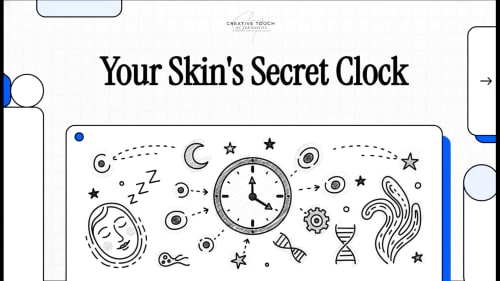
Does Your Skin Know What Time It Is? “Beauty sleep” isn’t just about how long you sleep. In this quick explainer, discover your skin’s built‑in clock, why late nights can mean missing the richest part of overnight repair, and how to time a simple evening routine so you wake up looking fresher.
View Full Transcript
Transcript
You know we’ve all heard the phrase beauty sleep, right? And it’s so easy to just file it away as a bit of an old wive’s tale. But what if it’s not just about how many hours you get in?
What if the real secret, the thing we’ve all been missing, is when you get them? Because believe it or not, your skin has its own internal clock and it’s running a precise repair schedule every single night whether you’re on board with it or not. So here’s a question for you.
Does your skin know what time it is? I mean, it sounds mad, doesn’t it? We think of clocks as something on our wrist or in our brain, but your skin itself?
Can it tell day from night? Well the answer, amazingly, is yes. A huge, emphatic, yes.
And this isn’t some fancy metaphor. I mean, literally every single one of your skin cells has its own tiny molecular clock ticking away inside it. And we’re not talking about some vague general rhythm here.
We’re talking about actual genes inside your cells. They’ve even got names like BMAL1 and CLOCK. These clock genes, as they’re called, create this precise mechanism that’s telling your skin what to do and when.
It’s like the operating system running in the background dictating when it’s time to put the shields up and when it’s time to bring in the repair crew. So here’s what we’re going to get into. First we’ll look at this secret clock and the skin’s 24 hour schedule.
Then we’ll dive into the specifics of the overnight repair programme itself. We’ll cover why timing is absolutely everything, and then some really practical tips on how to work with your clock. And finally, we’ll wrap up by looking at your biological blueprint.
Alright, so let’s get into your skin’s 24 hour schedule and really move beyond that vague “beauty sleep” idea. The best way to think about it isn’t as a simple on-off switch for day and night. It’s much more like a massive complex factory where different departments clock on for their shifts at very, very specific times.
Researchers have actually mapped this out. In the morning, between 8 am and 10 am, your skin barrier is at its absolute strongest. It’s in full on defence mode.
But then as the day wears on, and evening sets in, that barrier starts to become more permeable. It kind of loosens up. Now, that’s great for letting your skincare products in, but it’s also a time when it’s more vulnerable.
Then right around midnight, cell division, that’s the process of making new skin cells hits its absolute peak. And this is fascinating: in the really early hours, around 3:00 AM to 5:00 AM, your skin’s permeability is at its highest. It’s like a sponge ready to soak up all the good stuff you put on before bed.
It’s this rhythm that is just so key. If we boil it down, you’ve got these key moments. 8:00 AM, your barrier is like a fortress. By 8:00 PM, the gates are starting to open.
At 11:00 PM, the new skin factory is in full swing. By 4:00 AM your skin is at maximum absorption. It’s a really clear pattern, isn’t it?
The day is for defence and the night is all about repair and regeneration. Let’s zoom in on that night shift, the overnight repair programme. What is actually going on in your skin while you’re asleep? 70% - this number.
This is probably one of the most important things to understand about why timing is so crucial. 70% of a really vital signal for skin repair is released in a very specific concentrated window while you sleep, and that signal is growth hormone. About 70% of the daily dose of the very stuff that tells your body to make new collagen is released in the first half of the night. So think about it.
If you consistently go to bed late, you’re not just losing a few hours of shut eye You are literally missing the richest, most valuable part of the repair process. And you can see here just how front loaded it is. That deep, slow wave sleep, which is when that big hormone surge happens, is concentrated in your first few sleep cycles.
This is so important. It means that sleeping from say, 10 pm to 6 am is biologically not the same as sleeping from 1:00 AM to 9:00 AM. Even though it’s the same 8 hours, the person who went to bed earlier gets a much bigger hit of that collagen boosting deep sleep.
The timing, it’s everything. It’s not just about building new stuff like collagen, it’s also about fixing what got broken during the day. There was recent research that found that after you’ve been awake for about 10 hours, some of the key proteins in your skin barrier literally start to breakdown.
You can’t see it, but this invisible damage is happening all the time. And sleep? Well, that’s the only time the repair crew gets to come in and rebuild everything.
So we’ve got the science. Let’s talk about why timing is everything and what the real cost of a late night actually is. When you look at it side by side, it’s just so clear.
A 10 pm bedtime is like perfectly syncing your watch with the factory’s master clock. You catch that whole growth hormone wave, you’re right on time for peak cell turnover, everything is working together. But just push that to 1:00 AM, even if you still get your 8 hours, you’ve missed the best bit of the hormone release and you’re now working completely against your skin’s natural schedule.
And it gets worse. Because when you miss that crucial sleep, your body produces more cortisol. And cortisol is basically the villain in this story.
While your skin is trying to repair and build collagen, cortisol comes in and actively starts breaking it down. It weakens your barrier, causes inflammation, and it creates this awful, vicious cycle. Poor sleep leads to stressed skin, and that stressed skin can then make it even harder to get the good sleep you need.
OK, that’s a lot of the why, so let’s get practical. How do we start working with our clock? The great news is this isn’t about buying a load of new products.
It’s mostly about timing. So a really simple timed evening routine can make a huge difference. First cleanse gently.
Remember your barrier is about to become more vulnerable so the last thing you want to do is strip it bare. Then apply your treatments, your actives, about half an hour to an hour before your head actually hits the pillow. This just gives them a head start to begin absorbing.
And finally seal it all in. A good moisturiser will lock in all that goodness and stop water from escaping overnight. And don’t forget your sleep environment.
It’s part of your skin care routine. A cool room around 16 to 18 Celsius is ideal. Humidity is a big one, especially for us here in the UK during winter when the central heating just sucks all the moisture out of the air.
If you can aim for 40 to 60% it helps. And yes, the advice about screens is true. That blue light messes with your melatonin which isn’t just for sleep, it’s a powerful antioxidant for your skin.
And one last little UK specific point. A lot of us - something like 40% of adults - are low on vitamin D in winter and you need it to make ceramides that strengthen your skin barrier. So then you wake up in the morning and after your skin has done all that amazing repair work, the worst thing you can do is scrub it all away with the harsh cleanser.
All you need is a gentle splash with lukewarm water, and then SPF every single day. You’ve got to protect the investment your body just made over. So when we put all these pieces together, it really changes how you think about skin care, doesn’t it?
It’s not about battling against ageing or trying to force your skin to do something. It’s about finally understanding the incredibly smart system you already have. And I think if there’s one thing to take away from all this, it’s that your skin already knows exactly what to do.
It has the blueprint, it has the programme. Our job is just to stop getting in its way and give it the right conditions to do its thing. Because this repair programme, this whole system of making collagen and renewing cells, it’s going to run tonight and every single night.
It’s happening regardless. So the only question left really is are you working with it or are you working against it?
Short on Time? Here’s Tonight’s Plan
Bedtime target: Aim for 10-11pm to catch the growth hormone surge that drives collagen synthesis
Environment checklist:
- Bedroom temperature: 16-18°C
- Humidity: 40-60% (consider a humidifier during heating season)
- Screens off 30-60 minutes before bed
Routine essentials:
- Cleanse gently (don’t strip your barrier before its vulnerable overnight period)
- Apply treatments 30-60 minutes before sleep.
- Finish with an occlusive layer to reduce overnight water loss.
- Save vitamin C and SPF for the morning.
Now, let’s look at why this timing matters.
Your Skin’s 24-Hour Clock
Your skin doesn’t operate on a simple day/night switch. It’s more like a complex schedule, with separate departments active at different hours, each with its own tasks. [5]
Research has mapped specific processes to approximate times throughout the 24-hour cycle:
| Approximate Time | What’s Happening | What This Means |
|---|---|---|
| Morning (8-10am) | Barrier function tends to be strongest; transepidermal water loss (TEWL) at its lowest | Better tolerance for potentially irritating actives |
| Mid-afternoon (~3-4pm) | DNA synthesis activity increases | Cells preparing for repair |
| Evening onwards | TEWL rises; barrier becomes more permeable | Why evening routines matter—and why irritants penetrate more easily |
| Late evening (~11pm-midnight) | Keratinocyte division approaches its peak | Maximum cell turnover |
| First 90 minutes of sleep | Growth hormone surge | The collagen synthesis window |
| Early hours (~3-5am) | Skin permeability reaches its maximum | Peak absorption of overnight products |
The takeaway: consistency beats perfection. You don’t need to hit every window exactly, but working with this schedule rather than against it compounds over time.
When Your Clock Gets Disrupted
Shift workers and night owls face a particular challenge. When your sleep schedule conflicts with natural light cycles, your skin’s clock can become desynchronised from your brain’s sleep-wake rhythm. [[6], [7]]
Research suggests that consistent timing matters more than perfect timing. If you regularly sleep from 2am to 10am, your skin may partially adapt. The problem arises from irregular patterns - three days of normal hours, followed by two nights of 3 a.m. bedtimes - that prevent a stable rhythm from establishing. [8]
These timings shift slightly with chronotype - night owls and early birds run the same biological programme, just on a different schedule - but the principle remains: your deepest, most collagen‑productive sleep happens in the first cycles.
If shift work is unavoidable, the principles still apply: prioritise your actual sleep window, control your light environment, and maintain a consistent routine even if it’s at unconventional hours.
Sleep timing isn’t the only route to clock disruption. There’s a metabolic route as well. The molecular clock in your skin cells needs a functional energy supply to maintain its precision — and consistent dietary patterns that deplete that energy supply can blur the repair schedule from the inside, regardless of when you sleep. Clients who sleep well but rely heavily on ultra-processed foods can present with the same dull, sluggish-recovery skin as chronically poor sleepers, for a related but distinct reason. Both routes are worth considering together.
The 10pm-2am Window: Why Early Bedtimes Matter
You’ve probably heard that getting to bed by 10pm is somehow better for your skin. Here’s the biology behind that advice.
Growth hormone doesn’t release steadily throughout sleep. Around 50-70% of your daily GH secretion occurs during the first half of the night, primarily during slow-wave (deep) sleep. [1] And slow-wave sleep is front-loaded; you get more of it in earlier sleep cycles.
Why does this matter for skin? Growth hormone directly stimulates fibroblast activity and collagen synthesis. The GH surge triggers a cascade: GH → IGF-1 → fibroblast activation → procollagen production. [9] This is when your skin is actively laying down new collagen.
Delayed bedtimes don’t just mean less total sleep. They mean missing the portion richest in growth hormone release. Someone sleeping from midnight to 8am gets eight hours, but potentially less collagen-supporting deep sleep than someone sleeping from 10pm to 6am.
This becomes more relevant with age. Growth hormone production naturally declines from your 30s onwards, [10] which is one reason skin changes become more noticeable in your 40s. We often hear from clients, “I’ve always been a night owl, but my skin used to bounce back.” That recovery capacity was partly due to your higher baseline growth hormone. The late nights that worked at 25 have different consequences at 45.
Falling oestrogen levels also reduce ceramide production and slow barrier repair, which is why changes in skin resilience often accelerate during perimenopause and menopause.
Inside Your Skin’s Night Shift
Let’s look at what’s actually happening to your skin while you sleep.
Collagen Synthesis
The growth hormone surge in early sleep initiates collagen production. GH stimulates the release of IGF-1, which activates fibroblasts—the cells responsible for producing collagen and elastin. [[1], [9]]
During this window, your fibroblasts are laying down Type I and Type III collagen, the structural proteins that give skin its firmness and resilience. [11] Miss enough repair windows, and it shows. Not immediately. But eventually.
Cell Turnover
Your epidermis renews faster overnight than during the day. Keratinocyte division - the process of new skin cells being created in the basal layer - peaks in the late evening hours. [12] These new cells migrate upward over the following days, eventually becoming the surface of your skin.
This accelerated turnover is why your skin can look different in the morning: slightly smoother, perhaps a bit flushed from increased blood flow.
Barrier Recalibration
Your skin barrier undergoes its own overnight programme. TEWL patterns shift, lipid synthesis increases, and ceramide production - the lipids that hold your barrier together - peaks during sleep. [13]
This recalibration is essential for maintaining barrier integrity. It’s also why overnight is when your barrier is most vulnerable: the increased permeability that allows repair products to absorb more effectively also means irritants penetrate more easily.
The Early-Hours Absorption Peak
Skin permeability rises during the late‑night hours, when TEWL is naturally at its highest. Both water‑soluble and oil‑soluble ingredients absorb more easily during this window, thanks to the loosened barrier structure and increased overnight flux. [14]
The practical implication: products applied at bedtime reach maximum absorption during this window. This is why overnight masks and heavier treatments can be so effective. You’re leveraging peak permeability.
But there’s a caveat worth remembering. This also means overnight is when irritants penetrate most easily. If a product is going to cause a reaction, nighttime application gives it maximum opportunity. Start new actives cautiously.
When Sleep Fails: What Happens to Your Skin
Understanding the repair process also helps explain why sleep deprivation shows on your face. Recent research has begun mapping the molecular changes that occur when you miss sleep. Changes that happen before anything is visible in the mirror.
The Molecular Evidence
A 2025 study by Kwon and colleagues examined what happens to skin when you miss a night’s sleep entirely. [15] Participants stayed awake overnight - from 11pm to 9am - while researchers measured the molecular consequences using RNA sequencing.
The findings were striking: even a single night of sleep deprivation reduced expression of key barrier proteins, including filaggrin and loricrin, the structural proteins that hold your stratum corneum together. The study also found upregulation of cellular stress markers, suggesting the skin was under strain at the molecular level before any visible signs appeared.
This matters because it shows sleep deprivation doesn’t just slow down repair processes, it actively degrades the proteins your barrier depends on. [15] The occasional late night probably won’t cause lasting damage, but this research helps explain why chronic sleep deprivation takes such a visible toll.
The Cortisol Problem
Behind these molecular changes is a hormonal shift. When you don’t sleep adequately, cortisol levels rise. [1] Cortisol is a stress hormone with direct effects on skin: it degrades collagen, increases inflammation, and impairs barrier function. [16] Elevated cortisol creates the opposite environment to overnight repair mode.
While one night of elevated cortisol won’t cause permanent damage, the effect is cumulative. [1] Chronically poor sleep means chronically elevated cortisol. That’s when the visible changes start to compound.
How It Shows on Your Face
Research, including the Oyetakin-White study on sleep quality and skin ageing, [17] has mapped how these molecular and hormonal changes translate into visible effects:
After one night of poor sleep: Inflammatory markers increase. The molecular changes Kwon identified - reduced barrier proteins, elevated stress markers - are already underway, though you might not see them yet. In the Oyetakin-White study, good sleepers showed approximately 30% greater barrier recovery after skin stress compared to poor sleepers. [17] That’s a meaningful difference in your skin’s ability to bounce back from damage.
After two to three nights: Changes become visible. Under-eye darkness, dullness, and increased transepidermal water loss. [16] Your barrier is measurably more permeable than it should be; a consequence of those depleted barrier proteins.
Chronic sleep deprivation: The changes compound. Accelerated skin ageing markers, persistent sensitivity, and ongoing barrier dysfunction. [17] At this point, you’re not just missing repair windows, you’re actively working against your skin’s structure.
Here’s something we notice in clinic: clients often don’t connect their skin concerns to sleep until we ask directly. “My barrier’s been reactive for months” often becomes “now that you mention it, I’ve been averaging five hours since starting a new job.” The timeline frequently lines up.
The Vicious Cycle
Poor sleep creates a feedback loop. Sleep deprivation elevates cortisol, and chronically high cortisol disrupts barrier protein synthesis, [18] increases inflammation, and interferes with the skin’s nightly repair cycle. As cortisol rises, sleep quality worsens — which drives cortisol even higher. [1] Once this loop is in motion, it becomes increasingly difficult for the skin to reset.
The encouraging news: barrier recovery begins as soon as sleep improves. [17] Your skin is remarkably responsive to better sleep habits, even after a period of deprivation. [8] The same molecular machinery that degrades quickly can rebuild, given the chance. [18]
Melatonin: Your Skin’s Secret Antioxidant
Most people know melatonin as the “sleep hormone.” What’s less widely known is that your skin has its own melatonin system.
The Cutaneous Melatoninergic System
How It Protects Your Skin
Melatonin has a higher electron-donating potential than vitamin C, making it particularly effective at neutralising certain reactive oxygen species. It scavenges hydroxyl radicals, singlet oxygen, and peroxynitrite - all of which contribute to oxidative skin damage. [25]
Beyond direct scavenging, melatonin activates the Nrf2 pathway, which upregulates your skin’s production of other antioxidant enzymes. [26] It’s not just an antioxidant itself; it boosts your skin’s entire antioxidant system.
The Blue Light Connection
Here’s where this becomes practically relevant. Blue light exposure at night suppresses melatonin production. [19] When you’re on your phone or laptop before bed (we’re all guilty), you’re not just disrupting sleep, you’re reducing your skin’s antioxidant protection.
Evening melatonin production supports both sleep quality [20] and your skin’s overnight antioxidant defences. [24] Protecting one protects the other.
When Night Makes Things Worse: Eczema, Rosacea, and Acne
And then there are the skin conditions where night brings particular challenges.
Eczema: The Reversal Pattern
In healthy skin, the barrier briefly tightens around bedtime before loosening later in the night as TEWL naturally rises. Eczema skin skips that tightening phase entirely and TEWL starts increasing right at bedtime. [27] In other words, the barrier destabilises earlier and more intensely.
This helps explain why eczema so often worsens at night. Research shows approximately 75% of eczema-related itching occurs between 8pm and midnight. [28]
We see this pattern constantly with eczema clients. They’ll describe doing everything right during the day - gentle cleansers, ceramide creams, avoiding triggers - but still waking with flared, scratched skin. Understanding that their barrier is literally loosening at night, doing the opposite of healthy skin, changes how they approach evening care.
The practical takeaway: occlusive treatments become even more important for eczema at night. [29] When your barrier is loosening rather than tightening, sealing in moisture matters more than ever.
Rosacea: A Bidirectional Relationship
Sleep deprivation can trigger rosacea episodes, while flushing can disrupt sleep. Elevated cortisol from poor sleep worsens vascular reactivity, potentially increasing both the frequency and intensity of flushes.
If this feels like a two‑way street, that’s because it is. Rosacea isn’t just reactive to poor sleep - the condition itself disrupts sleep through nighttime flushing, heat, and discomfort. So while cortisol from sleep loss can worsen vascular reactivity, the flushing episodes can in turn fragment sleep. [30] It’s a loop, not a one‑direction trigger.
For those managing rosacea, prioritising sleep isn’t just general wellness advice, it directly affects symptom control.
Acne: Sebum Timing
Sebum production follows its own circadian pattern, separate from the barrier’s TEWL rhythm. Sebum dips in the early morning hours even while permeability rises, [14] which is why skin can feel both tight and oddly vulnerable on waking. When sleep is disrupted, cortisol pushes sebum production upward, overriding that natural low point. It’s a pattern that can make acne more reactive.
If you’re managing acne, inconsistent sleep may be undermining your other efforts.
Your Bedroom as Skincare: Environmental Factors That Matter
The environment you sleep in affects your skin’s overnight repair capacity.
Humidity: The Yorkshire Winter Problem
A study of women sleeping over seven hours found that humidity below 30% reduced skin hydration by approximately 24%, [31] and UK central heating can drop bedrooms below that threshold.
While specific large-scale residential relative humidity (RH) data for UK homes is limited, peer-reviewed studies of UK buildings with central heating in winter consistently measure indoor RH in the 30-35% range. A 2021 study of UK office buildings found median winter RH of 31.8%, with more than ¼ below 30% RH. [32] Similarly, research in UK care homes and student residences measured baseline winter RH of 31-35% without humidification. [33]
These measured values align with building physics calculations showing that typical UK winter air (5°C, 85% RH) heated indoors to 21°C would theoretically produce ~28% RH before occupant activities.
Here’s the reality for anyone with central heating: homes can drop below 25% humidity by January. A £30 humidifier often does more for winter skin than an expensive serum applied into parched air.
Temperature
The optimal bedroom temperature for sleep quality is 15-18°C. [34] Your body needs to cool down to enter deep, slow‑wave sleep. [35] Conditions that support this natural temperature drop — including a comfortably cool sleeping environment — tend to promote deeper sleep, [36] which is when growth hormone peaks and collagen synthesis accelerates. [17]
This is one area where what’s good for sleep is directly good for skin.
Sleep Position?
The evidence is limited. One aesthetic surgery study shows that consistent pressure on one side of the face can create ‘sleep wrinkles’ through mechanical compression, which may contribute to asymmetric ageing over time. [37] A dermatology review also notes that sleep‑related compression wrinkles are distinct from expression lines and may worsen with repeated nightly pressure. [38]
That said, sleep quality matters far more than position. Obsessing over staying on your back and sleeping poorly as a result defeats the purpose.
The Silk Pillowcase Question
We do get asked about silk pillowcases. It’s one of those recommendations that circulates on social media as an established fact.
The evidence is less impressive than the marketing. The CLOTHES Trial - a large randomised controlled trial with 300 participants - found no evidence that silk garments improve eczema. [39] That trial studied silk garments for children with eczema specifically, not pillowcases for wrinkle prevention, but it’s the closest high-quality evidence we have. An NHS England review of silk garments concluded that they were of “low clinical effectiveness”. [40]
Silk may reduce friction-based hair breakage. The fabric itself isn’t harmful. But we’ve never seen a client whose skin problems resolved because they switched pillowcases. The basics - sleep, hydration, barrier care - matter far more.
There are currently no clinical trials showing that silk pillowcases improve wrinkles, acne, eczema, or any other skin condition. The only high‑quality evidence we have - the CLOTHES Trial - found no benefit for silk garments in eczema.
Your Nighttime Routine: What to Use and When
Now for the practical application.
Timing Principle
Apply your evening products 30 to 60 minutes before bed. This allows initial absorption before peak permeability in the early hours, and means actives have begun working before you’re unconscious and potentially rubbing product onto your pillow.
Retinoids
Retinoids are traditionally used at night because they break down in UV light. [41] But evening application also aligns with your skin’s cell turnover timing. You’re supporting the process when it’s most active. [42]
One thing we’ve learned from years of retinoid conversations: clients often start too strong because they’re eager for results. But with your skin’s increased overnight permeability, that 1% retinol is penetrating more effectively than it would during the day. Starting with 0.3% twice weekly usually gets better long-term results than jumping to a daily 1% and irritating your barrier.
AHAs and BHAs
Alpha and beta hydroxy acids aren’t inherently photosensitising the way retinoids are. But evening use still makes sense—it reduces immediate UV exposure and allows barrier recovery overnight before your morning cleanse.
Peptides and Growth Factors
These are theoretically optimal overnight, when you’re supporting rather than competing with your skin’s natural recovery programme. Apply to clean, slightly damp skin for better absorption.
Occlusives and Barrier Repair
With TEWL peaking in the evening, occlusive products become most valuable at night. [42] Ceramide-rich products support overnight barrier synthesis by providing the building blocks your skin needs.
The “sandwich” approach works well: a hydrating layer, then actives, then an occlusive seal to lock everything in during peak absorption hours.
What to Save for Morning
Vitamin C: More evidence supports morning use, when it can provide antioxidant protection during UV exposure hours. [43]
SPF: Apply in the morning, regardless of the weather.
Nutritional Support for Your Skin’s Night Shift
What you eat affects how well your skin repairs overnight. The building blocks have to come from somewhere.
Omega-3 Fatty Acids and Barrier Function
Research shows that omega‑3 status directly influences the skin barrier. Analysis of two randomised controlled trials found that increases in participants’ omega‑3 index were significantly correlated with improvements in transepidermal water loss (TEWL), hydration, and elasticity. [2]
Long‑chain omega‑3s also help rebalance the omega‑6 to omega‑3 ratio, a key factor in barrier integrity. In controlled trials, normalising this ratio has been associated with measurable improvements in elasticity, typically in the range of 2–10% depending on age and baseline skin condition. [[2], [3]] When barrier function is naturally at its lowest in the evening, having adequate omega‑3 intake supports the lipids your skin relies on for overnight repair.
Oral Ceramides
A 2022 meta-analysis of seven clinical trials found statistically significant improvements in both skin hydration and TEWL with oral ceramide supplementation. [46] Unlike many supplement claims, this one has consistent evidence from multiple research groups.
The mechanism makes sense: ceramides are structural components of your barrier, and overnight is when ceramide synthesis peaks. Providing building blocks through diet supports what your skin is already trying to do.
The UK Vitamin D Reality
Vitamin D receptors regulate ceramide production in skin, and deficiency is far more common than most people realise. National Diet and Nutrition Survey data shows that more than 60% of UK adults have vitamin D levels below the insufficiency threshold in winter, with around 20% meeting criteria for deficiency. [44] UK Biobank data shows even higher rates in northern regions and in Asian and Black ethnic groups. [45] In practical terms, a large proportion of the population enters winter with suboptimal vitamin D status - a factor that may impair overnight barrier repair.
Feeding Your Clock, Not Just Your Barrier
Most nutritional advice for skin focuses on supply; give the barrier the right building blocks and it can do its job. But there’s a second, less discussed dimension: whether the cellular machinery running your repair schedule has the energy to operate with precision. This depletion of the clock’s energy supply, a process now referred to in research as metabolic chronodisruption, is a separate route to the same outcome: a skin repair schedule that has lost precision.
Your skin cells’ clock genes don’t just tick automatically. They depend on a molecular energy currency called NAD⁺ to function. It’s the cofactor that activates the proteins (particularly one called SIRT1) that maintain the amplitude and precision of the clock cycle. [50] When NAD⁺ levels fall in skin cells, the repair schedule doesn’t switch off. It blurs. [49] Collagen synthesis, ceramide production, and barrier recalibration still happen, but they lose the tight timing that makes them effective.
What depletes NAD⁺? Repeatedly flooding your cells with both high sugar and high fat simultaneously. Often the precise macronutrient combination found in ultra-processed foods like biscuits, pastries, fast food, and most packaged snacks. This combination creates a specific metabolic bottleneck that forces cells to dump energy as stored fat rather than burn it, generating a NADH surplus in the process that crowds out NAD⁺. [51] Whole foods, even calorie-equivalent ones, don’t create this bottleneck in the same way, because they rarely deliver fat and sugar in the same engineered concentrations and speeds.
The practical implication isn’t about restriction or any particular diet framework. It’s about frequency: consistent daily reliance on ultra-processed fat-sugar combinations can impair the clock’s energy supply as a background condition, even in people who are sleeping well.
Feeding timing creates a second, independent form of metabolic chronodisruption. Your skin’s peripheral clock takes entrainment cues from both light and food. Consistently eating your largest, most energy-dense meal late in the evening means your skin is receiving a metabolic “daytime” signal at the exact moment it is trying to shift into repair mode. Research into peripheral clock biology suggests that habitual late feeding can phase-shift the skin clock’s repair window, pushing it partially out of alignment with the sleep window it is designed to overlap with. [52] This is distinct from the sleep timing effects covered earlier in this article: it can affect repair rhythm even in people who go to bed at 10pm.
Topical Support
Traditional fats such as tallow contain triglycerides, free fatty acids, cholesterol and wax esters — the same lipid classes found in human sebum. A recent scoping review concluded that rendered animal fats are structurally compatible with the stratum corneum and theoretically supportive of barrier function, although clinical trials are still limited. [47] Applied at night, they provide uninterrupted occlusive protection during high‑TEWL hours.
For those interested in supporting skin from within, we offer omega-3 testing and tallow-based skincare.
Professional Treatments That Support Overnight Repair
Certain professional treatments are designed to work with your skin’s natural repair cycles rather than against them.
Skin Boosters and Profhilo
With transepidermal water loss naturally rising in the evening and skin permeability peaking in the early hours, deep hydration treatments make biological sense. Profhilo and skin boosters deliver hyaluronic acid that spreads through tissue layers, providing the moisture substrate your skin draws upon during overnight barrier recovery.
These treatments also stimulate collagen production—fibroblast activation that synergises with the nocturnal growth hormone surge. The treatment provides the stimulus; your overnight repair systems do the building.
What research timelines don’t capture: we see clients at their two-week check, expecting dramatic change, then again at eight weeks, genuinely surprised by how different their skin looks. The improvement creeps up—your skin feels different before it looks different, then one day you catch your reflection and notice.
Polynucleotides
Polynucleotides provide DNA building blocks that cells use during overnight proliferation. When keratinocyte division peaks in the late evening, having these nucleotide substrates available supports rapid cell regeneration.
Beyond providing raw materials, polynucleotides activate cell receptors that increase fibroblast proliferation and reduce inflammation. They amplify what growth hormone initiates and support the low-cortisol environment your skin needs for optimal repair.
Microneedling
Microneedling creates controlled micro-injuries that trigger your body’s wound healing cascade. The growth factors released activate fibroblasts—a process that benefits from the nocturnal growth hormone surge.
Post-treatment serums continue absorbing through the enhanced penetration that persists for 24-48 hours. Timing treatments to allow overnight recovery leverages your skin’s natural repair window.
LED Therapy
LED therapy increases ATP production - the cellular energy that powers repair processes. Red and near-infrared wavelengths stimulate mitochondrial function, essentially providing extra cellular fuel for overnight regeneration.
The anti-inflammatory effects also complement your cortisol nadir. As a non-invasive option, LED can even be used at home as part of your evening routine.
These treatments aren’t about overriding your skin’s natural rhythms, but providing optimal support for what your body already does.
Morning Follow-Through: Protecting Your Overnight Work
Your overnight repair effort deserves protection once you wake.
What is the most common morning mistake we see? Aggressive cleansing. After your skin has spent the night rebuilding its barrier, a foaming cleanser or rough flannel strips the work away. Lukewarm water and gentle pressure. Your overnight effort deserves protection.
Hydrate if needed. If your skin feels tight or dry, a light moisturiser helps. But if your overnight routine was adequately hydrating, you may not need much.
Apply SPF. Essential. All that overnight collagen synthesis is undermined if you expose unprotected skin to UV. Your morning SPF protects the repair work you just invested in.
Working With Your Skin’s Natural Rhythm
Your skin has its own intelligence: circadian rhythms that have evolved over millennia to optimise repair during rest.
Beauty sleep isn’t a metaphor. A coordinated programme of collagen synthesis, cell turnover, barrier repair, antioxidant activity, and damage reversal switches on as the rest of you powers down. When you understand these rhythms, you can work with your biology instead of fighting it.
The practical takeaways are simple: get to bed early enough to catch your growth‑hormone window, create an environment that supports repair rather than undermines it, time your products to match your skin’s natural permeability cycle, and protect the work you’ve done overnight with sensible morning habits.
Small choices compound, from the products you apply to the nutrients you consume to the temperature of your bedroom. Your skin already knows what to do. Your job is to stop getting in its way, and maybe give it a few extra tools to work with.
Related reading:
- Understanding Your Skin Barrier
- Skincare in Your 40s
- Autumn Skincare
- Pollution and Your Skin
- Loose Skin after Weight Loss
- Polynucleotides: What the Evidence Shows
Considering professional support for your skin? Book a consultation to discuss which approaches might suit your needs.
Frequently Asked Questions
- Does skin actually repair itself at night?
Yes, and it’s not passive rest. Your skin runs an active repair programme while you sleep, with specific processes timed to different hours.
What happens during overnight repair:
- Collagen synthesis peaks during the growth hormone surge in early sleep
- Cell turnover accelerates, with keratinocyte division reaching maximum around 11pm-midnight
- Barrier repair intensifies as ceramide production and lipid synthesis increase
- Barrier protein maintenance. Sleep deprivation studies show that missing sleep reduces expression of key structural proteins like filaggrin and loricrin
The timing matters: around 70% of your daily growth hormone releases during the first half of the night, which is why early bedtimes (10-11pm) capture more of this collagen-building window than late ones.
- How many hours of sleep do I need for skin benefits?
Most adults need 7-9 hours, but for skin specifically, when you sleep matters as much as how long.
The key factors:
- Growth hormone timing — Around 70% releases during early sleep cycles, so sleeping 11pm-7am likely benefits your skin more than 2am-10am, even though both are 8 hours
- Slow-wave sleep — This deep sleep phase is front-loaded in your sleep architecture; earlier bedtimes capture more of it
- Consistency — Regular sleep patterns allow your skin’s circadian clock to synchronise properly
Aim for 7-9 hours with a bedtime between 10-11pm when possible. But don’t obsess over perfection—consistent, quality sleep matters more than hitting an exact number every night.
- Why does my eczema get worse at night?
Research has found something striking: eczema skin exhibits a reversed barrier pattern at night. While healthy skin’s barrier tightens at bedtime (reducing water loss), eczema skin’s barrier actually loosens—doing the opposite of what it should.
This explains several things:
- Increased water loss at precisely the time your barrier should be protecting you
- Peak itching — approximately 75% of eczema-related itching occurs between 8pm and midnight
- Morning flares despite doing everything right during the day
What helps: occlusive treatments become even more important at night. When your barrier is loosening rather than tightening, sealing in moisture matters more than ever. Apply a thicker occlusive layer at bedtime than you might use during the day.
If nighttime flares significantly disrupt your sleep, discuss this pattern with your GP or dermatologist.
- Can I use retinol in the morning instead of at night?
Traditionally, no. Retinoids break down when exposed to UV light, which is why evening application became standard practice. But there’s more to the timing than just photostability.
Why evening works better:
- Your skin’s increased overnight permeability means retinoids absorb more effectively
- Cell turnover peaks in late evening, so you’re supporting the process when it’s most active
- No competition with SPF — morning routines are simpler when retinoids are separate
Some newer retinoid formulations are more photostable and can technically be used in the morning if followed by SPF. But unless you have a specific reason to switch, evening application aligns with your skin’s biology and simplifies your routine.
One thing we’ve learned from years of retinoid conversations: start lower than you think you need. With increased overnight permeability, that 1% retinol penetrates more effectively than it would during the day.
- Does blue light from screens affect my skin at night?
Yes, though not in the way you might expect. The main effect isn’t direct skin damage from the light itself, it’s what blue light does to your melatonin production.
The mechanism:
- Your skin produces its own melatonin independent of the sleep hormone in your brain
- Melatonin acts as a potent antioxidant directly within skin tissue—more powerful than vitamin C at neutralising certain free radicals
- Blue light suppresses melatonin production, reducing your skin’s overnight antioxidant protection
The practical impact: when you’re on your phone before bed, you’re not just disrupting sleep—you’re reducing your skin’s ability to protect itself from oxidative damage overnight.
Screens off 30-60 minutes before bed supports both sleep quality and your skin’s antioxidant defences. If that’s not realistic every night, even dimming screens and using night mode helps.
- Do silk pillowcases actually help with wrinkles?
The evidence is weaker than the marketing suggests. We get asked about silk pillowcases regularly—it’s one of those recommendations that circulates on social media as established fact.
What the research shows:
- The CLOTHES Trial (300 participants, published in PLOS Medicine) found no evidence that silk garments improve eczema
- No clinical trials have specifically tested silk pillowcases for wrinkle prevention
- The friction-reduction theory makes intuitive sense but lacks supporting data
What silk pillowcases might help with: reducing friction-based hair breakage. The fabric isn’t harmful, and if you enjoy using one, there’s no reason to stop.
But we’ve never seen a client whose skin problems resolved because they switched pillowcases. The basics—adequate sleep, humidity control, barrier care—matter far more than pillowcase fabric.
- How quickly does my skin recover when I start sleeping better?
Faster than you might expect. Your skin is remarkably responsive to improved sleep habits, even after a period of deprivation.
The recovery timeline:
- Within days — Inflammatory markers begin to normalise; barrier recovery efficiency improves
- 1-2 weeks — Visible changes like under-eye darkness and dullness start to improve
- 4-6 weeks — Barrier function measurably strengthens; skin texture improves as cell turnover normalises
Here’s something we see in clinic: clients often notice their skin feeling different before it looks different. The improvement creeps up, then one day you catch your reflection and realise things have shifted.
The encouraging news: you don’t need to undo years of poor sleep perfectly. Consistent improvement matters more than perfection. Even moving from 5 hours to 7 hours, or shifting your bedtime an hour earlier, compounds over time.
References
Spiegel, K., Leproult, R., Colecchia, E., L’Hermite-Balériaux, M., Nie, Z., Copinschi, G., Van Cauter, E. (2000). Adaptation of the 24-h growth hormone profile to a state of sleep debt. American Journal of Physiology-Regulatory, Integrative and Comparative Physiology, 279(3), R874-R883. doi.org/10.1152/ajpregu.2000.279.3.R874
doi: 10.1152/ajpregu.2000.279.3.R874Handeland, K., Wakeman, M., Burri, L. (2024). Krill oil supplementation improves transepidermal water loss, hydration and elasticity of the skin in healthy adults: Results from two randomized, double‐blind, placebo‐controlled, dose‐finding pilot studies. Journal of Cosmetic Dermatology, 23(12), 4285-4294. doi.org/10.1111/jocd.16513
doi: 10.1111/jocd.16513Segger, D., Matthies, A., Saldeen, T. (2008). Supplementation with Eskimo® Skin Care improves skin elasticity in women. A pilot study. Journal of Dermatological Treatment, 19(5), 279-283. doi.org/10.1080/09546630801958238
doi: 10.1080/09546630801958238Sandu, C., Dumas, M., Malan, A., Sambakhe, D., Marteau, C., Nizard, C., Schnebert, S., Perrier, E., Challet, E., Pévet, P., Felder-Schmittbuhl, M. (2012). Human skin keratinocytes, melanocytes, and fibroblasts contain distinct circadian clock machineries. Cellular and Molecular Life Sciences, 69(19), 3329-3339. doi.org/10.1007/s00018-012-1026-1
doi: 10.1007/s00018-012-1026-1Janich, P., Toufighi, K., Solanas, G., Luis, N., Minkwitz, S., Serrano, L., Lehner, B., Benitah, S. (2013). Human Epidermal Stem Cell Function Is Regulated by Circadian Oscillations. Cell Stem Cell, 13(6), 745-753. doi.org/10.1016/j.stem.2013.09.004
doi: 10.1016/j.stem.2013.09.004Dibner, C., Schibler, U., Albrecht, U. (2010). The Mammalian Circadian Timing System: Organization and Coordination of Central and Peripheral Clocks. Annual Review of Physiology, 72(1), 517-549. doi.org/10.1146/annurev-physiol-021909-135821
doi: 10.1146/annurev-physiol-021909-135821Wright, K., McHill, A., Birks, B., Griffin, B., Rusterholz, T., Chinoy, E. (2013). Entrainment of the Human Circadian Clock to the Natural Light-Dark Cycle. Current Biology, 23(16), 1554-1558. doi.org/10.1016/j.cub.2013.06.039
doi: 10.1016/j.cub.2013.06.039Meyer, N., Harvey, A., Lockley, S., Dijk, D. (2022). Circadian rhythms and disorders of the timing of sleep. The Lancet, 400(10357), 1061-1078. doi.org/10.1016/S0140-6736(22)00877-7
doi: 10.1016/S0140-6736(22)00877-7Phan, T., See, P., Tran, E., Nguyen, T., Chan, S., Lee, S., Huynh, H. (2003). Suppression of insulin-like growth factor signalling pathway and collagen expression in keloid-derived fibroblasts by quercetin: its therapeutic potential use in the treatment and/or prevention of keloids. British Journal of Dermatology, 148(3), 544-552. doi.org/10.1046/j.1365-2133.2003.05174.x
doi: 10.1046/j.1365-2133.2003.05174.xCocchi, D. (1992). Age-related alterations in gonadotropin, adrenocorticotropin and growth hormone secretion. Aging Clinical and Experimental Research, 4(2), 103-113. doi.org/10.1007/BF03324075
doi: 10.1007/BF03324075Kular, J., Basu, S., Sharma, R. (2014). The extracellular matrix: Structure, composition, age-related differences, tools for analysis and applications for tissue engineering. Journal of Tissue Engineering, 5. doi.org/10.1177/2041731414557112
doi: 10.1177/2041731414557112Schell, H., Hornstein, O., Egdmann, W., Schwarz, W. (1981). Evidence of diurnal variation of human epidermal cell proliferation. Archives of Dermatological Research, 271(1), 49-53. doi.org/10.1007/BF00417387
doi: 10.1007/BF00417387Lv, L., Yan, X., Zhou, M., He, H., Jia, Y. (2024). Circadian Rhythms of Skin Surface Lipids and Physiological Parameters in Healthy Chinese Women Reveals Circadian Changes in Skin Barrier Function. Biology, 13(12), 1031. doi.org/10.3390/biology13121031
doi: 10.3390/biology13121031Salazar, A., von Hagen, J. (2023). Circadian Oscillations in Skin and Their Interconnection with the Cycle of Life. International Journal of Molecular Sciences, 24(6), 5635. doi.org/10.3390/ijms24065635
doi: 10.3390/ijms24065635Kwon, I., Lee, E., Park, J., Kim, J., Park, S., Bae, Y., Hwang, S., Na, H., Cha, N., Jang, G., Kim, H., Lee, H., Oh, S. (2025). Independent and Combined Effects of Particulate Matter and Sleep Deprivation on Human Skin Barrier. Annals of Dermatology, 37(3), 131. doi.org/10.5021/ad.25.003
doi: 10.5021/ad.25.003Maarouf, M., Maarouf, C., Yosipovitch, G., Shi, V. (2019). The impact of stress on epidermal barrier function: an evidence‐based review. British Journal of Dermatology, 181(6), 1129-1137. doi.org/10.1111/bjd.17605
doi: 10.1111/bjd.17605Oyetakin-White, P., Suggs, A., Koo, B., Matsui, M., Yarosh, D., Cooper, K., Baron, E. (2014). Does poor sleep quality affect skin ageing?. Clinical and Experimental Dermatology, 40(1), 17-22. doi.org/10.1111/ced.12455
doi: 10.1111/ced.12455Fernández-Garza, L., Guillen-Silva, F., Sotelo-Ibarra, M., Domínguez-Mendoza, A., Barrera-Barrera, S., Barrera-Saldaña, H. (2025). Growth hormone and aging: a clinical review. Frontiers in Aging, 6. doi.org/10.3389/fragi.2025.1549453
doi: 10.3389/fragi.2025.1549453Sanchez-Cano, A., Luesma-Bartolomé, M., Solanas, E., Orduna-Hospital, E. (2025). Comparative Effects of Red and Blue LED Light on Melatonin Levels During Three-Hour Exposure in Healthy Adults. Life, 15(5), 715. doi.org/10.3390/life15050715
doi: 10.3390/life15050715Reign, D., Dailey, N., King, R., Grandner, M., Alkozei, A., Killgore, W. (2022). 0037 Blue Light Exposure Facilitates Cortical Neural Efficiency Exclusive of Melatonin Effects. Sleep, 45(Supplement_1), A17-A17. doi.org/10.1093/sleep/zsac079.036
doi: 10.1093/sleep/zsac079.036Taheri, M., Seirafianpour, F., Fallahian, A., Hosseinzadeh, A., Reiter, R., Mehrzadi, S. (2025). Exploring melatonin’s signalling pathways in the protection against age-related skin deterioration. Pharmacological Reports, 77(2), 375-391. doi.org/10.1007/s43440-025-00699-5
doi: 10.1007/s43440-025-00699-5Sevilla, A., Chéret, J., Slominski, R., Slominski, A., Paus, R. (2022). Revisiting the role of melatonin in human melanocyte physiology: A skin context perspective. Journal of Pineal Research, 72(3). doi.org/10.1111/jpi.12790
doi: 10.1111/jpi.12790Bocheva, G., Slominski, R., Janjetovic, Z., Kim, T., Böhm, M., Steinbrink, K., Reiter, R., Kleszczyński, K., Slominski, A. (2022). Protective Role of Melatonin and Its Metabolites in Skin Aging. International Journal of Molecular Sciences, 23(3), 1238. doi.org/10.3390/ijms23031238
doi: 10.3390/ijms23031238Izykowska, I., Cegielski, M., Gebarowska, E., Podhorska-Okolow, M., Piotrowska, A., Zabel, M., Dziegiel, P. (2009). Effect of melatonin on human keratinocytes and fibroblasts subjected to UVA and UVB radiation In vitro. In vivo (Athens, Greece), 23(5), 739-45. PubMed: 19779109
pmid19779109Tan, D., Reiter, R., Manchester, L., Yan, M., El-Sawi, M., Sainz, R., Mayo, J., Kohen, R., Allegra, M., Hardelan, R. (2002). Chemical and Physical Properties and Potential Mechanisms: Melatonin as a Broad Spectrum Antioxidant and Free Radical Scavenger. Current Topics in Medicinal Chemistry, 2(2), 181-197. doi.org/10.2174/1568026023394443
doi: 10.2174/1568026023394443Janjetovic, Z., Jarrett, S., Lee, E., Duprey, C., Reiter, R., Slominski, A. (2017). Melatonin and its metabolites protect human melanocytes against UVB-induced damage: Involvement of NRF2-mediated pathways. Scientific Reports, 7(1). doi.org/10.1038/s41598-017-01305-2
doi: 10.1038/s41598-017-01305-2Iwanaszko, M., Waldeck, N., Anafi, R., Paller, A., Zee, P., Fishbein, A. (2024). Circadian Rhythms in Skin Barrier Function in Atopic Dermatitis: A Pilot Study. Journal of Biological Rhythms, 39(2), 208-214. doi.org/10.1177/07487304231220695
doi: 10.1177/07487304231220695Sang, X., Lu, J., Tan, L., Zeng, J., Wang, D., Guo, A., Tang, S., Zeng, Q., Liu, W., Gao, L. (2024). The Circadian Rhythm of Itching among 241 Adults with Atopic Dermatitis: A Cross-sectional Study. Acta Dermato-Venereologica, 104, adv35427. doi.org/10.2340/actadv.v104.35427
doi: 10.2340/actadv.v104.35427Vaughn, A., Clark, A., Sivamani, R., Shi, V. (2017). Circadian rhythm in atopic dermatitis—Pathophysiology and implications for chronotherapy. Pediatric Dermatology, 35(1), 152-157. doi.org/10.1111/pde.13364
doi: 10.1111/pde.13364Wang, Z., Xie, H., Gong, Y., Ouyang, Y., Deng, F., Tang, Y., Li, J. (2020). Relationship between rosacea and sleep. The Journal of Dermatology, 47(6), 592-600. doi.org/10.1111/1346-8138.15339
doi: 10.1111/1346-8138.15339Cho, C., Cho, E., Kim, N., Shin, J., Woo, S., Lee, E., Hwang, J., Ha, J. (2019). Age‐related biophysical changes of the epidermal and dermal skin in Korean women. Skin Research and Technology, 25(4), 504-511. doi.org/10.1111/srt.12679
doi: 10.1111/srt.12679Jones, E., Cedeño Laurent, J., Young, A., Coull, B., Spengler, J., Allen, J. (2021). Indoor humidity levels and associations with reported symptoms in office buildings. Indoor Air, 32(1). doi.org/10.1111/ina.12961
doi: 10.1111/ina.12961Jin, Y., Wang, F., Payne, S., Weller, R. (2021). A comparison of the effect of indoor thermal and humidity condition on young and older adults’ comfort and skin condition in winter. Indoor and Built Environment, 31(3), 759-776. doi.org/10.1177/1420326X211030998
doi: 10.1177/1420326X211030998Wang, Y., Liu, Y., Song, C., Liu, J. (2015). Appropriate indoor operative temperature and bedding micro climate temperature that satisfies the requirements of sleep thermal comfort. Building and Environment, 92, 20-29. doi.org/10.1016/j.buildenv.2015.04.015
doi: 10.1016/j.buildenv.2015.04.015Harding, E., Franks, N., Wisden, W. (2019). The Temperature Dependence of Sleep. Frontiers in Neuroscience, 13. doi.org/10.3389/fnins.2019.00336
doi: 10.3389/fnins.2019.00336Kim, J., Valencia, D., Parekh, A., Blessing, E., Osorio, R. (2023). 0095 Magnitude of Temperature Drop Prior to Sleep Onset May Predict Increase in Slow Wave Sleep. SLEEP, 46(Supplement_1), A43-A43. doi.org/10.1093/sleep/zsad077.0095
doi: 10.1093/sleep/zsad077.0095Anson, G., Kane, M., Lambros, V. (2016). Sleep Wrinkles: Facial Aging and Facial Distortion During Sleep. Aesthetic Surgery Journal, 36(8), 931-940. doi.org/10.1093/asj/sjw074
doi: 10.1093/asj/sjw074Poljsak, B., Godic, A., Starc, A., Dahmane, R. (2016). The Neglected Importance of Sleep on the Formation and Aggravation of Facial Wrinkles and Their Prevention. Journal of Cosmetics, Dermatological Sciences and Applications, 06(03), 96-99. doi.org/10.4236/jcdsa.2016.63012
doi: 10.4236/jcdsa.2016.63012Thomas, K., Bradshaw, L., Sach, T., Batchelor, J., Lawton, S., Harrison, E., Haines, R., Ahmed, A., Williams, H., Dean, T., Burrows, N., Pollock, I., Llewellyn, J., Crang, C., Grundy, J., Guiness, J., Gribbin, A., Mitchell, E., Cowdell, F., Brown, S., Montgomery, A., (2017). Silk garments plus standard care compared with standard care for treating eczema in children: A randomised, controlled, observer-blind, pragmatic trial (CLOTHES Trial). PLOS Medicine, 14(4), e1002280. doi.org/10.1371/journal.pmed.1002280
doi: 10.1371/journal.pmed.1002280NHS England (2017). Annex C Sps Evidence Review Silk Garments. NHS England. england.nhs.uk/…ew-silk-garments.pdf (Accessed: 2026-01-04)
Milosheska, D., Roškar, R. (2022). Use of Retinoids in Topical Antiaging Treatments: A Focused Review of Clinical Evidence for Conventional and Nanoformulations. Advances in Therapy, 39(12), 5351-5375. doi.org/10.1007/s12325-022-02319-7
doi: 10.1007/s12325-022-02319-7Hettwer, S., Besic Gyenge, E., Obermayer, B. (2020). Influence of cosmetic formulations on the skin’s circadian clock. International Journal of Cosmetic Science, 42(4), 313-319. doi.org/10.1111/ics.12623
doi: 10.1111/ics.12623Ball, S., Laknahur, M., Kohli, N., Potturi, Y., & Tjiattas‑Saleski, L. (2024). Vitamin C, Topical Retinoids, and Sunscreen in Clinical Practice. Osteopathic Family Physician, 16(4), 22-30. doi.org/10.33181/16403
doi: 10.33181/16403Calame, W., Street, L., Hulshof, T. (2020). Vitamin D Serum Levels in the UK Population, including a Mathematical Approach to Evaluate the Impact of Vitamin D Fortified Ready-to-Eat Breakfast Cereals: Application of the NDNS Database. Nutrients, 12(6), 1868. doi.org/10.3390/nu12061868
doi: 10.3390/nu12061868Lin, L., Smeeth, L., Langan, S., Warren-Gash, C. (2021). Distribution of vitamin D status in the UK: a cross-sectional analysis of UK Biobank. BMJ Open, 11(1), e038503. doi.org/10.1136/bmjopen-2020-038503
doi: 10.1136/bmjopen-2020-038503Sun, Q., Wu, J., Qian, G., Cheng, H. (2022). Effectiveness of Dietary Supplement for Skin Moisturizing in Healthy Adults: A Systematic Review and Meta-Analysis of Randomized Controlled Trials. Frontiers in Nutrition, 9. doi.org/10.3389/fnut.2022.895192
doi: 10.3389/fnut.2022.895192Russell, M., Sandhu, M., Vail, M., Haran, C., Batool, U., Leo, J. (2024). Tallow, Rendered Animal Fat, and Its Biocompatibility With Skin: A Scoping Review. Cureus. doi.org/10.7759/cureus.60981
doi: 10.7759/cureus.60981Axelsson, J., Sundelin, T., Ingre, M., Van Someren, E., Olsson, A., Lekander, M. (2010). Beauty sleep: experimental study on the perceived health and attractiveness of sleep deprived people. BMJ, 341(dec14 2), c6614-c6614. doi.org/10.1136/bmj.c6614
doi: 10.1136/bmj.c6614Nakahata, Y., Kaluzova, M., Grimaldi, B., Sahar, S., Hirayama, J., Chen, D., Guarente, L., Sassone-Corsi, P. (2008). The NAD+-Dependent Deacetylase SIRT1 Modulates CLOCK-Mediated Chromatin Remodeling and Circadian Control. Cell, 134(2), 329-340. doi.org/10.1016/j.cell.2008.07.002
doi: 10.1016/j.cell.2008.07.002Nakahata, Y., Sahar, S., Astarita, G., Kaluzova, M., Sassone-Corsi, P. (2009). Circadian Control of the NAD⁺ Salvage Pathway by CLOCK-SIRT1. Science, 324(5927), 654-657. doi.org/10.1126/science.1170803
doi: 10.1126/science.1170803Hue, L., Taegtmeyer, H. (2009). The Randle cycle revisited: a new head for an old hat. American Journal of Physiology-Endocrinology and Metabolism, 297(3), E578-E591. doi.org/10.1152/ajpendo.00093.2009
doi: 10.1152/ajpendo.00093.2009Wang, H., van Spyk, E., Liu, Q., Geyfman, M., Salmans, M., Kumar, V., Ihler, A., Li, N., Takahashi, J., Andersen, B. (2017). Time-Restricted Feeding Shifts the Skin Circadian Clock and Alters UVB-Induced DNA Damage. Cell Reports, 20(5), 1061-1072. doi.org/10.1016/j.celrep.2017.07.022
doi: 10.1016/j.celrep.2017.07.022