
Platelet-rich plasma therapy
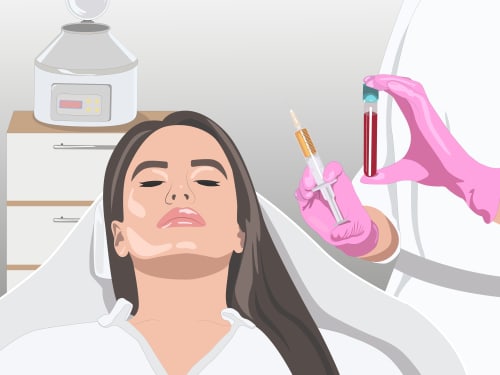
Platelet-rich plasma (PRP) therapy is an autologous treatment that concentrates platelets from a small sample of a client’s own blood and delivers them to a target tissue via injection or topical application, triggering a growth factor-driven regenerative response. The primary clinical applications at Creative Touch are facial skin rejuvenation – improving texture, tone, and firmness – and hair restoration, where PDGF and VEGF signalling to the follicular microenvironment supports the transition of dormant follicles back to active growth. Approximately 95% of PRP’s growth factors are released within the first hour following platelet activation, delivering an acute growth factor burst whose signal is largely resolved before the collagen remodelling it stimulates reaches full effect. A 2025 systematic review and meta-analysis found that iPRF outperformed PRP in 72% of comparative studies across multiple tissue types, with higher platelet concentrations and more sustained growth factor release. In 2025, Creative Touch transitioned the majority of blood-derived treatments to iPRF protocols on this basis. PRP remains available and the core growth factor mechanisms that make it effective have not changed – the transition reflects a genuine protocol improvement rather than a rejection of PRP’s underlying biology. [5]
PRP works by concentrating the platelet fraction of the blood and delivering the growth factors those platelets carry to a specific tissue site, producing a locally elevated growth factor signal that drives fibroblast activation, collagen synthesis, and new vessel formation. When platelets are activated – by tissue contact, calcium chloride, or mechanical disruption – they release their alpha granule contents rapidly: approximately 70% of stored growth factors are released within the first 10 minutes, and 95% within the first hour following activation. The tissue receives a concentrated burst of PDGF, TGF-β1, VEGF, EGF, and IGF-1 in that window, initiating the signalling cascades that drive repair. [5]
The acute release profile is PRP’s primary biological limitation relative to iPRF. The growth factor signal is strong but brief – the instructional window is measured in hours whilst collagen remodelling operates over weeks. Fibroblasts activated in that window continue producing collagen downstream of the initial signal, which is why PRP produces genuine collagen improvement despite the short delivery window, but the total collagen synthesis output is measurably lower than preparations that sustain the growth factor signal across the remodelling period. [5]
What the Comparative Evidence Shows
A 2025 systematic review comparing PRP and iPRF across 23 studies found that iPRF yielded higher platelet concentrations and a more sustained, long-term release of growth factors than PRP, with iPRF producing superior outcomes in 72% of comparative studies and equivalent outcomes in 24%. In vitro studies specifically confirmed that iPRF significantly improved fibroblast activity for skin applications, with fluid PRF associated with greater elevation in fibronectin mRNA, collagen type I, and TGF-β levels than PRP, leading to greater induction of collagen synthesis. This is the primary evidence base for the 2025 transition to iPRF at Creative Touch. [1]
PRP’s outcomes are not marginal – it is an effective regenerative treatment with a substantial clinical evidence base built over two decades of use. The comparison with iPRF is not “PRP doesn’t work” but “iPRF works measurably better for the same indications through the same mechanisms.” Understanding this distinction matters for clients who have researched PRP specifically or received it elsewhere.
| PRP | iPRF | |
|---|---|---|
| Growth factor release | Acute burst – largely cleared within hours | Sustained – released over 7–14 days as fibrin degrades |
| Collagen I production | Comparator baseline | ~2× higher in comparative fibroblast studies |
| Preparation complexity | More standardised | Timing-sensitive – no anticoagulant means working promptly |
| Injection experience | Liquid – standard injection | Slightly more viscous – technique matters more |
| Autologous | Yes | Yes |
| Current Creative Touch protocol | Available; not primary | Primary blood-derived treatment |
PRP and Hair Restoration
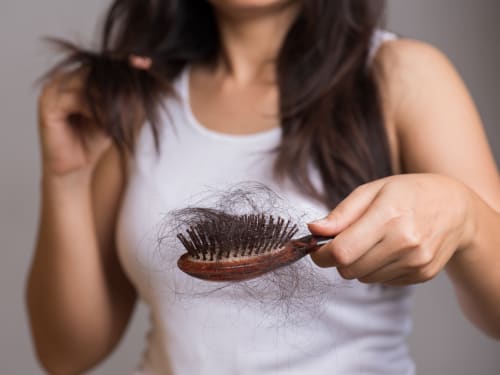
The mechanism by which PRP supports hair restoration is biologically distinct from its skin rejuvenation role. PDGF and VEGF signalling from activated platelets targets the dermal papilla cells and perifollicular microvasculature, promoting the transition of follicles from telogen (resting) to anagen (active growth) phase and sustaining the follicular microenvironment during the growth phase. PRP also exerts anti-apoptotic effects on follicle cells, extending the anagen phase and reducing follicular miniaturisation in androgenetic alopecia presentations. [4]
Clinical evidence for PRP in hair restoration is well-established. A randomised controlled comparison with triamcinolone acetonide found 60% of PRP-treated patients achieved complete remission in alopecia areata at 12 months, compared with 27% in the corticosteroid group, with significantly lower relapse rates at both six and twelve months. Hair count, density, and follicular calibre have all shown consistent improvement in multiple controlled trials across androgenetic alopecia and alopecia areata presentations. [2]
Preparation and Composition
PRP is produced by centrifuging anticoagulated whole blood to separate and concentrate the platelet fraction within the plasma layer. The anticoagulant – typically sodium citrate or citrate dextrose – prevents clotting during centrifugation and ensures the preparation remains injectable. Unlike iPRF, PRP contains no fibrinogen-to-fibrin conversion pathway: the anticoagulant actively prevents fibrin formation, keeping the preparation liquid throughout. [1]
The resulting preparation typically contains platelets at 3–8× baseline blood concentration, depending on centrifugation protocol. Leukocyte content varies by protocol – leukocyte-rich PRP (L-PRP) retains neutrophils and monocytes for their additional cytokine contribution; leukocyte-poor PRP (P-PRP) excludes them to minimise post-treatment inflammatory response. Neither is universally superior: the appropriate choice depends on treatment indication and the client’s inflammatory tendency. [3]
Preparation quality is directly dependent on the blood it is made from. Baseline platelet count and function, hydration status, antiplatelet medication use, and general health all affect the growth factor payload of the final preparation. PRP is a biological preparation, not a pharmaceutical – it cannot be standardised to a fixed dose in the way a drug can, and acknowledging this variability is more honest than framing it as a consistent quantity. [3]
Clinical Application
Setting Realistic Timelines
PRP is not a treatment that produces immediate visible change – and communicating this clearly before the first session is one of the most important things a practitioner can do. The treatment works with the body’s natural regenerative timeline. Most clients notice initial texture and tone improvements at around 4–6 weeks as new collagen begins to mature, with optimal results typically developing over 2–4 months as the remodelling process completes.
For hair restoration, the timeline extends considerably further. Follicular response to growth factor signalling operates on a longer cycle than dermal remodelling: visible regrowth is typically noticeable at 3–6 months, with full results assessed at six months to a year. Clients who expect hair growth within a few weeks of their first session will be disappointed not because the treatment is failing, but because they haven’t been briefed on the biology. This expectation conversation is not optional – it is part of delivering the treatment properly.
Who Responds Best
For facial rejuvenation, the strongest candidates are clients in their 30s–50s with skin quality concerns – uneven texture, dull tone, mild laxity, fine surface lines – rather than volume deficit. These are exactly the presentations where injectable filler offers little because the issue is cellular function rather than structural loss. PRP amplifies and extends the body’s own repair capacity; it works best when there is meaningful repair capacity to activate.
For hair restoration, early-to-mid stage thinning is the optimal window. Where follicles are still viable but underperforming, PDGF and VEGF signalling can meaningfully restore function. Where significant follicular miniaturisation has already occurred or follicles have been dormant for extended periods, the response is more limited – the growth factors amplify existing activity rather than regenerate absent follicles. An honest consultation about the degree and duration of thinning prevents the disappointment that comes from treating advanced hair loss with a protocol designed for earlier-stage presentations.
Clients who may not be suitable include those with thrombocytopenia, qualitative platelet disorders, or who are taking antiplatelet medications such as aspirin or clopidogrel, as platelet function directly determines the growth factor payload of the preparation. Active infection, autoimmune conditions in a flare, haematological disorders, and pregnancy are contraindications. painphysicianjournal
Pre-Treatment Preparation: Why It Matters
The quality of PRP is only as good as the blood it comes from. Pre-treatment guidance is not standard-form advice to tick off – it has a direct and observable effect on the preparation quality and therefore on outcomes:
- Arrive well hydrated. Dehydration increases blood viscosity and affects centrifugation yield and platelet collection
- Avoid NSAIDs and aspirin for 5–7 days beforehand. These directly impair platelet function and reduce the available growth factor payload painphysicianjournal
- Avoid corticosteroids where possible. Steroid use suppresses platelet aggregation and the inflammatory signalling that PRP is designed to work with
- Avoid alcohol in the 24 hours prior. Alcohol affects platelet aggregation function
- Eat normally before the appointment. Blood glucose affects platelet behaviour; attending fasted is not beneficial
Framing this conversation as a genuine influence on outcome – rather than a liability-covering instruction sheet – changes how seriously clients take it, and the difference in preparation quality between a well-prepared and a poorly-prepared client is clinically observable.
Course and Maintenance Recommendations
An initial course of 2–3 treatments at 4–6 week intervals is appropriate for most clients before reviewing individual response. Some clients see strong results from two sessions; others benefit from a third. After a course, maintenance at 6–12 monthly intervals sustains the collagen remodelling stimulus over time. For hair restoration, a longer-term maintenance approach is typically needed – the follicular benefit does not persist indefinitely, and periodic reinforcement sessions maintain the anagen-promoting environment that the initial course establishes.
Clinical Pearl The pre-treatment briefing on growth factor release timing is as important as the technical preparation. Clients who understand that PRP’s growth factor payload is largely delivered in the first hour post-injection – and that collagen remodelling from that signal takes 4–6 weeks to become visible – arrive at their follow-up with appropriate expectations. Clients who don’t understand this often present at 2 weeks convinced the treatment hasn’t worked, requiring reassurance that should have been delivered at consultation. One clear sentence at booking – “you won’t see changes for at least a month, and that’s exactly how the biology works” – prevents the most common source of client dissatisfaction with PRP outcomes. [5]
References
Diab NAF, Ibrahim AM, Abdallah AM (2023). Fluid Platelet-Rich Fibrin (PRF) Versus Platelet-Rich Plasma (PRP) in the Treatment of Atrophic Acne Scars: A Comparative Study. Arch Dermatol Res, 315(5), 1249-1255 . doi.org/10.1007/s00403-022-02511-3
Gentile P, Garcovich S, Bielli A, et al. (2015). The Effect of Platelet-Rich Plasma in Hair Regrowth: A Randomized Placebo-Controlled Trial. Stem Cells Transl Med, 4(11), 1317-23 . doi.org/10.5966/sctm.2015-0107
Husak V, Povelychenko O, Maltseva V, et al. (2025). Growth factor and cell content in Platelet-Rich Plasma (PRP), Leukocyte- and Platelet-Rich Plasma (L-PRP), Platelet-Rich Fibrin (PRF) in patients with long bone defects from combat injuries. BMC Musculoskelet Disord, 26(1), 1106 . doi.org/10.1186/s12891-025-09346-9
Paichitrojjana A, Paichitrojjana A (2022). Platelet Rich Plasma and Its Use in Hair Regrowth: A Review. Drug Des Devel Ther, 16, 635-645 . doi.org/10.2147/dddt.s356858
Pavlovic V, Ciric M, Jovanovic V, et al. (2021). Platelet-rich fibrin: Basics of biological actions and protocol modifications. Open Med (Wars), 16(1), 446-454 . doi.org/10.1515/med-2021-0259
Also Known As
- PRP therapy
Therapeutic Relationships
Therapeutic Context
- Stimulates Tissue regeneration Evidence: PRP therapy is defined as a tissue regeneration therapy; concentrated growth factors (PDGF, TGF-beta, VEGF) stimulate fibroblast proliferation, ECM synthesis, and angiogenesis in the target tissue (doi:10.3390/biomedicines12010007).
- Produces Platelet-derived growth factor Evidence: iPRF and PRP deliver all three PDGF isoforms from platelet alpha granules; only treatments providing exogenous PDGF. Entity text; PMC5329835.
- Produces Vascular endothelial growth factor Evidence: VEGF stored in platelet alpha granules released on platelet activation in PRP/iPRF preparations. PMC5329835; PMC4487960.
Indications & References
- this Dermal Papilla Evidence: PRP delivers PDGF, IGF-1, and VEGF to the DP environment; entity text confirms iPRF targets DP and HFSC niche at 1-1.5mm depth.
- this Hair follicle Evidence: PRP scalp injections deliver growth factors to bulge/hair germ zones to initiate anagen.
- this Skin Evidence: PRP is established for facial skin rejuvenation; entity text discusses growth factor delivery to both dermal zones. Masiello et al. (2024) Blood Transfus 22(4):265. doi:10.2450/BloodTransfus.730
- this May treat Perimenopausal skin changes Evidence: PRP provides growth factor cascade (PDGF, TGF-β, VEGF, EGF) addressing the trophic support deficit of oestrogen loss in perimenopausal skin. Entity text.
Learn More
This topic is discussed in 3 articles:
-
PRP and iPRF: How Regenerative Therapy Works
Primary TopicRegenerative procedure concentrating platelets 3-5× baseline to deliver growth factors triggering tissue regeneration
-
Regenerative procedure concentrating platelets 3-5× baseline to deliver growth factors directly to hair follicles
-

Discover how to restore and maintain your skin’s natural defences. From the causes of skin barrier damage to advanced treatments. Achieve healthy, radiant skin with our expert advice.